
 Previously Balladeer’s Blog has examined Garrison Tales From Tonquin (Tonkin), the 1895 collection of short stories by James O’Neill, an American who served in the French Foreign Legion in Algeria and Vietnam during the 1880s and 1890s. I’ve also covered the Legion at Camerone and during the Great Syrian Revolt of the 1920s.
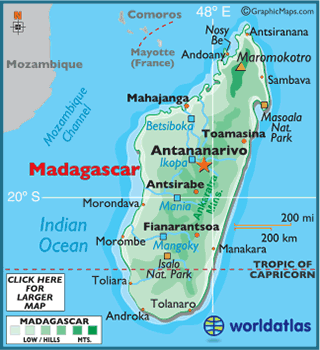
SECOND MADAGASCAR AFFAIR – This time around I’ll take a look at the French Foreign Legion during the 2nd Madagascar Conflict/ Expedition. The fighting went on from December 11th of 1894 to September 30th of 1895. This entire affair was so mishandled by French politicians in Reunion, by the War Minister and by General Jacques Duchesne that they basically killed thousands more of their own troops than were killed by the opposing forces.
TAKING IT FROM THE TOP – Typically for my French Foreign Legion posts, I’m not on their side in the war that the French government sent them to fight. It was the usual colonial nonsense, in this case exploiting unrest in the targeted country to use as an excuse for intervening and making Madagascar a French Protectorate. Regular readers know I don’t write sentiments like that to please politically correct fools, it’s just how I sincerely feel. If I felt any other way I wouldn’t hesitate to say so.
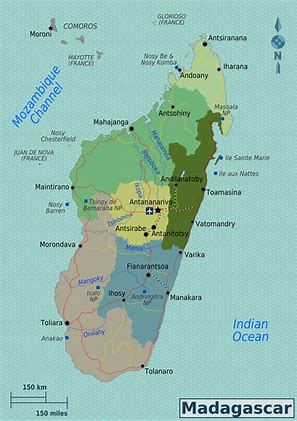 DECEMBER 1894 – On December 11th France declared war on Madagascar after its rulers refused to willingly become a French Protectorate. Though the French Army would be running this military campaign, the French Navy and their Marines kicked off the action by bombarding and then seizing Toamasina/ Tamatave on the eastern coast of Madagascar.
Though that location would have been ideal for a fairly quick march on the capital city of Tananarive/ Antananarivo, the French Army had beat out the French Navy for control of this war by UNDERCUTTING THEIR BID. (!) To stay within the lower costs the War Ministry had allocated, the army’s General Duchesne instead insisted on starting their campaign at Majunga/ Mahajanga on the northwestern coast of Madagascar, nearly doubling the amount of territory to be fought through.
JANUARY 1895 – In a relative feeling of “Team Spirit” the French Navy cooperated by now taking the area designated by the army for their landing site. On January 15th Majunga/ Mahajanga was bombarded and seized, fortress and all. Soon, however, the cosmic unsuitability of this location became apparent. Continue reading

 THE YEAR 2440 (1771) – Written by Louis-Sebastien Mercier, this French novel was at first published anonymously in Holland because of its criticism of the French aristocracy and of religion. Also for its bold rejection of societal norms of the time period. It was years before Mercier dared to take public credit for the work, and even then he did so largely because some were crediting The Year 2440 to Rousseau or Voltaire.
  With the Fourth of July holiday rapidly approaching here is another seasonal post. Previously, Balladeer’s Blog has looked at the
  SEPTEMBER 1st-5th – The American privateer ship the Active seized multiple prizes and took aboard several British Prisoners of War. Unfortunately, the Captain of the Active had stretched his crew too thin. The captive Brits gleaned the vulnerable position of their captors and rose up to seize control of the ship and were determined to link up with the first British vessel they could find to help take in the seized U.S. ship and consummate their freedom.
 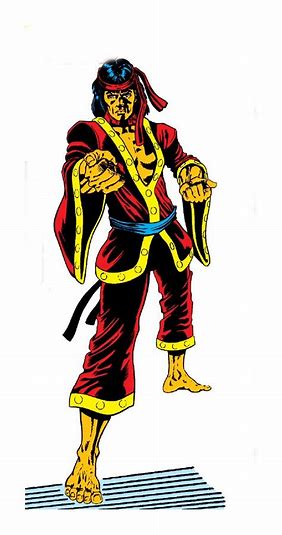 First, a little background information. In the early 1970s Marvel was experimenting with hybrid titles that would combine the old and the new by
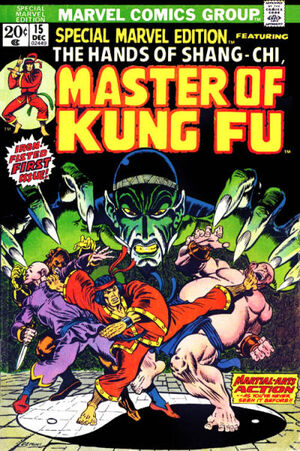 SPECIAL MARVEL EDITION #15 (December 1973)

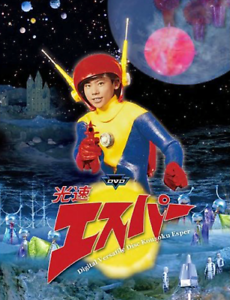 LIGHT SPEED ESPER (1967-1968) – This overlooked Japanese television show was titled Kousoku Esupâ in its nation of origin. If you enjoy live action programs like Ultraman or other shows from the tokusatsu subgenre of entertainment then Light Speed Esper will certainly appeal to you.
  Hikaru’s parents are killed in this intergalactic accident, filling the extraterrestrials – called Alien Espers or Esper Seijin – with immense feelings of guilt. They possess and animate the dead bodies of Hikaru’s mother and father to make amends. Very morbid amends, I grant you, but amends nonetheless.
  NATIONAL CHAMPIONSHIP GAME – The number 1 team in the nation – the HUTCHINSON COLLEGE BLUE DRAGONS – clashed with the 2nd ranked SNOW COLLEGE BADGERS for the NJCAA football crown yesterday.
 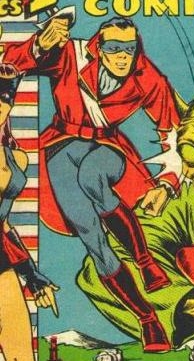 THE SPIRIT OF ’76
 POCKET COMICS #1 (August 1941)
  The Clouds was written by Aristophanes around 423 BCE and next to Lysistrata, which I examined last week, is the Big A’s most- discussed satire, mostly because of its lampooning of the philosopher Socrates, a contemporary of Aristophanes. Many modern readers, who have been programmed to sneeringly “deconstruct” old works of art rather than understand them, love to regard this comedy with hostility. They accuse Aristophanes of being “anti – intellectual” for subjecting Socrates in particular and the Sophist philosophers in general to the same satirical criticism that every other aspect of Athenian society was subjected to in comic plays.
  In the ancient Greek democracy Athenian citizens were expected to represent themselves in court in both criminal and civil proceedings.
