 FROM MAY 6th, 2019: Even the Democrat media outlet CNN admitted the lies regarding Trump’s remarks that day. Every so often anti-Trump fanatics still cite the lies, so this flashback looks at this item.
“When even some reporters at the Democrat media outlet CNN realize that the lies Democrats tell about President Trump’s Charlottesville remarks have been exposed you’d think slobbering anti-Trumpers like Joe Biden would know better than to try peddling them.
Or maybe not. The reason so many of us former Democrats decided to #WALKAWAY is because being a Democrat now means lying on a daily basis.
At any rate CNN’s Jake Tapper and Steve Cortes called out the lies Biden was throwing around about President Trump’s remarks about Charlottesville last year. Trump NEVER called hatemongers like Nazis and Klansmen “fine people.” The “very fine people on both sides” remark clearly referred to there being fine people on both sides of the public debate regarding old war monuments and on what happened at Charlottesville.
 Democrats and their media outlets have been trying to sell their lies about Trump’s remarks ever since then, with Crazy Joe Biden even perpetuating that lie when he joined 9,783 other Democrats in the presidential race.
Anyway, as even veteran Trump-hater Jake Tapper had to admit:
“Now, elsewhere in those remarks, Trump did condemn neo-Nazis and white supremacists. So he’s not saying that the neo-Nazis and white supremacists are very fine people.”
That rare moment of honesty from Tapper was good to see, but the way so many Democrats continue pushing that lie wins stronger support for Trump among his supporters and people on the fence. As the now-cliché goes about Democrats’ dishonest attacks on the President, “Do you want more Trump? Because THIS is how you get more Trump.”
It’s also how you get more of us to #WALKAWAY from the increasingly unhinged Democrat Party.
Among the many sources where you can verify that President Trump clearly condemned the Neo-Nazis, Antifa Fascists and Neo-Klansmen and did NOT call them “fine people” (see below). Continue reading →

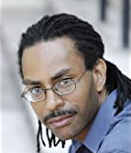 FROM MAY 13th, 2020: One of the many books examining the travesty of Barack Obama’s presidency.
  Martin Luther King Person of Courage Kiara Ashanti (above right) authored COMMANDER-IN-FAILURE: AN AFRICAN-AMERICAN REFLECTS ON AMERICA’S FIRST BLACK PRESIDENT AND HOW HE FAILED US ALL. It’s a riveting read.
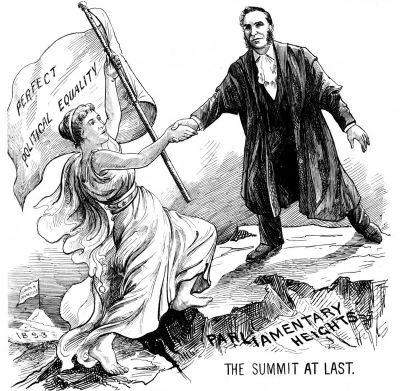 SEPTEMBER 19th, 1893 – New Zealand’s suffrage movement ended in success as the Electoral Act of 1893 was signed by Governor Lord Glasgow. Kate Sheppard was one of the prominent women leading the movement, and the Women’s Christian Temperence Union were also crucial in pushing for women’s suffrage.
 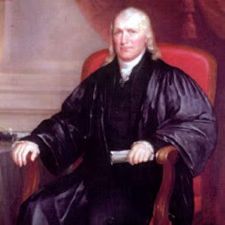 ASSOCIATE JUSTICE SAMUEL CHASE
  It’s no secret that Donald Trump is a de facto Third Party President, which is why he’s had to fight the crooks in both major political parties. Recently yet ANOTHER poll showed people recognizing the fact that President Trump has been better for young African-Americans than Obama was.
  Meanwhile, regarding Africa, even anti-Trump zealots like Aubrey Hruby have been forced to admit that UNDER PRESIDENT TRUMP AMERICA INVESTS MORE IN AFRICA THAN UNDER ANY OTHER PRESIDENT!
  PART 74 – Some of the Fool Killer’s targets on both sides of the aisle in the October of 1914 edition of the folk figure. The World War is in full swing.
  ASSOCIATE JUSTICE WILLIAM PATERSON
  MONSIEUR LECOQ – This French detective, who worked for the Surete, was created by France’s Emile Gaboriau, a former secretary of THE Paul Feval, the famed writer. The Gaboriau novels featuring Lecoq (whose first name was never revealed, like Columbo) all came out in the 1860s, making him one of the western world’s Big Three fictional detectives who came BEFORE Arthur Conan Doyle’s Sherlock Holmes in 1887.
  L’AFFAIRE LEROUGE (serialized in 1865, novelized in 1866) – This novel, set in 1862, depicted Lecoq as an assistant detective who was refining his trade with the help of another Gaboriau detective named Tabaret. In this story alone, Lecoq is a figurative Archie Goodwin to the less mobile Tabaret’s Nero Wolfe.
  ASSOCIATE JUSTICE THOMAS JOHNSON
 Whenever I hear AIDS, I think of Anthony Fauci’s poor handling of it. When I hear Covid-19, I think of Anthony Fauci’s disastrous handling of it and his stream of contradictory statements. When I hear “lysenkoism” I think of Anthony Fauci and that clod’s bizarre attempt to equate himself with science.
 PETA was
 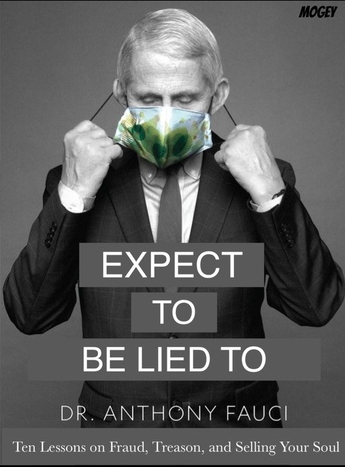 At any rate, PETA made an appropriate image of Fauci using multiple pics of the kind of animals tortured as mentioned above.
