Halloween Month is nearly over, and Balladeer’s Blog is here with a review of what is often called the worst Australian horror film ever made.
 HOUSEBOAT HORROR (1989) – “Mullets ahoy!” would make a good alternate title for this Shot on Video disaster from Down Under. Star Alan Dale of Neighbors fame leads a cast of untalented actors and barely adequate musicians who get chopped up by a disfigured slasher.
Ignore reviews which claim this flick is a Heavy Metal Horror Movie. Whatever the awful band in Houseboat Horror may be, they are definitely NOT Heavy Metal. If they were, I’d have covered this movie in my look at over Thirteen Heavy Metal Horrors from the 1980s. The band here is called a “disco group” multiple times, which made me wonder if Australians really still considered disco “cool” by 1989.
Taking things from the top, Houseboat Horror is set in Victoria, Australia at Lake Eildon going by the fictional name Lake Infinity. Alan Dale stars as director Grant Evans, who will be making a music video with a supposedly hot new Aussie band on a houseboat.
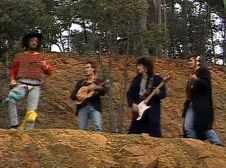 Text onscreen tells us it is October, which in Australia should be Spring, but the Aussie filmmakers for some reason have the characters keep saying it’s Winter. Guess they forgot what month they claimed it was.
The destined slasher victims proceed in multiple vehicles to Lake Infinity to shoot their video. The car with the musicians and a couple of groupies in it actually shows sense enough not to pick up a creepy, oddly dressed hitchhiker who turns out to be the movie’s slasher, Acid Head. Continue reading
 NUMBER SEVEN TAKES A FALL – In the NAIA, the 23rd ranked SOUTHWESTERN COLLEGE MOUNDBUILDERS visited the number 7 team in the nation – the FRIENDS UNIVERSITY FALCONS. By Halftime the Moundbuilders were on top 20-14, and 26-21 to end the 3rd Quarter. From there Southwestern College won the game 40-21.
  ENTER: THE DRAGONS – The NCAA Division 2 TIFFIN UNIVERSITY DRAGONS traveled to face the HILLSDALE COLLEGE CHARGERS. A 7-7 1st Quarter tie became a 21-7 Dragons advantage at the Half. After the break, the Chargers shut out Tiffin but still lost to them 21-14.
  PART 80 – As always, it’s fascinating to read the over 100-year-old opinions of James Larkin Pearson (and by extension his Fool Killer), including the opinions that one doesn’t agree with. Here are some of the Fool Killer’s targets in December 1915.
 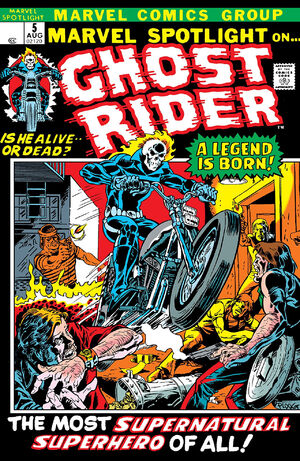 MARVEL SPOTLIGHT Vol 1 #5 (August 1972)
  LA MALROCHE (1833) – By Louisa Stuart Costello. Halloween month continues here at Balladeer’s Blog with yet another look at a neglected work of Gothic Horror, this one dealing with witchcraft, a monstrous child and supernatural beasts. Louisa Costello, the female author of this eerie tale, deserves to be much better known.




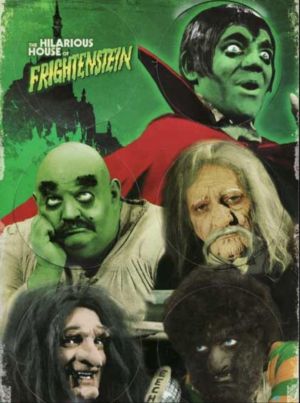 THE HILARIOUS HOUSE OF FRIGHTENSTEIN (1971-1974) – Balladeer’s Blog’s recent review of Countdown Canada (1970) generated so much excitement that I decided to go to the Canada Well once again with this classic children’s series which combined kid-friendly monsters with educational programming and the always welcome Vincent Price.
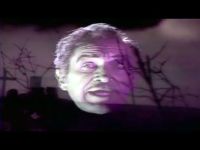
 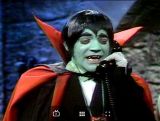 That poem went “Another lovely day begins, for ghosts and ghouls with greenish skin. So close your eyes and you will find, that you’ve arrived in Frightenstein. Perhaps the Count will find a way, to make his monster work today. For if he solves this monster-mania, he can return to Transylvania! So welcome where the sun won’t shine, to the castle of Count Frightenstein!” And then Price did his patented sinister laugh, again like he would go on to do for Thriller more than a decade later.
  As that intro indicated, the premise to this show was that Count Frightenstein and the others at his castle in Frankenstone were living in exile from Transylvania until he could bring Brucie J. Monster (basically the Frankenstein Monster) back to life. That backstory was really just the excuse for the ensuing madness in the form of kid-friendly comedy sketches and educational material, all presented with monsters as the characters.
  Institution: YAVAPAI COLLEGE
 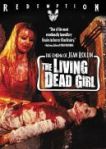 Halloween Month continues with this review of one of the zombie movies of French Director Jean Rollin. Balladeer’s Blog’s reviews of Rollin’s films always point out that his works range from brilliant and artistic to just plain awful.