
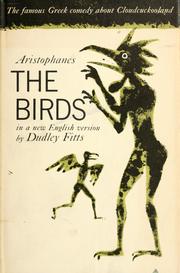
 Balladeer’s Blog presents another examination of an ancient Greek political satire. This comedy by Aristophanes was one that I was planning on covering very soon when I started posting my reviews of Attic Old Comedy years ago. For various reasons it kept falling by the wayside.
Where am I going with this? For Aristophanes’ line “In Cloud-Cuckooland things become what they are called rather than being called what they are” make it “In Ivory Towerland things become what they are called rather than being called what they are.” But I’m getting ahead of myself.
The Birds is Aristophanes’ lengthiest surviving comedy and also the most analyzed (some would say over-analyzed). So much has already been written about this particular work that I’ve decided to forego my usual intensive examination of every scene. Instead I’ll go with a brief synopsis followed by a way I feel The Birds could be adapted (as opposed to translated) for the present day.
SYNOPSIS
 More than 2,300 years before George Orwell’s Animal Farm and 1984, Aristophanes was dealing with some of the same political themes.
Pisthetaerus and Euelpides, Athenians feeling alienated by the increasingly restrictive laws and lawsuits of their home city have left Athens behind to start over with a new society. Part of the comedy centers around the ages-old theme of how those who seek to overthrow oppression often wind up becoming the new oppressors themselves. (Think of the 1960s generation of American leftists who became just as oppressive as they claimed previous generations had been)
Another Orwellian theme finds Aristophanes satirizing the way in which the ruling class in any society uses and corrupts language to strengthen the subjugation of the populace. The Birds even features the importance of religious and historical myths in any culture as the leaders of the new civilization conjure up an all-new cosmology with “the birds” at the center to justify their own rule. Continue reading
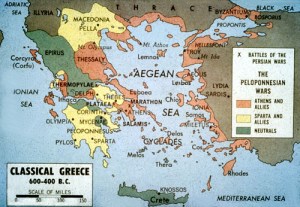 POLEIS – In this post I’m looking at Poleis (Cities), written by Eupolis, one of the Big Three of Ancient Greek Comedy along with Aristophanes and Cratinus. This satirical comedy is dated from approximately 422 B.C. to 419 B.C. Like so many other such comedies it has survived only in fragmentary form.
  As for how people can be “costumed” as cities, picture how it would be done with American cities. The chorus member representing New York might be depicted as the Statue of Liberty, Saint Louis as the Arch, Pittsburgh as a steel worker, Los Angeles as a brain-dead movie star and so on.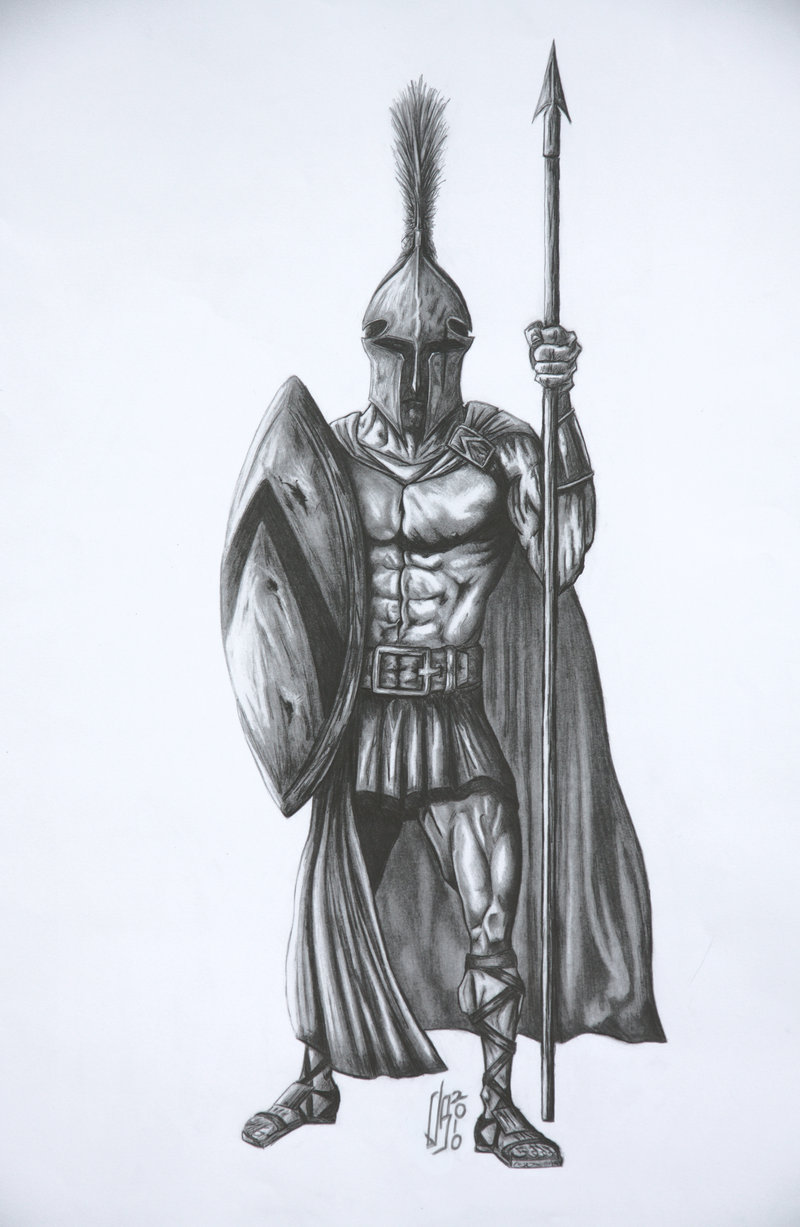
 A NEW LIST OF HILARIOUSLY WRONG PREDICTIONS FROM PSYCHICS – Cannibalism in Pennsylvania? A Civil War in the 1980s?
  ANCIENT SCIENCE FICTION: The People of the Moon (1895)
  IRON SIGHTS: TWO PSYCHOS – Comic book giant Richard C Meyer’s latest graphic novel featuring all-out action against the Mexican drug cartels. CLICK
 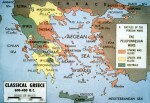 POLEIS (CITIES) 422-419 B.C. – A look at the ancient Greek political comedy written by Eupolis. CLICK
  ANCIENT SCIENCE FICTION – Messages From Mars (1892)
  ISAIAH WASHINGTON – And yet another Martin Luther King Person of Courage to profile – CLICK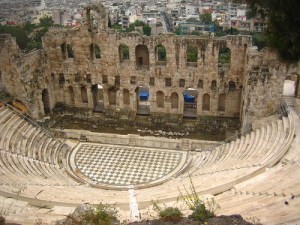
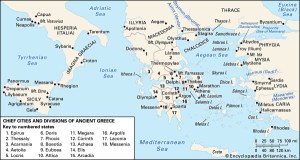 Balladeer’s Blog takes another look at an ancient Greek comedy. Most of my previous examinations of these verse plays dealt with Attic Old Comedy or on what little is known about Susarion, a revered pioneer of stage comedy.
  1) As the butts of jokes for their supposed inability to appreciate the sophisticated pleasures of city life and/or for their supposed lack of intelligence.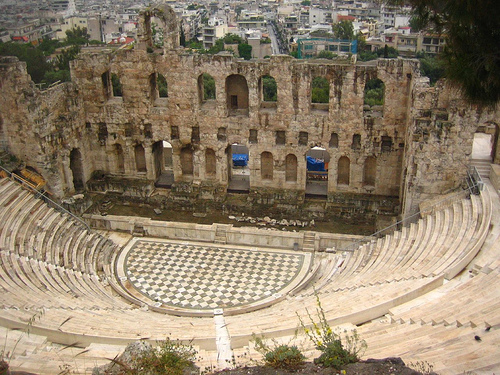
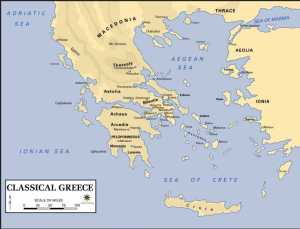 By reader request here is a blog post featuring a brief synopsis of the subject matter to each of the dozens of reviews I’ve written of ancient Greek comedies. Some of you indicated that you don’t like clicking on one with no idea what it will be about, so here we go.
