
Here is Part Five of Balladeer’s Blog’s look at the various mythological works in Ireland’s Lebor na hUidre, The Book of the Dun Cow. For Part One click HERE.
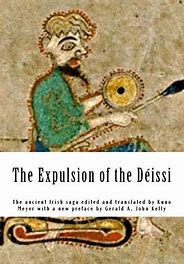 THE EXPULSION OF THE DEISSI (Tucait innarba na nDessi i mMumain ocus aided Chormaic) – Once believed to be a genuine historical narrative, The Expulsion of the Deissi has long been recognized as yet another case of mere quasi-historical myth-making.
The story deals with the expulsion and wandering of the former vassals called the Deissi, who were actually a loose confederation of people, but this legend elevated them to the status of a dynastic family. Like so many myths in world history, this highly embellished tale served the political purpose of a unifying origin myth, raising the Deissi Muman from defeated wanderers to a temporarily fallen noble dynasty.
The Expulsion of the Deissi survives in various forms, with The Book of the Dun Cow‘s account categorized as Version B.
I. Around the 100s to 300s A.D. when Cormac mac Airt was a High King of Ireland and ruled from the political and religious capital Tara, his “wanton son” Cellach abducted and raped Forach. She was the daughter of Forad, a brother of Oengus Gaibuaibthech (Oengus of the Dread Spear), the fiery military champion of the family, here supposed to be ancestors of the Deissi Muman.
Oengus’ spear was said to be the Luin of Celtchar, the spear of the god Lugh which he passed down to ancient Irish heroes like Celtchar mac Uthechar, Dubthach, Fedlimid and Mac Cecht. Right after Oengus finished a revenge quest for another family member who was recently killed, he led his troops to Tara to deal with Cellach. Continue reading
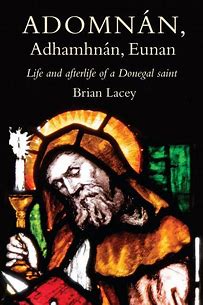 THE VISION OF ADOMNAN (Fis Adomnain) – This was a tale of the vision that Saint Adomnan supposedly had during his lifetime (c 679-704 A.D.). Several centuries before Dante’s Divine Comedy (Inferno, Purgatorio, and Paradiso), The Vision of Adomnan depicted the future saint being conducted through Heaven, Purgatory, and Hell so that he could share this “vision” with others.
 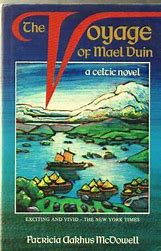 THE VOYAGE OF MAEL DUIN (Immram curaig Mail Duin) – Dated to around the late 900s A.D. or earlier, this story deals with the epic quest of Mael Duin (aka Maildun and Maeldune) and the crew of his ship as he seeks revenge on his father’s killers. This lengthy epic deserves to be as well-known as the Odyssey or the Quest for the Golden Fleece.
 Mael Duin matured, and proved better than his presumed siblings at athletic, martial and academic competitions. Losing their temper over this, one of our hero’s foster brothers ridiculed Mael Duin for not even knowing who his real father and mother were.
 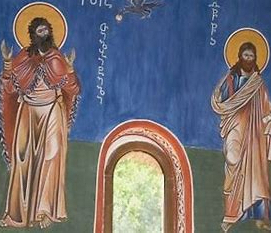 TWO SORROWS OF THE KINGDOM OF HEAVEN (Dá brón flatha nime) – This is a variation of the tales about Elijah and Enoch, who asked to be risen physically to Heaven while still alive. Because of their virtuous lives, their desire was fulfilled, but their “sorrows” centered around the limitations of their physical forms amid the wonders of Heaven. For just one example, they cannot fly like the angels and souls around them.
  Next, he reads to them about Christ returning for the Final Judgment accompanied by the Hosts of Heaven. Each human who appears before him is accompanied by a personal angel and a personal devil. The angel speaks of the person’s good deeds and the devil about their bad deeds. Jesus then assigns souls to Heaven or Hell.
 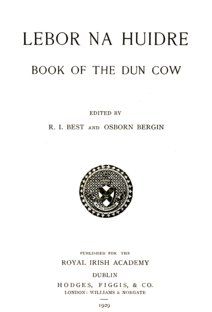 BOOK OF THE DUN COW (Lebor na hUidre) – In the past, Balladeer’s Blog has done deep dives into gods, goddesses and epics from
 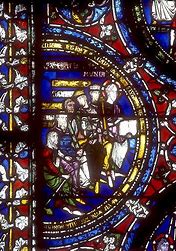 SIX AGES OF THE WORLD (Sex aetates mundi) – This was one of the many texts from many Christian-influenced cultures that viewed the world from Creation through Jesus Christ as being Six Ages. In this fictional context each age was roughly 1,000 years.
 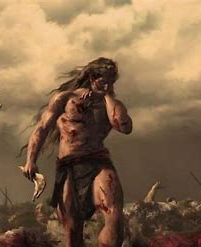 SAMSON IN THE LEGENDS OF THE JEWS – Samson was born the son of Manoah, a man of the Dan tribe and his wife Zelalponit aka Hazelalponit of the tribe of Judah.
 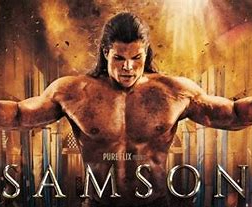 SAMSON IN ISLAM – Right at the start, I’ll make it clear that there is no specific reference to Samson in the Koran. Period. In some of the other scholarly writings by Muslim authorities of the distant past they included Samson aka Shamsun by speculating that he was among the many unnamed prophets of their faith.
 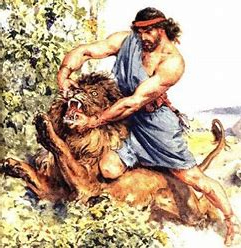 NOTE: Yes, that still puts Samson’s existence before Muhammad was even born, but the academic and religious debates about this are outside the material I am covering in this post.
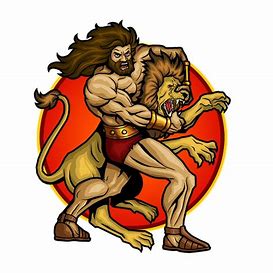 SAMSON AS A NON-BIBLICAL SUN GOD – Before getting into the Biblical and Talmudic Samson tales, let’s take a look at the tradition of Samson being an ancient sun deity. In this context his “seven locks/ braids of hair” were seven solar rays emanating from his head like in ancient artwork of other solar figures.
  64. The May of 1913 edition of James Larkin Pearson’s Fool-Killer was lacking in urgency and satirical bite, but I found it to have a certain slice of life feel to it that captured its era yet also underlined certain tableaus that are seemingly eternal.
  A. Ngai, the creator god, divider of the universe, divider of the land from the sea and owner of the dazzling light, descended to the Earth shortly after making it. Mists covered the entire world because of how freshly made it was.
