
Frontierado falls on Friday, August 7th this year. As always, the Frontierado holiday is about the myth of the Old West, not the grinding reality.
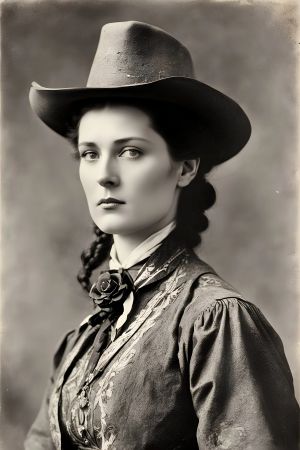 CIMARRON ROSE DUNN – Poco wrote a song about her. She appears in a 1915 Silent Film about Oklahoma Outlaws. She’s often mistakenly believed to be the subject of the 1952 western The Rose of Cimarron. And it’s not even certain if that’s really her in one of the alleged surviving photos of her. Rose Dunn may embody the embellishments that fight with the truth when it comes to various figures from the Old West.
Even today, online entries and articles about this woman tend to fall into one of two categories. 1. Rose Dunn was an outlaw ally of the Doolin Gang in their rustling and bank & train robbing antics, and she later become a bounty hunter alongside her brothers. Or 2. Rose Dunn was involved in a couple actions with the Doolin Gang but otherwise was as innocent as an angel.
Dunn lived well into the 20th Century but refused to discuss her past, either to avoid notoriety or because there was nothing to tell, take your pick. Still, iconic Old West lawman Bill Tilghman wrote about her criminal career in his supposedly non-fiction book Oklahoma Outlaws.
The future Rose of Cimarron was born September 5th, 1878 in either Winfield or Cowley, Kansas (sources vary). She had two sisters and seven brothers. Growing up with so many older brothers, Rose could ride and shoot better than some men. When Rose’s father William Dunn died, her mother later remarried to a physician known as Dr. Call and at some point moved to Ingalls, Oklahoma near the Cimarron River. Continue reading
 PART 71 – Some of the Fool Killer’s targets on both sides of the aisle in the May 1914 edition of James Larkin Pearson’s version of the folk figure:
 *** Bootleggers who were hurriedly transporting as much whiskey as they could from Virginia into North Carolina, where booze was now illegal. They did this because they could charge much more for liquor in a state where it was officially banned.
 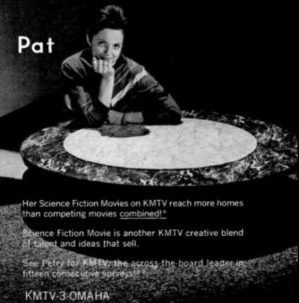 SCIENCE FICTION MOVIE PARTY (1962-1965) was also called simply SCIENCE FICTION MOVIE and PAT’S SCIENCE FICTION MOVIE in the tantalizingly few surviving pieces of information available about this cult Movie Hostess show. SFMP aired Saturday nights at 10:30 (one ad says 10:20) on KMTV in Omaha, Nebraska from September 1962 to the end of summer 1965.
 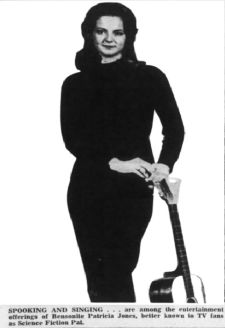 SCIENCE FICTION PAT – Patricia Jones was a multi-talented woman enrolled at the University of Nebraska. On the side she played guitar, sang and recited beat poetry in Omaha coffee houses of the period. On SFMP Pat wrote her own material and designed various mostly black outfits for herself to wear during her Host Segments.
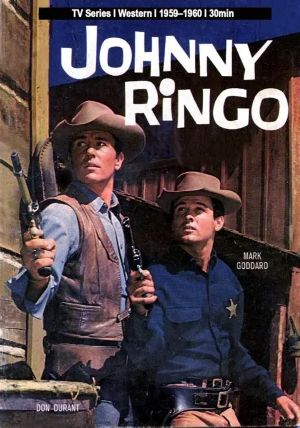 JOHNNY RINGO (1959) – Don Durant starred as the one and only Johnny Ringo, the real-life gunslinger. The fictional setting of this program takes place between Johnny’s original rise to fame during the Mason County War in Texas and his final years in Arizona as part of the Clanton-McLaury Crime Faction led by Curly Bill Brocius. Aaron Spelling was the producer.
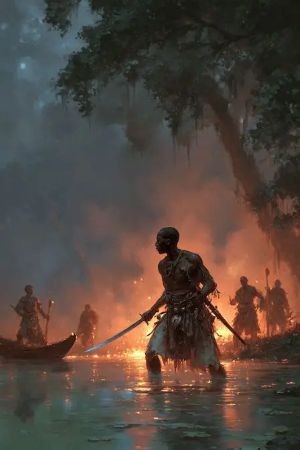 PART THREE: When we left off, our hero Ozidi the Younger had just finished slaying the first of his father’s murderers and Ozidi reminded his mentally unfit uncle, King Temugedege, that he is having to take care of the family business that he is incapable of. When all of the killers of Ozidi the Elder have been dealt with, his father’s spirit will be free from the deadlands limbo in which it currently dwells.

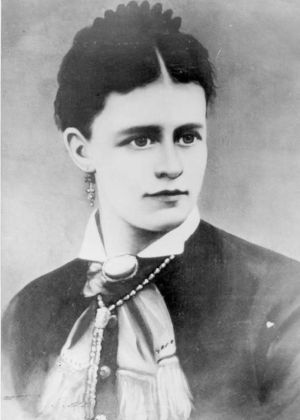 IRISH NELLIE CASHMAN – Nellie Cashman was born Ellen O’Kissane in 1845. Sometime between 185o and 1852 her family moved to Boston, where the ambitious young woman was later working as a bellhop at Boston hotels. During the U.S. Civil War Nellie did some spying for the Union cause, following which she and her family moved to San Francisco in 1866.
 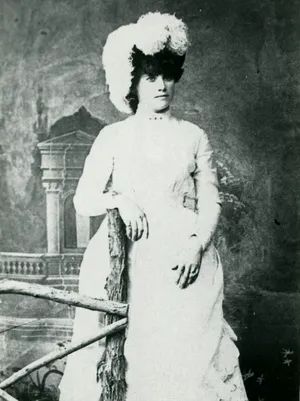 Irish Nellie used part of her growing fortune to finance the Sisters of Saint Anne. When snowstorms trapped dozens of gold seekers in the Cassiar Mountains in a series of avalanches, Irish Nellie heard that Canadian authorities were advising against rescue attempts due to how dangerous the Cassiars were.
  AUD-I-SEE aka AudiSee (1978) – Balladeer’s Blog takes a look at the largely forgotten AudiSee series of audiovisual science fiction stories for adolescents. Each episode is roughly 30 minutes long. The audio element consists of voice actors including a narrator. The visual element consists of an illustrated booklet that came with the AudiSee package.
 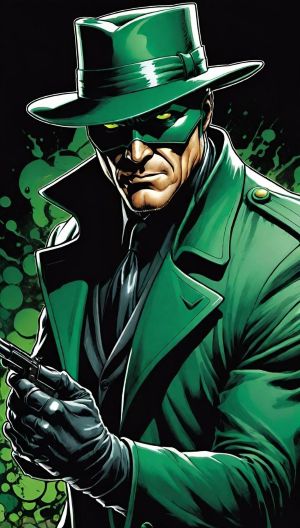 This weekend’s superhero post from Balladeer’s Blog looks at some of the earliest comic book adaptations of the iconic character the Green Hornet. That figure originated on radio in January 1936 and in a very early example of a shared universe, the Green Hornet’s secret identity was Britt Reid, grand-nephew of John Reid – the Lone Ranger.
 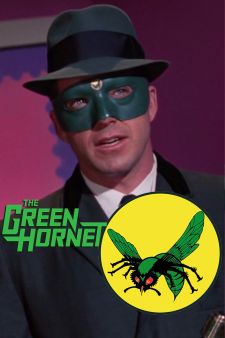 And just as the Lone Ranger show’s theme music came from classical music – the William Tell overture – the Green Hornet show’s theme came from Rimsky-Korsakov’s Flight of the Bumble Bee.
 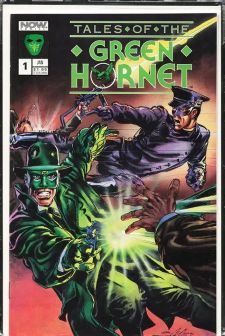 The police and even Daily Sentinel crime reporter Mike Axford (formerly of the 1932 radio series Warner Lester, Manhunter) misunderstood the Green Hornet’s vigilante activities and suspected the masked hero of being a criminal himself. The Hornet took advantage of that misperception by convincing some of his gangster foes that he was indeed an outlaw and wanted a cut of their illegal operations.
  PART 70 – Some of the Fool Killer’s targets on both sides of the aisle in the April 1914 edition of James Larkin Pearson’s version of the folk figure:
