
One of the most popular topics here at Balladeer’s Blog is “Ancient” Science Fiction. That category covers science fiction stories – often very primitive – from the 1st Century A.D. up through about a hundred years ago. Here’s another list of twenty items for 2020.
 THE Nth MAN (1920?)
Author: Homer Eon Flint
“Ancient” Kaiju! An enormous humanoid being with skin like turtle shells rises from the depths to rampage across the United States. The entity is intelligent and lays down political and economic ultimatums to the career politicians of Washington DC and to the plutocrats who pull their strings. Though the enormous Nth Man is told that his demands will be met, the tycoons betray him. They construct a high-tech army to try to kill the giant when he returns and the battle is on.
FOR MY REVIEW CLICK HERE
 A MEXICAN MYSTERY (1888)
Author: W. Grove
An inventor in 1860s Mexico seeks favor with Emperor Maximilian by devising an actual “thinking” train engine complete with mechanical arms which allow it to function without humans manning it. The intelligent construct develops a predatory mentality, then goes on a wild killing spree throughout the country while outfighting its human foes at nearly every turn.
FOR MY REVIEW CLICK HERE Continue reading
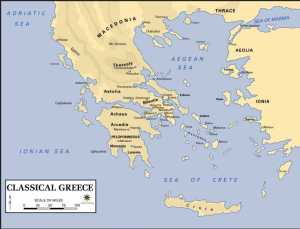 By reader request here is a blog post featuring a brief synopsis of the subject matter to each of the dozens of reviews I’ve written of ancient Greek comedies. Some of you indicated that you don’t like clicking on one with no idea what it will be about, so here we go.
  Balladeer’s Blog frequently examines ancient Greek comedies written by Aristophanes, Cratinus, Eupolis and others. Recently I was put in mind of the way those comedians often satirized the “professional accusers” in the political and legal forums of ancient Athens.
  Demagogues like Cleon and Hyperbolus and others often used “professional accusers” against their political opponents. These figures – called sycophantes by the ancient Athenians – are often termed “informers” in many translations of Greek comedies but I feel the word accuser is more accurate.
  Here at Balladeer’s Blog I’ve been reviewing ancient Greek comedies for years and a fair amount of people have recently asked me why I didn’t take the traditional view of Aristophanes’ comedy The Birds. That traditional view claims that The Birds was written at least partially as a commentary on the failed military expedition to Sicily.
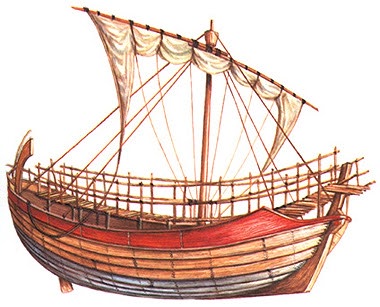

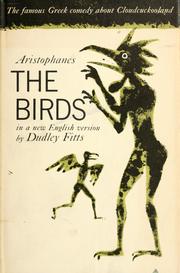 Balladeer’s Blog presents another examination of an ancient Greek political satire. This comedy by Aristophanes was one that I was planning on covering very soon when I started posting my reviews of Attic Old Comedy years ago. For various reasons it kept falling by the wayside.
 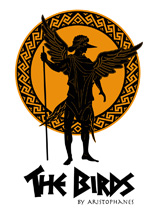 More than 2,300 years before George Orwell’s Animal Farm and 1984, Aristophanes was dealing with some of the same political themes.
 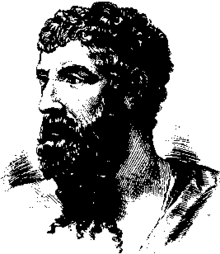 Many of you have been kind enough to let me know that the new movie Chi-Raq, about black-on- black violence in Chicago, can be added to the long list of adaptations of Lysistrata by Aristophanes.
 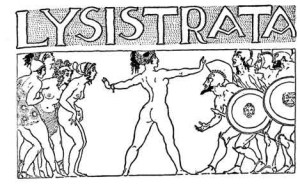 By 411 BCE the Peloponnesian War between Athens (and its allied city-states) and Sparta (and its allied city-states) had been raging for roughly 20 years. The war provides the backdrop for many of Aristophanes’ surviving comedies and is especially apt where Lysistrata is concerned.
  Balladeer's Blog