
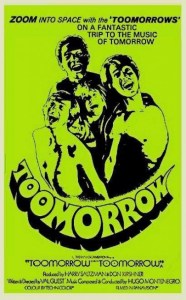
 TOOMORROW (1970) – What is one part Monkees episode, one part Frankie & Annette Beach Movie, one part Help!, one part Donny & Marie in Goin’ Coconuts, one part KISS Meets The Phantom of the Park and one part Beyond the Valley of the Dolls? The answer is Toomorrow, the infamous Don Kirshner/ Val Guest cult movie with a then-unknown Olivia Newton-John in a starring role.
The aim was to launch a new pre-fab pop band like the Monkees, but this time consisting of an Aussie (Newton-John of course), a Brit (Vic Cooper), an African-American (Karl Chambers) and a white American (Benny Thomas).
Olivia sings and also dances around the guys while they play, Benny plays the guitar, Karl is the drummer and Vic plays the keyboard AND his special invention called a Tonalizer. The band is called Toomorrow because, as Karl observes, they are “Too much! Too-Morrow!”
 We’re told that Vic’s Tonalizer is what gives Toomorrow its special “sound.” How special is that sound? So special that its unique vibrations can revive the stagnant culture of an alien race that’s facing decay and collapse. It seems the aliens’ own musical output has grown stale because they have long since progressed beyond the troublesome “emotions” and “heart” that Toomorrow’s members pour into their songs.
Buy this movie for the Sandbaggers or Dalgleish fan in your life, because Roy “Neil Burnside” Marsden co-stars as Alpha, the captain of the aliens’ spaceship. His forever-terse voice is unmistakable despite the – admittedly competent – makeup and prosthetic effects for the ET’s (above right). Continue reading
 Alexandre Dumas pere is synonymous with swashbuckling historical adventures like The Three Musketeers, The Count of Monte Cristo and The Man in the Iron Mask.
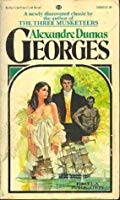 GEORGES (1843) – Published just one year before The Three Musketeers, this novel is not only a rollicking adventure full of action, romance and double-crosses but it deals with racial issues in such a way that you would have thought it would have been adapted for film four or five decades ago. The title character uses his sword to fight slavery!
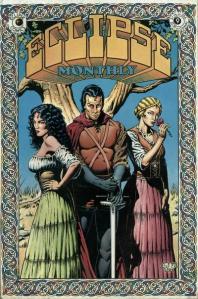 ECLIPSE MONTHLY Vol 1 #9 (June 1984)
 The Masked Man (Dick Carstairs) is on-hand as Editor-In-Chief J Judah Johnson (a pastiche of J Jonah Jameson) assigns our hero’s reporter friend Barney McAllister to scour the city to see if any more members of the Architectural Terrorists are still at large.
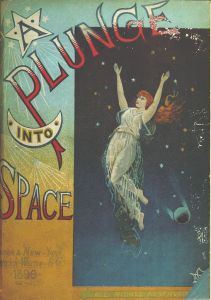 A PLUNGE INTO SPACE (1890) – Written by THE Robert Cromie, later editions of this novel came with a preface by Jules Verne himself. Scientist Henry Barnett, after 20 years of labor, has mastered “the ethereal force which permeates all things,” a combination of electricity and gravity. This mastery will allow for interplanetary space travel.
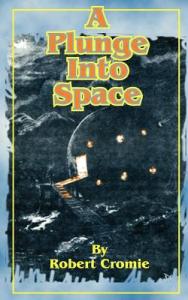 In anticipation of encounters with hostile life-forms on other planets, the clique has also manufactured disintegrator weapons, with which they fight off curious parties of indigenous tribes in order to preserve their secret.
 PART THIRTY-NINE – Some of the Fool Killer’s targets in the September of 1910 issue of James Larkin Pearson’s Fool-Killer:
 *** “Republocrats,” as Pearson and his Fool Killer called the corrupt fraternity of career politicians/ career criminals who belonged to the two gangs called Democrats and Republicans. Today the term is spelled “Republicrats.”
 THE INVISIBLE MAN (1984) – This was a British television miniseries version of the H.G. Wells science fiction story and was originally aired in 6 episodes of 27 minutes each. It was later edited and repackaged as 3 episodes running 50 minutes each.
 Pip Donaghy shines as the madman Griffin and conveys a true sense of danger behind his envelope-pushing scientific brilliance. Much of his performance rests on his terrific voice-acting, naturally, but he is always convincing.
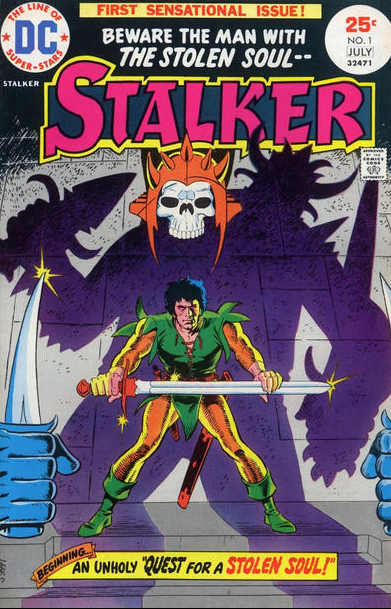 STALKER – With the WITCHER series such a sensation right now, Balladeer’s Blog takes a look at the forgotten 1970s sword, sorcery and fantasy series called Stalker.
 STALKER #1 (July 1975)
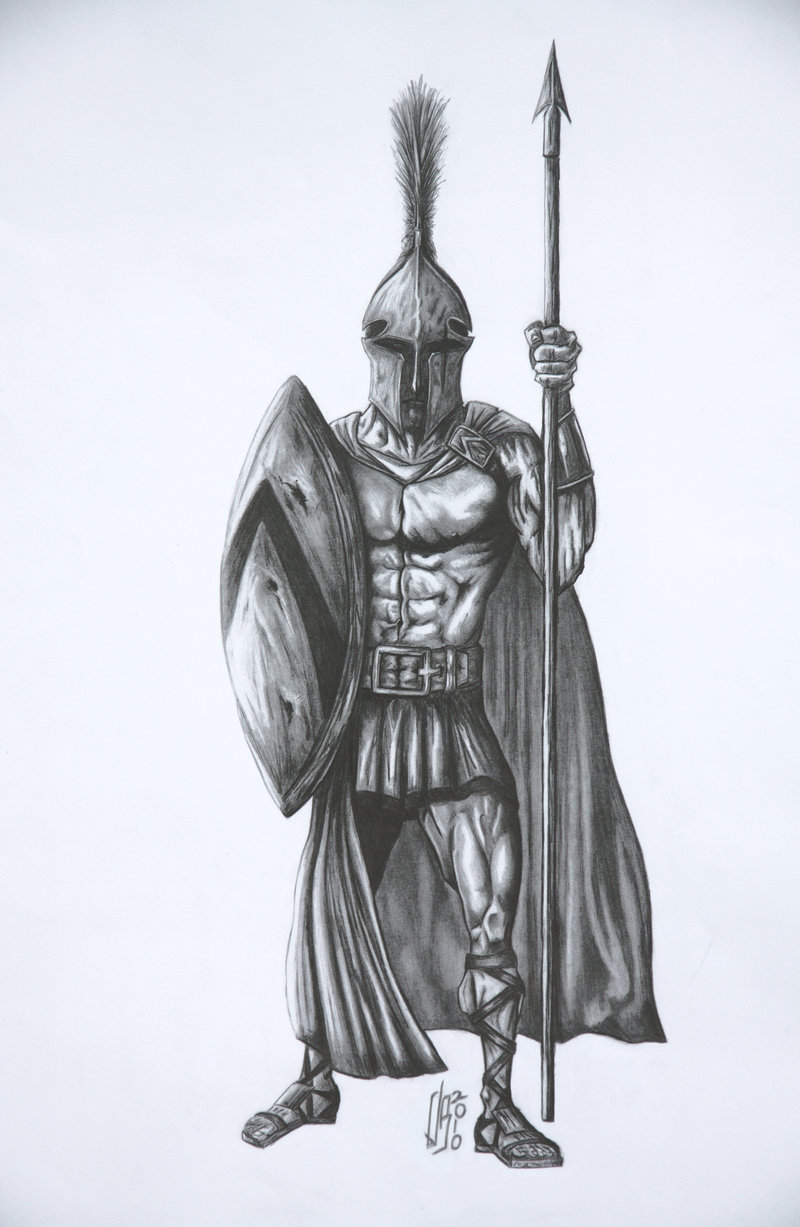
 UTOPIA or THE HISTORY OF AN EXTINCT PLANET, PSYCHOMETRICALLY OBTAINED (1884) – Written by Alfred Denton Cridge. An unnamed narrator comes across the remains of a meteor that entered Earth’s atmosphere. This narrator has the gift of psychometry (the author’s uncle was THE William Denton) and after he picks up the tangerine-sized chunk of black rock from another planet he begins getting impressions from it.
 The planet was just 2,500 miles across and was home to a race of roughly 5 1/2 feet tall humanoids, some with yellow skin, some with brown skin and others with gray skin. All the races had long, black hair. Utopia sported Earthlike plains, mountains, lakes and rivers with just one huge ocean.

