
FOR PART ONE OF BALLADEER’S BLOG’S EXAMINATION OF THIS OLD, OLD MARVEL COMICS STORYLINE CLICK HERE The revisions I would make are scattered throughout the synopsis below.
 MARVEL TEAM-UP Vol 1 #45 (May 1976)
Title: Future-Shock
NOTE: Killraven meets the time-traveling Spider-Man in this story. Team-up titles, like Marvel Two-In-One and Marvel Team-Up or DC’s The Brave and the Bold were often considered non-canonical by comic book fans.
The purpose of such team-up books was largely promotional. A superstar of the respective publishing company – Spider-Man for Marvel Team-Up, the Thing for Marvel Two-In-One and Batman for The Brave and the Bold – would star in an often half-assed story. The high-profile character’s fame would, it was hoped, put more eyes on the less popular figure they were being teamed up with and increase that less popular figure’s sales.
Another purpose was to retain copyrights on characters in Marvel or DC’s vast, increasingly overpopulated shared universes. A long unused figure not popular enough to carry their own comic book could be used in a one-shot team-up story, thus satisfying copyright law without the expense of trying to use the superhero in another failed title of their own.
Given Killraven’s forever-struggling sales there’s little doubt this team-up story was done hoping Spider-Man’s fame would boost those sales.
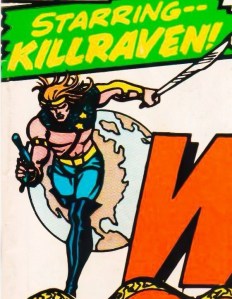 Synopsis: August, 43 years in the future. The story is set in the war-torn No Man’s Land on the outskirts of New York City. This of course makes no sense since Killraven and his Freemen were at this point in America’s Deep South. (KR even refers to recent events so you can’t say this tale is set during the 3 years when Killraven and his rebel group were headquartered on Staten Island.)
Again, this reflects the “who cares about continuity” nature of many such team-up titles.
REVISION: That’s why I would have this story set in Troy, Alabama, with the Freemen still lost and wandering through the biologically mutated jungle which now covers much of the American southeast.
Back to the unrevised story: Spider-Man is using Reed Richards’ copy of Dr Doom’s time machine to leave 1600s Salem, where he and assorted guest-stars had just had an adventure.
Saddened that he could not save the victims of the Salem Witch Trials (well, duh), Spidey morosely tries to return to his own time, only to overshoot his mark and wind up in the New York of Killraven’s future. In that future, Earth is being ruled by its alien conquerors, Martians in the original story but Zetans in my revisions. Continue reading
 THE DOMINION IN 1983 (1883) – Written by “Ralph Centennius,” the presumed pseudonym of an unknown author.
  Canadian technology leads the world, with rocketships that can fly at a mile per second and electric automobiles for ground transport. Electricity is the predominant energy source, and Electropolis, the first all-electric city, was recently completed.
  Regular readers of Balladeer’s Blog will remember my review of three neglected swashbuckler novels by Alexandre Dumas. (For those three – Georges, Captain Pamphile and La Dame de Monsoreau click
  When I was a little boy thrilled with the Musketeers, Monte Cristo and Iron Mask I excitedly grabbed The Black Tulip to read, assuming it, too would feature derring-do and swordplay. Much to my disappointment the novel instead dealt with attempts to cultivate a black tulip, the mob-slaying of Netherlands politicians Johann and Cornelius de Witt, romance and the redemption of personal honor.
  AMAZING ADVENTURES Vol 2 #34 (January 1976)
 Killraven, M’Shulla and Carmilla Frost are using an old, abandoned horse-racing track to race each other on their separate mounts. KR is riding his usual pinkish-red serpent-stallion, while the other two ride similarly chimeric creatures spawned by residue of the bio-warfare agents unleashed 18 years earlier in Earth’s unsuccessful war against the alien invaders.
 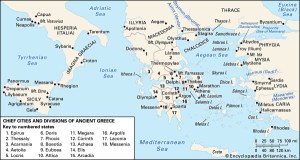 Balladeer’s Blog takes another look at an ancient Greek comedy. Most of my previous examinations of these verse plays dealt with Attic Old Comedy or on what little is known about Susarion, a revered pioneer of stage comedy.
  1) As the butts of jokes for their supposed inability to appreciate the sophisticated pleasures of city life and/or for their supposed lack of intelligence.
 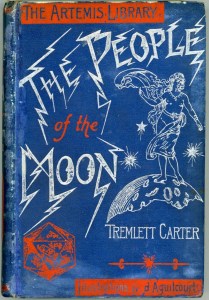 THE PEOPLE OF THE MOON (1895) – Written by Tremlett Carter. An unnamed narrator, a scientist of some sort, sees a glowing 18 inch object floating in the sky. A bird who makes physical contact with the glowing orb is killed by the object’s electric charge.
 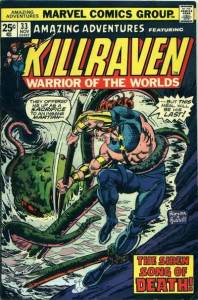 AMAZING ADVENTURES Vol 2 #33 (November 1975)
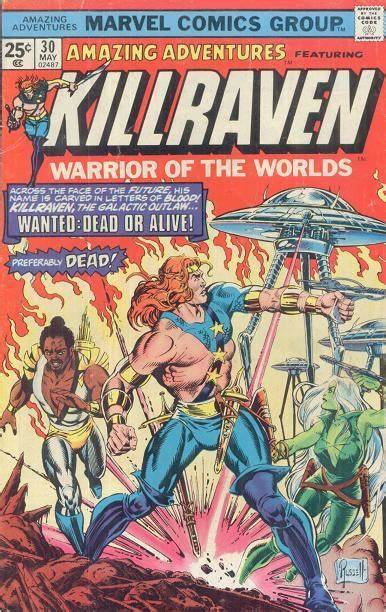 AMAZING ADVENTURES Vol 2 #30 (May 1975)
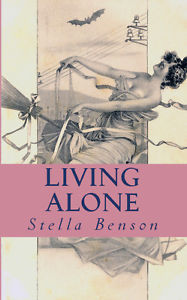 LIVING ALONE (1919) – Written by Stella Benson. This novel is like a World War One forerunner of Bedknobs and Broomsticks. In 1918, during what was then called The Great War, a London woman named Sarah Brown busies herself with War Savings Committee Work.
 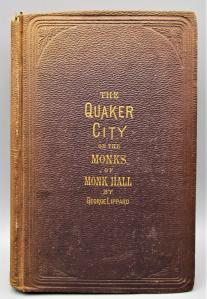 THE MONKS OF MONK HALL aka THE QUAKER CITY (1844-1845) – Written by George Lippard, this strange and macabre story was originally serialized from 1844-1845 before being published in novel form. This bloody, horrific work was America’s best-selling novel before Uncle Tom’s Cabin.
 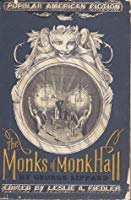 Think of Monk Hall as a combination of Twin Peaks establishments like the Black Lodge, One-Eyed Jacks and the Great Northern all rolled into one. The vast, multi-roomed Hall is honey-combed with secret passageways and trap doors. Beneath the mansion are a subterranean river plus several levels of labyrinthine catacombs filled with rats, refuse and the skeletal remains of the Monks’ many victims from the past century and a half.
 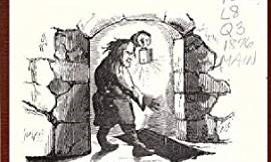 DEVIL-BUG – The deformed, depraved and deranged bastard offspring of one of Monk Hall’s members and one of the many prostitutes who are literally enslaved there. Devil-Bug has spent his entire life in the Hall and has no other name. He is squat, incredibly strong and grotesquely ugly with one large gaping eye and one small, withered, empty socket on his face.
 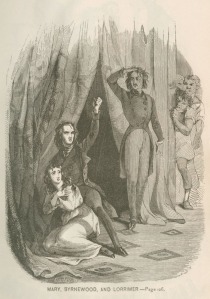 Master of an occult method of eternal youth, Ravoni has been alive for over two hundred years. (The novel repeatedly says just two hundred years, but the villain refers to having been present at the Saint Bartholomew’s Day Massacre, which happened in 1572, so it has to be longer)
