Happy Halloween! Balladeer’s Blog marks it with a neglected work of American horror.
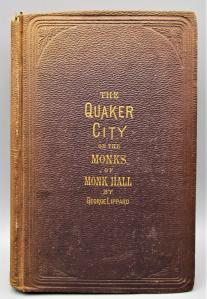 THE MONKS OF MONK HALL aka THE QUAKER CITY (1844-1845) – Written by George Lippard, this strange and macabre story was originally serialized from 1844-1845 before being published in novel form. This bloody, horrific work was America’s best-selling novel before Uncle Tom’s Cabin.
I always refer to this book as “Twin Peaks Goes to the 1840s.” On one level The Monks of Monk Hall deals with crime, corruption, drugs and sex-trafficking among many supposedly “respectable” citizens of Philadelphia the way Twin Peaks did with residents of the title town.
On another level the novel deals with supernatural horrors that lurk behind the Quaker City’s murders, vices and sexual perversions, again like the David Lynch series. The center of the darkness is Monk Hall, an old, sprawling mansion with an unsavory history and reputation. Many have disappeared into the bowels of the building, never to be seen again. The power players and criminals who mingle at the Hall in bizarre orgies, secret murders and drunken debauches are known as “Monks” – Monk Hall’s exclusive membership.
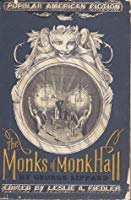 Think of Monk Hall as a combination of Twin Peaks establishments like the Black Lodge, One-Eyed Jacks and the Great Northern all rolled into one. The vast, multi-roomed Hall is honey-combed with secret passageways and trap doors. Beneath the mansion are a subterranean river plus several levels of labyrinthine catacombs filled with rats, refuse and the skeletal remains of the Monks’ many victims from the past century and a half.
The sinister staff of Monk Hall are happy to provide their members with all the sex, opium and other diversions that they hunger for behind their public veil of respectability. Throw in the occult practices of the members and there’s a sort of “American version of Sir Francis Dashwood’s Hellfire Club” feel to it. Among the novel’s more horrific characters:
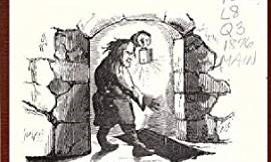 DEVIL-BUG – The deformed, depraved and deranged bastard offspring of one of Monk Hall’s members and one of the many prostitutes who are literally enslaved there. Devil-Bug has spent his entire life in the Hall and has no other name. He is squat, incredibly strong and grotesquely ugly with one large gaping eye and one small, withered, empty socket on his face.
This monstrosity works as Monk Hall’s combination door-man, bouncer and executioner, gleefully murdering on demand and secreting the corpses away in the sub-basements beneath the mansion. Just to make him even more unwholesome, Devil-Bug sleeps next to the corpse of one of his victims and uses occupied coffins as furniture in his creepy rooms.
RAVONI – Interchangeably referred to as a sorcerer, mad doctor, astrologer and anatomist, this handsome but sinister man pulls the strings behind the supernatural evils of Philadelphia and vicinity.
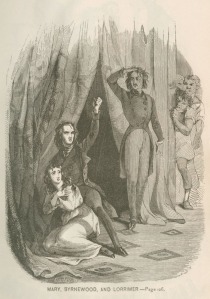 Master of an occult method of eternal youth, Ravoni has been alive for over two hundred years. (The novel repeatedly says just two hundred years, but the villain refers to having been present at the Saint Bartholomew’s Day Massacre, which happened in 1572, so it has to be longer)
Ravoni has powers of mesmerism, prognostication and can even raise the dead. He was the original owner of Monk Hall under another name long ago. Readers eventually learn the kind of dark rituals the man performed at the Hall but don’t learn the full extent of his evil plans until the climax of the novel. Continue reading →

 AMAZING ADVENTURES Vol 2 #34 (January 1976)
 Killraven, M’Shulla and Carmilla Frost are using an old, abandoned horse-racing track to race each other on their separate mounts. KR is riding his usual pinkish-red serpent-stallion, while the other two ride similarly chimeric creatures spawned by residue of the bio-warfare agents unleashed 18 years earlier in Earth’s unsuccessful war against the alien invaders.
 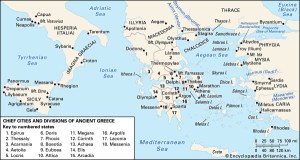 Balladeer’s Blog takes another look at an ancient Greek comedy. Most of my previous examinations of these verse plays dealt with Attic Old Comedy or on what little is known about Susarion, a revered pioneer of stage comedy.
  1) As the butts of jokes for their supposed inability to appreciate the sophisticated pleasures of city life and/or for their supposed lack of intelligence.
 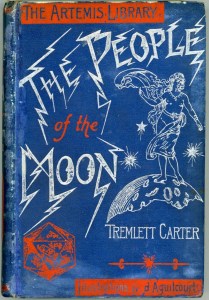 THE PEOPLE OF THE MOON (1895) – Written by Tremlett Carter. An unnamed narrator, a scientist of some sort, sees a glowing 18 inch object floating in the sky. A bird who makes physical contact with the glowing orb is killed by the object’s electric charge.
 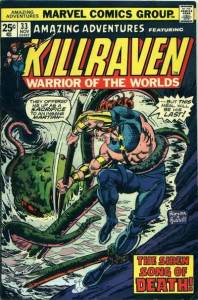 AMAZING ADVENTURES Vol 2 #33 (November 1975)
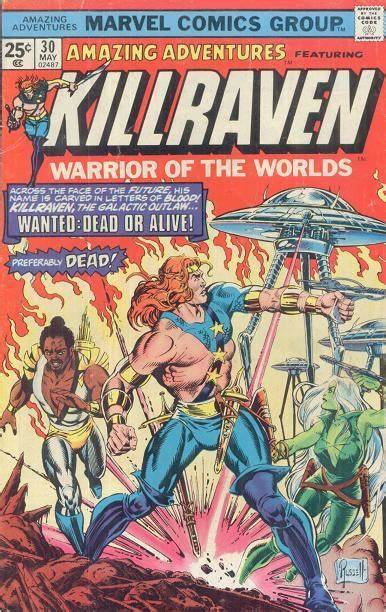 AMAZING ADVENTURES Vol 2 #30 (May 1975)
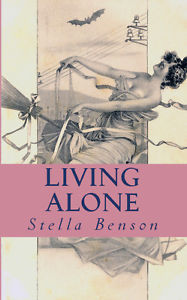 LIVING ALONE (1919) – Written by Stella Benson. This novel is like a World War One forerunner of Bedknobs and Broomsticks. In 1918, during what was then called The Great War, a London woman named Sarah Brown busies herself with War Savings Committee Work.
 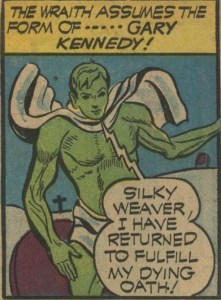 THE WRAITH
  BEATRICE RAPPACCINI
 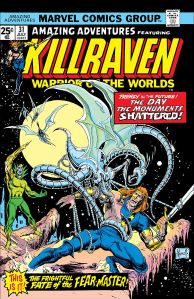 AMAZING ADVENTURES Vol 2 #31 (July 1975)
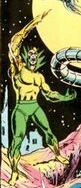 Those pursuers: Atalon – white-shirted human quisling administrator of Death-Birth, the now-destroyed alien fortress where they raised humans like cattle since they eat human flesh – and the Sacrificer, green-clad medical madman who used to prepare those cannibal meals for the aliens, including their favorite delicacy – human infants carved out of their mother’s body shortly before they are due to deliver.
  Balladeer's Blog