
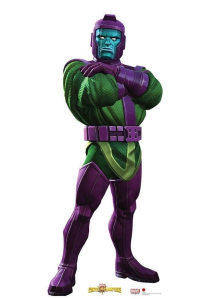
 In the past handful of days Balladeer’s Blog’s 2017 blog posts examining the Marvel Comics villain Kang the Conqueror and some of his other selves like Immortus and Rama Tut have been getting incredible amounts of hits. I looked into it and it turns out that when the latest Marvel streaming miniseries, Loki, ended, the cliffhanger involved Kang and Immortus at Immortus’ castle in Limbo, the realm outside the time stream.
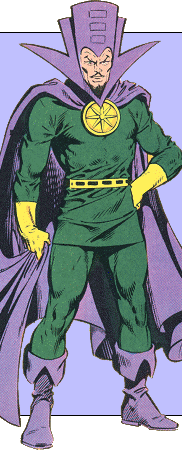 I thought that people were just going to my 2017 blog posts because they had no idea who Kang and Immortus are. Instead, I started getting comments from readers expressing thanks for the clarity of the “Timey-Wimey” nature of Kang’s labyrinthine saga. They said that the people writing the Loki miniseries plopped everything into the far later stages of the Kang/ Immortus stories, bypassing the earlier tales that would help people understand it.
So, in the style of an FAQ, here are the links to my articles which let people in on the Kang storyline from the beginning, through his eventual metamorphosis into Immortus by way of Rama Tut II, the Scarlet Centurion and others. Think of Kang’s various selves like you’d think of the Doctor’s various regenerations on Doctor Who to simplify it. Anyway, here are the links for my reviews of early Kang stories up through the Celestial Madonna Saga. (And with The Eternals movie coming, Marvel may well work the Celestials into their movie universe, too.)
Originally, Immortus wasn’t overseeing a “Sacred” Timeline as much as he was making sure events played out properly to bring on the Celestial Madonna.
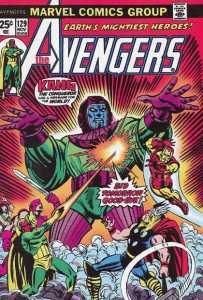 ONE: BID TOMORROW GOODBYE – Kang wants the Celestial Madonna (Mantis, who started out as an Avenger in the 1970s) and reveals she has been the reason he frequently targeted the 20th Century. Agatha Harkness guest-stars, from the years when she was the Scarlet Witch’s mentor. CLICK HERE.
TWO: A BLAST FROM THE PAST – The actual, REAL death of an Avenger as the team tries to stop Kang from obtaining the Celestial Madonna, whose offspring would grant Kang control of all time and space. CLICK HERE
THREE: THE REALITY PROBLEM – The funeral for that first Avenger to be killed in action, plus further investigation into Mantis’ mysterious past to learn how she became destined to be the Celestial Madonna. CLICK HERE. Continue reading

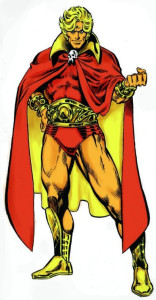 ADAM WARLOCK, THANOS, GAMORA AND THE MAGUS – And speaking of Thanos, and with Adam Warlock having been hinted at since the first Guardians of the Galaxy movie, here’s another 1970s Young Adult Classic from Marvel. Adam took on his vile other self the Magus, his galaxy-spanning 1,000-world empire and Thanos in his first post-Thanos War appearance. Plus Gamora’s very first appearance. Click
 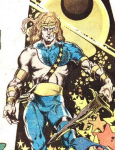 KILLRAVEN – The heroic rebel leader and his Freemen take on Earth’s alien invaders on a war-torn post-apocalyptic world crawling with extraterrestrial tyrants and assorted mutated menaces. Click
 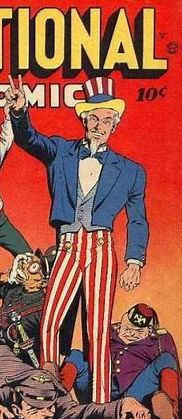 UNCLE SAM
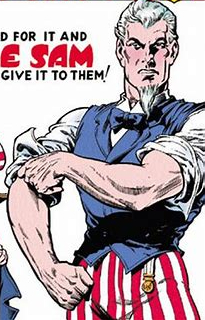 Powers: This hero had Superman-level strength and invulnerability. He could fly in a sense by making enormous Hulk-sized leaps. He had a mystic ability to know where he would be needed. Due to his supernatural nature, Uncle Sam could not be photographed or filmed.
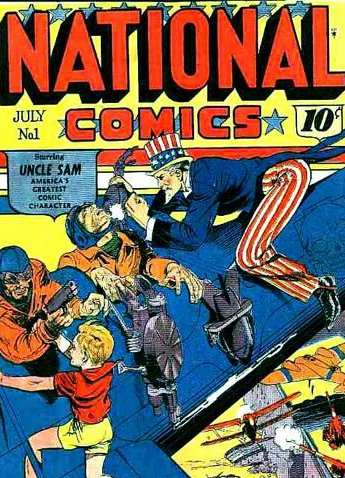 NATIONAL COMICS #1 (July 1940)
 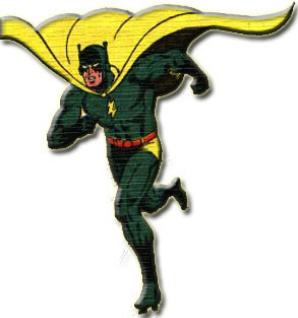 AIR WAVE
  With the big 4th of July holiday coming up, this weekend’s light-hearted bit of superhero escapism will combine some Revolutionary War nostalgia with some World War Two nostalgia. Balladeer’s Blog takes a look at the early adventures of the Nedor Comics hero called the Fighting Yank.
 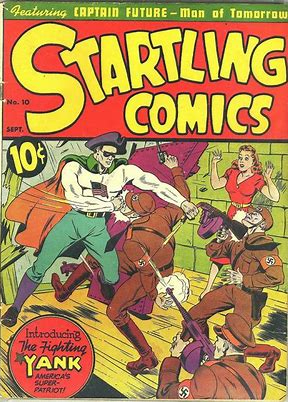 STARTLING COMICS #10 (September 1941)
 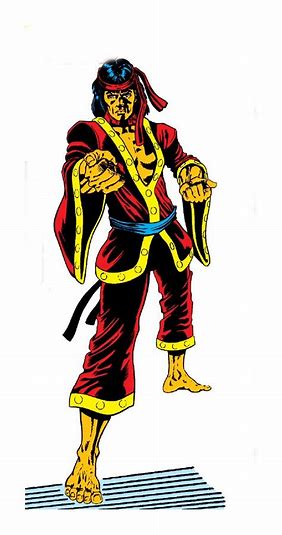 First, a little background information. In the early 1970s Marvel was experimenting with hybrid titles that would combine the old and the new by
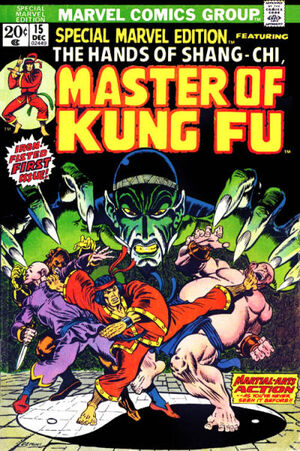 SPECIAL MARVEL EDITION #15 (December 1973)
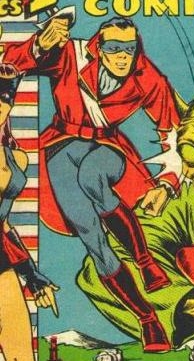 THE SPIRIT OF ’76
 POCKET COMICS #1 (August 1941)
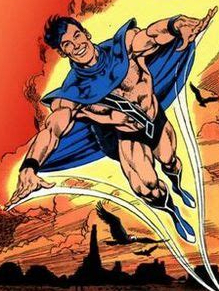 BLACK CONDOR
  CRACK COMICS #1 (May 1940)
  CRACK COMICS #2 (June 1940)
 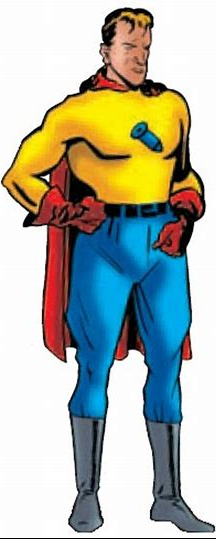 PHANTOM BULLET
 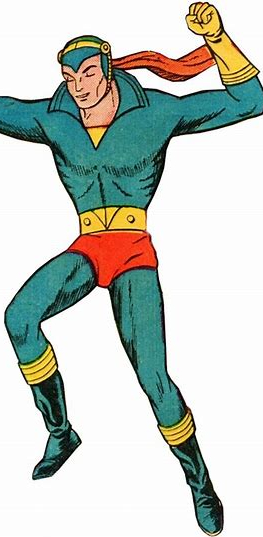 THE THIN MAN
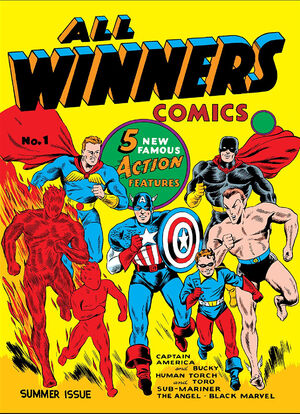 ALL WINNERS COMICS #1 (June 1941)
  Balladeer's Blog