Category Archives: Mythology

VIETNAMESE GOD: NGOC HOANG

ngoc-hoangNGOC HOANG – The Vietnamese equivalent of the Jade Emperor in Chinese mythology. Said in some myths to be the eldest child of Khong Lo and Giat Hai. His actual name is sometimes presented as Ong Troi, though his fellow deities and High Priests are permitted to address him as Thuong De. (But everyone knew him as Nancy for you Beatles fans)
He rules over the Vietnamese pantheon and the heavenly home of the gods – the 18th Heaven above the 18th Heaven (aka the 36th Heaven). He is also in charge of each god and human’s destiny.

While his father Khong Lo was creating the geographical features of the Earth to try to convince Giat Hai to marry him, Ngoc Hoang was creating the animals of the Earth and when he created people, the Twelve Heavenly Midwives (more children of Khong Lo and Giat Hai in some myths) sculpted the faces, as they do today, and these celestial artists take such pride in their work that is why everyone looks different. 

He was also noted for meting out strict punishments when subordinate gods displeased him. Here are some of what I like to call “Don’t Mess With Ngoc Hoang” Myths: Continue reading

6 Comments

Filed under Mythology

THE GREEN HUNTSMAN: CHRISTMAS HORROR FOLKLORE

green-flamesTHE GREEN HUNTSMAN – The Green Huntsman is an interesting example of the many figures who started out as folklore before being committed to the printed page in horror stories.
Long before the short stories featuring the Green Huntsman began to appear around the 1830s the figure was already being conflated with the Wicked Huntsman of Basque folk tales. Joseph Holt Ingraham’s 1841 story titled simply The Green Huntsman is arguably the best known of the short stories.

The figure eventually known as the Green Huntsman has its origins centuries ago. Originally a mortal man, this huntsman was a Castilian nobleman who had a perfect body but a very ugly face. As the tale was inevitably embellished it got to the point where the man freakishly had just one large green eye above the nose of his otherwise handsome face. 

green-flames-2The nobleman was obsessed with tracking down and marrying a mythical woman called the Christmas Bride who could only be found on Christmas Eve. This woman was incredibly beautiful but blind. The Green Huntsman wanted her as his bride not only because she would not be able to see how hideous he was, but, more importantly, she was destined to give birth to a son who would become the New Charlemagne, who would unite all Europe under one ruler. 

Clad in his all-green hunting outfit the Green Huntsman would ride forth every Christmas Eve accompanied by his hunting dogs. One year the whip he used to urge his horse onward contained a hair from the head of the Virgin Mary herself. (Remember, there was a lucrative business long ago in selling fake relics like pieces of wood from the “true” cross, plus the bones or other items from various saints.)

That hair from Christian mythology’s Blessed Mother supposedly would act as a divining rod, and the bristles on the whip would point the way to the Christmas Bride. The Green Huntsman had paid an enormous amount of money to the Pope himself to obtain the hair. Continue reading

6 Comments

Filed under A CHRISTMAS CAROL, Mythology

TEHAINGA’ATUA: A GOD OF BELLONA & RENNELL ISLANDS

FOR BALLADEER’S BLOG’S FULL LIST OF GODS FROM BELLONA AND RENNELL ISLANDS CLICK HERE 

bellona-and-rennel-5TEHAINGA’ATUA – The Chief of the sky gods in Bellona and Rennell (Bel-Ren) mythology. Tehainga’atua ruled the stars, which Bel-Ren astrologers read to determine when (they believed) the sky-god would command particular stars to unleash dangerous seas, rain and thunder storms plus hurricanes. Earthquakes would be unleashed on the two islands by Mahuike, another of Tehainga’atua’s subordinate deities.

Because this deity could dispense or withhold life-giving rains he was often appealed to in rituals. Like Kane/Tane in other Polynesian Islands, Tehainga’atua ruled over wild plant life. Gnetum costatum plants were considered to be “the hair of Tehainga’atua.” 

Tehainga’atua’s parents were the goddess N’guatupu’a and the god Tepoutu’uingangi. In some traditions they are his grandparents instead. His wife (and sister) was the goddess Sikingimoemoe. His children included the god Tehu’aingabenga and other district or clan deities. Some traditions hold that those gods are instead his grandchildren. Continue reading

12 Comments

Filed under Mythology

NOHOILPI: NAVAJO GAMBLING GOD

navajo-territoryNohoilpiThe gambling god of the Navajo, sometimes referred to as the Great Gambler. He is a renegade son of the sun god Tsohanoai.

Nohoilpi came to the Earth and taught his gambling games to the various tribes but soon abused his power by besting them at all of his games of chance and then collecting his winnings by enslaving people to build an entire city to mark his glory. Continue reading

14 Comments

Filed under Mythology

MOANA FANS ARE LOVING THE TALE OF PELE AND HI’IAKA

moana-movie-posterThe hit movie Moana seems to have caused a lot of people to refer each other to my various Polynesian myth articles. A few of them even claim that it feels like my articles (written and posted years ago) may have inspired the creative team behind Moana.

At any rate the extra attention for my highly detailed look at the Hawaiian epic myth about the fire and volcano goddess Pele and her sister Hi’iaka is great.

For readers’ convenience here are links to each of the chapters:  

Pele and Hi'iakaPART ONE: When Pele offends the love goddess Laka that deity takes revenge by causing Pele to fall in love with the mortal Prince Lohiau of Kauai. CLICK HERE 

PART TWO: While Pele remains on Mount Kilauea, the Axis Mundi in Hawaiian mythology, she sends her younger sister the goddess Hi’iaka to the island of Kauai to bring back Prince Lohiau to become Pele’s husband. CLICK HERE 

PART THREE: Hi’iaka and her traveling companions – the fern goddess Pa’u’o’pala’e plus the mortal woman Wahine – encounter men love-struck at the sight of them. Later, Hi’iaka proves her godhood to the Hawaiians with a display of power. CLICK HERE 

PART FOUR: In Pana Ewa Rainforest, Hi’iaka and her companions do battle with an entire legion of mo’o monsters. CLICK HERE 

PART FIVE: Hi’iaka must save her traveling companions from the gigantic shark-monster named Maka’ukui. CLICK HERE    Continue reading

14 Comments

Filed under Mythology

“VIRGIN” BIRTHS IN WORLD MYTHOLOGY

anakin-skywalkerOkay, I hate to go on record defending George “Jar Jar” Lucas of all people but there is one criticism directed at him that I think is unfair. People often accuse Lucas of jamming in a Jesus parallel with the way Shmee Skywalker gave birth to Anakin without any actual father being involved in the process.  

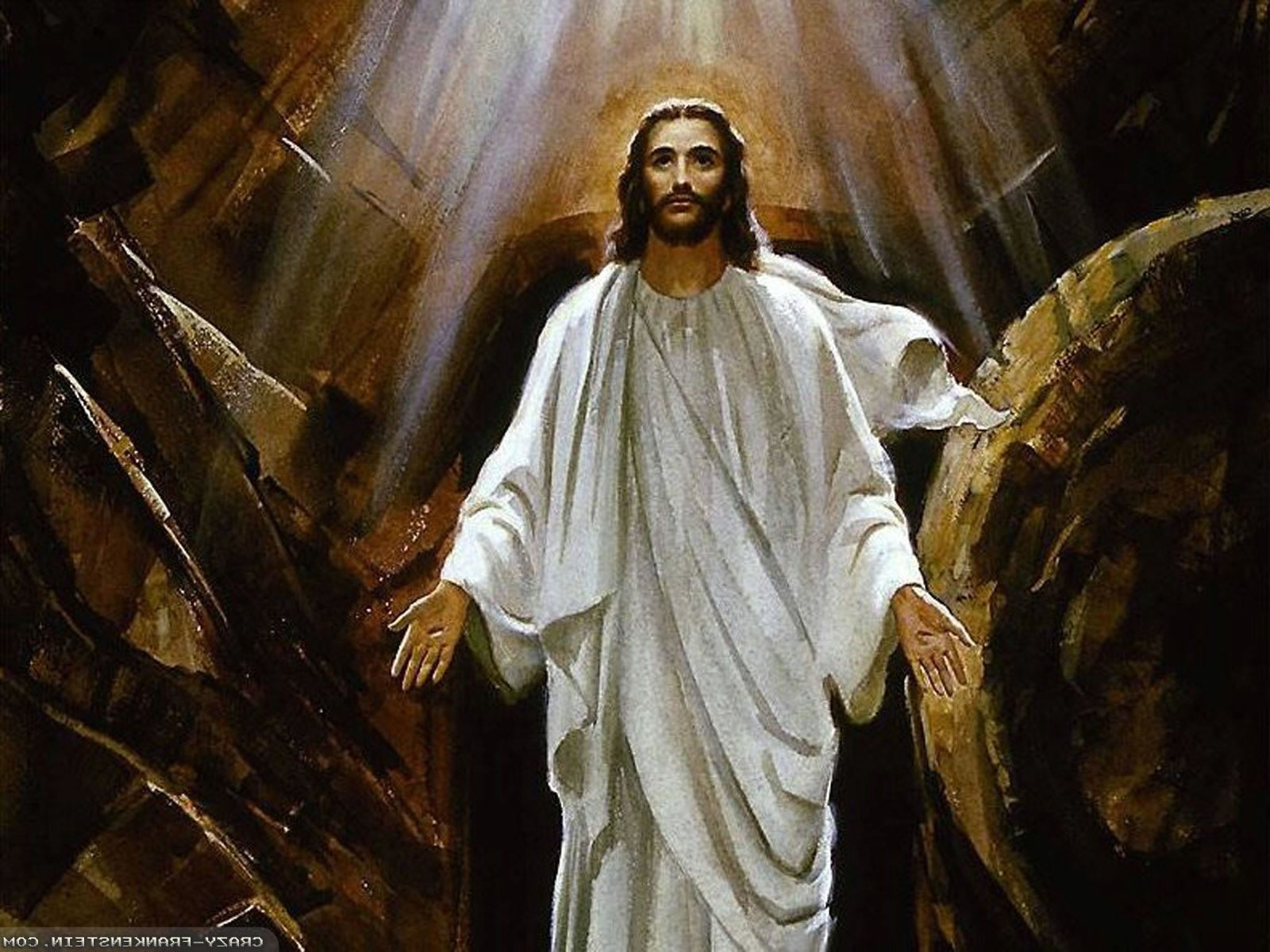
The Christian myth about Jesus’ supposed Virgin Birth is far from the only example of fatherless births in global belief systems. George Lucas was simply keeping Anakin’s story in line with demigod and hero tales from countless other cultures. The concept is not limited to Christian beliefs.

In the tradition of Balladeer’s Blog’s examination of various dead-and-resurrected gods from around the world here is a look at just a few of the mythological entities with births that either downplay the father’s role or omit it entirely.  

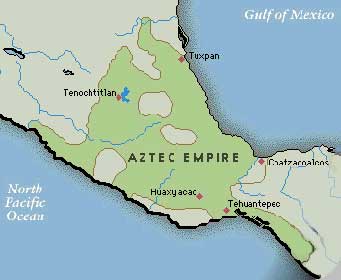
huitzilopochtliHUITZILOPOCHTLI

Pantheon: Aztec  

Birth: Coatlicue, the mother of this national god of the Aztecs was impregnated by a small bundle of dust or feathers that got caught in her vagina.

Her husband Mixcoatl and their other children didn’t buy that story for a minute and suspected Coatlicue of infidelity. Huitzilopochtli sprang fully-grown from his mother’s womb to protect her.  

FOR MORE AZTEC GODS CLICK HERE Continue reading

22 Comments

Filed under Mythology

YAHOLA AND HAYUYA: MUSCOGEE CREEK GODS

Original Creek TerritoryYAHOLA and HAYUYA – These two gods resided in the air and the clouds. They were the guardians of Muscogee people being given training in mysticism and the medical arts. Yahola and Hayuya were the two most prominent of the four Hiyouyulgee, divinities who tutored the ancient Muscogee about the use of fire and various plants, medicinal and otherwise. Yahola and his brother Hayuya endowed people with strength, creative inspiration and magical abilities.

Both deities presided over the Busk Ground Ceremonies, the most important rituals in the Muscogee holiday calendar. Yahola in particular had special sovereignty over curing illnesses and the delivery of children. He was also the patron deity of the intoxicating Black Drink consumed in mass quantities by the Muscogee Creek, who would cry out his name when feeling the effects of the drink he had given to them as a gift.  Continue reading

2 Comments

Filed under Mythology

EKEITEHUA: A GOD OF BELLONA AND RENNELL ISLANDS

bellona-and-rennellEKEITEHUA – (Also called Singano) This major deity was the god of the northwest wind and was also the main district deity of the Iho (Taupongi) Clan, the archrivals of the Kaitu’u Clan since those two clans are the last survivors of the original eight traditional clans.

Ekeitehua’s celestial home was the far-off land called Mungingangi. This home lay on the horizon to the northwest of Bel-Ren and was the source of the Nohotonu Wind, which Ekeitehua controlled. The Bel-Ren people were undecided on whether or not Mungingangi was above the horizon, below it or on some plane equivalent to it.

Ekeitehua was the son of the god Sikingingangi, having been born from Sikingingangi’s feces, which were yams. Ekeitehua’s sister Teu’uhi the goddess of insanity was also born from their father’s feces/yams and their adopted mother was the goddess ‘Iti’iti. Continue reading

4 Comments

Filed under Mythology

ARKOANYO: A GOD OF THE TUPARI

Tupari live near the Rio BrancoARKOANYO – The bird-creating deity who often protected his fellow divinities, especially from the storm god Valedjad. That god often grew so angry with his fellow deities that he unleashed powerful storms on them, sometimes destroying lesser deities who dared to oppose him.

At one point Valedjad grew so angry he caused a storm so powerful it flooded the Earth, killing many of the other gods and goddesses. The surviving deities struggled to devise a way of at last ending Valedjad’s reign of terror. Arkoanyo, the bird-creating deity was the one who took action.  Continue reading

6 Comments

Filed under Mythology

TOP DEITIES IN AINU MYTHS

Ainu mapThe Ainu people of Japan suffered oppression at the hands of the Japanese which was similar to that suffered by various conquered peoples around the world at the hands of the Western World, Russia, China and the Muslim World.

The Ainu migrated south to the Japanese islands from the northern lands of the Inuit. Regular readers of Balladeer’s Blog will recognize the similarities between the Ainu and Inuit belief systems and methods of worship. In addition certain linguistic similarities will be noted between the Ainu and the Japanese. The Shinto “kami” becomes the Ainu “kamui”, to cite the most prominent example. 

As with the Inuit, exact names and aspects of the following deities can vary, with the most pronounced differences being in Saghalien.

  • NOTE: I am still working out my entry on the Ainu bear god. If you know the Ainu then you know that that entry alone may double the size of this article. And as always, anyone curious about my source books can just ask.

RUKORO – The Ainu god of the male privy. No, I’m not kidding. The powerful stench from his domain serves the useful purpose of  fending off evil spirits. Because of his association with evacuation and expulsion of things unclean he is regarded as a powerful exorcist. There is no corresponding goddess of the female privy, owing to primitive taboos about menstruation.

CHUP – The sun god of the Ainu. His wife is Tombe, the moon goddess. Ainu homes orient their sacred window toward the east to greet the rising sun. Until recent decades it was customary to salute the sun upon exposure to its rays, similar to the practice of genuflecting to the center of an altar, but done without kneeling.

It was considered disrespectful to bodily cross the rays of sunlight striking the hearth through the sacred window. It was better to wait until the position of the sun changed. An inau, one of the idols or totems of the Ainu people, would be set up to honor the sun. That inau bears an incised outline of the orb of the sun and during rituals libations and praise are offered up to Chup.    Continue reading

19 Comments

Filed under Mythology