
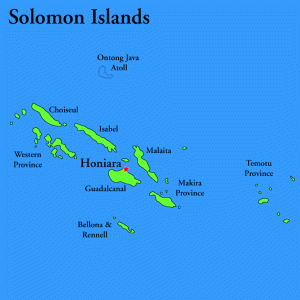
 Balladeer’s Blog’s look at the gods and myths of Bellona and Rennell Islands has proven very popular. (CLICK HERE ) The figure Takitaki is not a deity but he is often considered the Bel-Ren equivalent of the mortal hero Odysseus from Greek myths.
TAKITAKI – This hero of Bel-Ren myths was a very clever thief whose nautical adventures took him all around the Solomon Islands. Sometimes Takitaki traveled in a canoe small enough for one person but other stories feature him commanding an entire crew on much larger vessels. Here is one of the best-known exploits of this member of the Togo Clan:
Arriving at one of the other Solomon Islands after a long voyage from Bellona and Rennell, Takitaki surreptitiously made his way inland until he came across a populated village. The famished hero began stealing taro from one of the gardens.
At length Takitaki was caught in the act by the owner of the garden. A general alarm was sounded and our protagonist ran, stuffing his mouth as he fled. He took shelter in an abandoned home but soon found himself surrounded and besieged by the villagers.
Takitaki wielded his spear so expertly that he finished off the first few villagers who tried coming in after him. The others contented themselves to settle in for a siege, knowing the intruder would have to emerge sooner or later. Takitaki nearly despaired when those surrounding him announced themselves as cannibals who would use him as a meat dish to complement their servings of taro. Continue reading
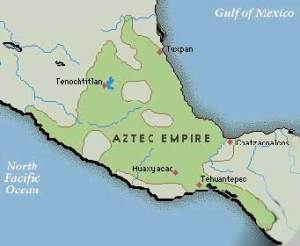 TEZCATLIPOCA – The god of sorcery and human sacrifice as well as the patron deity of thieves and other evildoers. Tezcatlipoca was originally also a war god but his martial attributes were later taken over by Huitzilopochtli. Many myths about Tezcatlipoca involve his conflicts with the wind and culture god Quetzelcoatl, conflicts that even caused the destruction of two of the previous worlds.
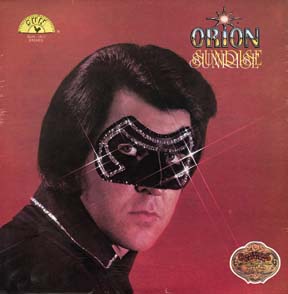
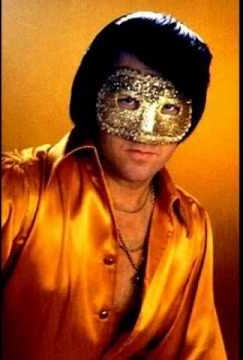
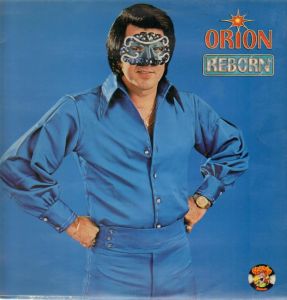 ITEM: Claims are made that enigmatic power players managed to get the novel removed from bookstores. The claims are sometimes accompanied by insinuations that this was done because the book might have struck too close to reality with its “fake death” ending.
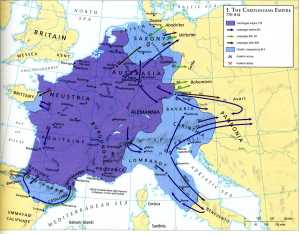 Tradition and folklore hold that Charlemagne was crowned Emperor by the Pope on Christmas, but in real life it apparently did not happen until the following February. Still, Charlemagne’s anointing as Holy Roman Emperor on top of the kingly titles he already held was recounted as a Christmas tale for quite a while.
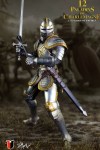 THE TWELVE PEERS – This term was the Charlemagne equivalent of King Arthur and his Knights of the Round Table.
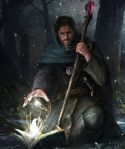 MAUGRIS THE ENCHANTER aka MALAGIGI – This magician was the Frankish equivalent of Merlin from King Arthur lore. Maugris was raised by a Fairy named Oriande and appears in a supporting role in many tales of Charlemagne’s Paladins, often in a mystical disguise.
 BRADAMANTE – This female Paladin was the sister of Reinold de Montaubon. She wore a suit of all-white armor, making her the original White Knight.
 ILAGANIQ – The Inuit hero Ilaganiq was born in the village of Imitchaq, which was famous for being right near the edge of a cliff overlooking the Bering Sea. Ever since he was very young Ilaganiq and his brothers were subjected to extensive physical conditioning by their father.
 NGUATUPU’A AND TEPOUTU’UINGANGI – The parents of many of the major gods and goddesses in Bel-Ren myths, like Izanagi and Izanami in Shinto beliefs. Nguatupu’a and Tepoutu’uingangi were revered AND feared by ALL of the clans of the two islands. They were represented by two large black stones in the region of Bellona Island called Ngabenga.
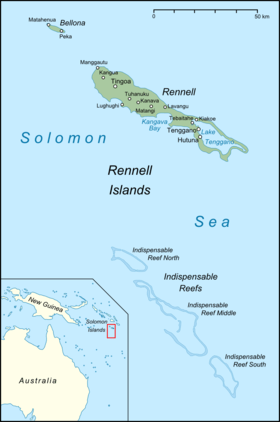 Balladeer’s Blog’s previous look at the gods of Bellona and Rennell Islands has proven to be as popular as my examination of the gods of their fellow Polynesian island groups like Hawaii and Samoa. For the main list CLICK
 Previously Balladeer’s Blog examined the gods and goddesses of the Merina people of Madagascar. This time around I’ll move on to the Betsimisaraka people, the second most populous group in that island nation.

