Category Archives: Ancient Greek Comedy

MERCHANT SHIPS (424-421 B.C.): ANCIENT GREEK COMEDY

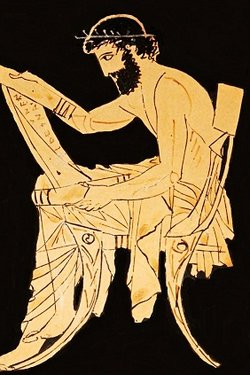
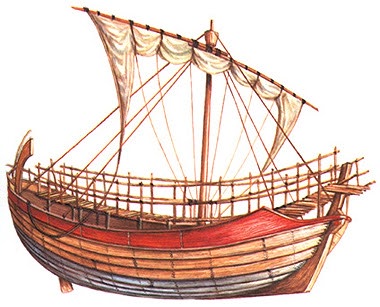
Ancient Greek Merchant Ship

Ancient Greek Merchant Ship

Balladeer’s Blog presents another examination of an ancient Greek political satire. In this case it is one of those works of Aristophanes which have survived only in very fragmentary condition.

MERCHANT SHIPS  

Merchant Ships was written and publicly staged in approximately 424 B.C. to 421 B.C. according to the available data. It was another of Aristophanes’ comedies protesting the pointlessness of the Greek city-states warring among themselves instead of uniting against the encroachments of the Persian Empire.

I can’t help but view this particular comedy in light of my own country’s current plight of having the rival criminal gangs called the Democratic and Republican Parties pointlessly rob the country blind and run it into the ground while virtually ignoring external threats.

In this comedy the captains of two separate merchant ships – one from Athens and one from their foe Sparta – have grown weary of the pointless conflict and make a separate peace with each other. They and their crew members get to spend the play enjoying the food and drink from their cargoes and living out a metaphorical return to the prosperous days before the Peloponnesian War when peace reigned among the various Greek city-states.  

Franchises aka Merchant Ships

Franchises aka Merchant Ships

For a modern-day adaptation (as opposed to a straight translation) the situation could be depicted by having a Chick Fil-A restaurant right next to a Starbucks coffee shop. The managers and employees of these stereotypically Republican (Chick Fil-A) and stereotypically Democratic (Starbucks) establishments could grow tired of the political feuding, especially since both political parties often call for boycotts of the opposing business.   Continue reading
13 Comments

Filed under Ancient Greek Comedy

THESMOPHORIAZUSAE (circa 411 B.C.): ANCIENT GREEK COMEDY

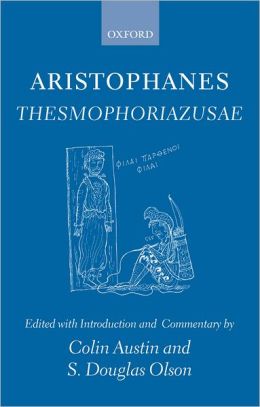
Just one of many translations available.

Just one of many translations available.

This comedy by Aristophanes was one that I was planning on covering very soon when I started posting my reviews of Attic Old Comedy a few years ago. For various reasons it kept falling by the wayside even though its subject matter was surprisingly relevant to ongoing controversies here in present day America, especially on college campuses.   

THE TITLE

The title Thesmophoriazusae has been rendered in different ways over the centuries – as Thesmophoria Women (the most literal translation), as Women Celebrating the Thesmophoria, and even as The Poet and the Women. 

The Thesmophoria was an annual festival in ancient Greece, a festival that marked the myth about the goddess Demeter’s descent into the Netherworld to rescue her daughter Persephone, who had been stolen away by Hades, the god who ruled over the land of the dead. The festival was reserved for women only and was their version of the male initiation rites performed at all-male festivals.

The female celebrants lived in tents on the hill called the Pnyx for the three days of the Thesmophoria, which took place around the time of the autumn crop-sowing.

THE PREMISE  

The premise of Thesmophoriazusae hits so close to home in these days of the repulsive Political Correctness Police that the seeming unlikelihood of it was one of the reasons I kept postponing my examination of it. Its storyline has always seemed to me like it was lifted straight from accounts of any of the countless pro-censorship rallies mounted by various groups of perpetually offended fools on campuses across the country. Continue reading

25 Comments

Filed under Ancient Greek Comedy

MARIKAS (circa 421 B.C.): ANCIENT GREEK COMEDY

EupolisBalladeer’s Blog presents another look at an ancient Greek Comedy. This time around it’s one written by Eupolis who – along with Aristophanes and Cratinus – was one of the Big Three of Attic Old Comedy.

MARIKAS (c 421 B.C.) – This was the second comedy to emerge in the new subgenre of Attic Old Comedy called “the Demagogue Comedy”. Aristophanes led the way a few years earlier with The Knights, his comedy attacking the politician Cleon. The play Marikas finds Eupolis attacking the demagogue Hyperbolus, whose reputation for character assassination by way of overstatement lives on in our language by way of the word “hyperbole”.  

As with most ancient Greek comedies Marikas has survived only in fragmentary form. Those fragments, along with contemporary references in surviving works, provide what is known about the play. Marikas, the title character, was used by Eupolis to represent the politician Hyperbolus the same way Aristophanes had used the Paphlagonian to represent Cleon in The Knights. Continue reading

25 Comments

Filed under Ancient Greek Comedy

CALLIPPIDES (circa 400 BC), THE ANCIENT GREEK COMEDY

Annoy your friends with your pretentiousness: refer to shows like I Love Lucy and Make Room for Daddy as "Parathespian Comedies."

Annoy your friends with your pretentiousness: refer to shows like I Love Lucy and Make Room for Daddy as “Parathespian Comedies.”

Balladeer’s Blog presents another examination of an ancient Greek comedy. Callippides was written by the comedian Strattis and falls into that comic poet’s specialized area: Parathespian Comedies.

Another fun element of our shared humanity with the ancient Athenians who flocked to attend these plays is the fact that even 2,400 years ago audiences were fascinated and entertained by the trappings of “showbiz”. “Parathespian Comedies” were just one of the many sub-genres of ancient Greek comedy but Strattis is the writer most associated with them … by me and the .000001 percent of the population who are into such things.

Yes, a few thousand years before I Love Lucy, The Dick Van Dyke Show, Seinfeld and other such sitcoms the spectators at the Theatre of Dionysus were laughing at comedies depicting what it was like to be one of the performing, writing and singing stars of the Athenian stage. The Parathespian Comedies sometimes featured fictional stars as the characters but would also depict real-life figures of the stage in stories that were either wholly fictional or based on backstage gossip of the time.  

Callippides was based on the real-life actor and megastar of ancient Greek tragedies. In this particular case Strattis presented a very unflattering comedic poke at Callippides, making jokes that depicted him as a William Shatner-esque ham instead of the accomplished thespian he was often hailed as.   Continue reading

19 Comments

Filed under Ancient Greek Comedy

A NEW REVIEW OF AN ANCIENT GREEK COMEDY IS COMING THIS WEEK

Mascot 1It’s very nice to learn that some of you are so fond of my examinations of ancient Greek comedies that you’ve been asking when the next one will be up. I can guarantee it will be this week, thank you. Don’t let the Halloween posts discourage you, my regular topics will still be showing up.  Continue reading

2 Comments

Filed under Ancient Greek Comedy

ANCIENT GREEK COMEDY: COTHURNUS (circa 405 B.C.)

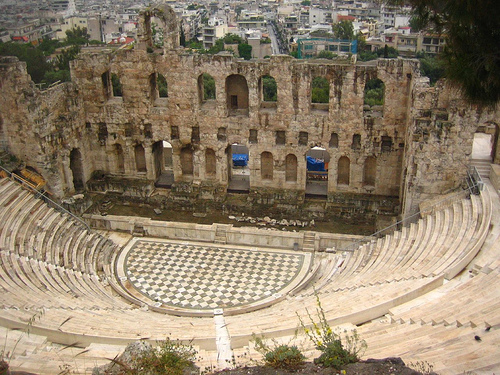
The Ruins of the Theater of Dionysus in Athens.

The Ruins of the Theater of Dionysus in Athens.

Balladeer’s Blog takes another look at an ancient Greek comedy. This time around I’m examining Cothurnus by Philonides, a comic poet who may also have acted and produced for the Athenian stage as well. It cannot be definitively determined if the “Philonides” referred to in those capacities are all one and the same or separate figures.

THE PLAY  

Like most ancient Greek comedies Cothurnus has survived only in fragmentary form and with very few fragments at that. The title refers to a type of footwear of the time period. A cothurnus could be worn on either the left foot or the right foot because of its softness and looseness. Because of this the word “cothurnus” also became a sarcastic term for a politician who tried to position themselves on both sides of an issue, claiming victory no matter which way the political winds blew.

This is certainly another element of Old Comedy that we can still relate to 2,400 years later. Philonides was specifically using this term and this comedy to target Theramenes. To give a comprehensive look at Theramenes’ political juggling act would take too much time, suffice it to say he would flip-flop not just on specific issues but would retroactively claim to have supported whichever side won, would change political affiliations again and again and even set up other public figures to take the fall for his own failures (like arranging for six generals to be blamed and executed for his own part in the Arginusae travesty). Continue reading

23 Comments

Filed under Ancient Greek Comedy

ANCIENT GREEK COMEDY: AUTOLYCUS circa 420 B.C.

Jesse Ventura: Wrestler turned governor of Minnesota

Jesse Ventura: Wrestler turned governor of Minnesota

With the ongoing domestic violence situation with the NFL’s Ray Rice, the fake “drowning rescue” at USC plus the usual number of other scandals plaguing high-profile athletes at the moment this seemed a good time to examine the ancient Greek comedy Autolycus. This play was written by Eupolis who, along with Aristophanes and Cratinus constituted the Big Three of Attic Old Comedy. As with so many comedies of the time period Autolycus has survived only in fragmentary form, unfortunately.

THE PLAY

The title character of Eupolis’ comedy Autolycus was an Athenian athlete who earned a high degree of fame for his performance at the Great Panathenaia in 422 B.C. To simplify the concept the Great Panathenaia was a “local” version of the Olympic games and did not have participants from all over the known Western World.

Like so many figures from ancient Athens Autolycus had both male lovers and female lovers. The plot of this comedy dealt with the way in which Autolycus’ male lover Kallias – a wealthy heir – had begun grooming Autolycus for a run at political office. The play depicted Autolycus (son of Lykon) as being all muscles and no brains, prompting Kallias to insist his lover be “coached up” on politics by one of Lykon’s servants – an erudite man who suffered financial losses and was reduced to the lackey class in Athens.  

Once again we have an ancient Greek comedy with a theme we can still relate to today. On one level we can picture unlikely figures like Arnold Schwarzeneggar or Jesse Ventura successfully winning gubernatorial races despite their public reputations as “jocks” instead of statesmen. On a deeper level the theme of the comedy can also be applied to ANY figures who are deemed politically viable because of their accomplishments in a field COMPLETELY unrelated to the skills necessary to the art of governing.   Continue reading

36 Comments

Filed under Ancient Greek Comedy

ANCIENT GREEK COMEDY: BAPTAE (c: 415-413 BCE)

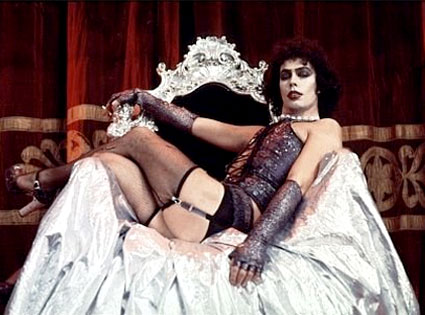
Dr Frank N Furter

Dr Frank N Furter

For Balladeer’s Blog’s latest post on Ancient Greek Comedy I will examine another fragmentary work by Eupolis, who, along with Aristophanes and Cratinus was one of the Big Three of Attic Old Comedy.

BAPTAE was a comedy satirizing the latest faddish belief system to hit Athens: the cult of the Dorian and Thracian goddess Cotyto. Just like Kabala or transcendental meditation and other systems have enjoyed a brief vogue with entertainers and even some movers and shakers various foreign deities would periodically develop a following in ancient Athens. Eupolis was lampooning the fashionable appeal of one such cult and also ridiculed other elements of Cotyto worship as we will see.

The title Baptae came from the fact that the worshippers of Cotyto would immerse or “baptize” their garments in blue, green or purple dye, an expensive and very ostentatious indulgence for the time period. And yes, Baptae and baptizing are from the same root word, since it originally referred to immersion in any liquid, not just water.

The main element of the Athenian version of the cult of Cotyto was the fact that her devotees were exclusively male and all of them DRESSED AS THE GODDESS as part of their rites of worship. Even today we can Continue reading

46 Comments

Filed under Ancient Greek Comedy

EIGHT ANCIENT GREEK COMEDIES WITH THEMES THAT ARE STILL RELEVANT

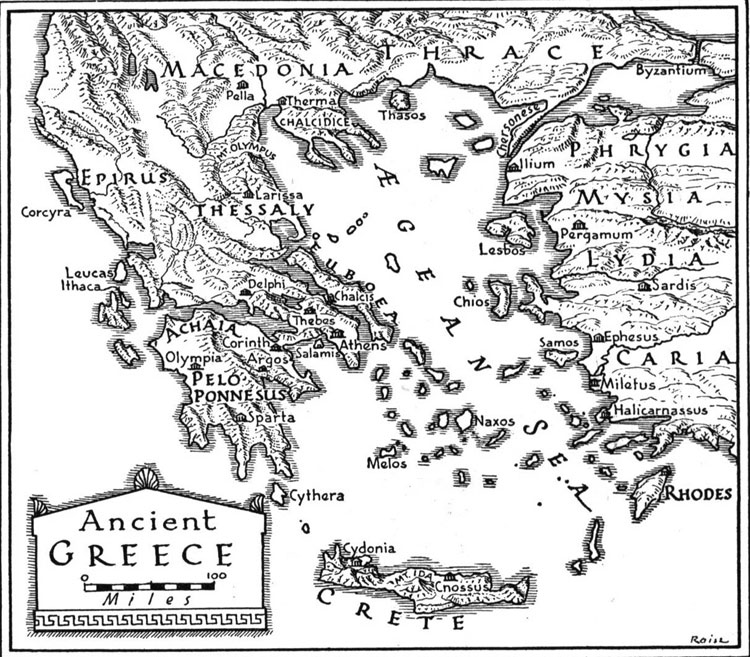
Map

Map

The satirical comedies written and performed during the glory years of the ancient Athenian Democracy still pack a punch after more than 2,400 years. Athens faced many of the same issues and dilemmas we Americans face. Part of the reason for that is the fact that our founding fathers were great students of ancient Greek democracy and modeled some of our own institutions on the Athenian model.

The comedies are also much more sophisticated than modern audiences expect, featuring political views, sexual material and metatheatrical humor that seems several centuries ahead of their time. Breaking the fourth wall is not a postmodern concept like some people have convinced themselves – it was a convention established in these ancient works of comedy.

Irreverence toward any and all subjects – including the gods they worshipped – was permitted by the Athenians in the “anything goes” arena of the Theatre of Dionysus, where the comedies competed with each other at festivals, chiefly the Dionysia and the Lenaea.

TRIPHALLES – By Aristophanes. This comedy was a mythological burlesque and featured the fantastic story of the title character, a man with three penises. Mythological burlesques could be comedies that parodied the story of a specific mythological figure or could simply lampoon the grandiose approach of mythic tales. This would be done by employing the storytelling technique of a sweeping epic to tell a less-than-majestic story. Picture a modern-day grand opera about the John Holmes or Continue reading

124 Comments

Filed under Ancient Greek Comedy

ANCIENT GREEK COMEDY: THE PAGEANT OF LETTERS (C 402 BCE)

Time for another examination of an ancient Greek comedy. In the past several months Balladeer’s Blog has reviewed dozens of examples of Attic Old Comedy. We’ve gotten to appreciate our shared humanity with the ancient Athenians, America’s forerunners in the experiment of democracy, with comedies that dealt with politics, economics, philosophy and irreverence for religion.

This time we’ll deal with a comedy that is more light-hearted for a change, but which deals with a subject that still affects a very large part of the world to Continue reading

74 Comments

Filed under Ancient Greek Comedy