Balladeer’s Blog continues its examination of the science fiction/ existential drama The Prisoner. For Part One, in which I examined the themes and concepts at play in the series click HERE
 Episode Title: DANCE OF THE DEAD
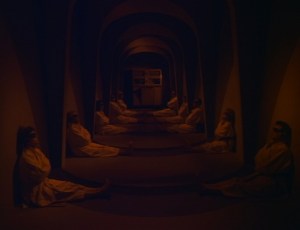
In the eternally-open debate about the exact order of the 17 episodes of The Prisoner I unashamedly hold with those who place Dance of the Dead as Episode Two. My main reason is the fact that the Prisoner himself and other characters bluntly state he is new to the Village.
Plus this episode features him betraying so much lack of awareness of the Villagekeepers’ Head Games and their placement of cameras everywhere that to me Dance of the Dead only makes sense coming immediately after the first episode, Arrival.
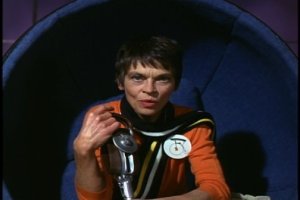 Mary Morris as this episode’s Number Two is one of the most memorable Number Twos in the rotating series of those Village executives. As we all know Trevor Howard was originally slated for this episode but Morris is a more than welcome change.
The title is perfect for anyone with the Prisoner mindset. So-called “mainstream society”, including its bizarre rituals which so many willingly and mindlessly play along with, truly is a Dance of the Dead. Today Facebook and Twitter and social media in general take the whole concept beyond the point of parody.
To me part of the argument for placing Dance of the Dead as Episode Two comes from the way it embodies the television industry problem called Second Episode Blues in which a strong opening episode is often followed by one that is a bit aimless compared to that debut.
Dance of the Dead‘s storyline – fragmented though it may seem – features a nice selection of elements that show up in various combinations in nearly every subsequent Prisoner episode:
“THIS MAN HAS A FUTURE WITH US” – On the literal level it IS true that a talented former Intelligence Agent like Number Six could be an asset to the conspirators behind the Village.
On the allegorical level, the leadership in even the most conformist and oppressive societies stays on the lookout for capable recruits. It’s often the most efficient way of co-opting individuals whose abilities might otherwise lead them to establish rebellions. The Powers That Be can even dangle the carrot of certain privileges not enjoyed by the rest of the population as an added incentive for talented individuals, enticing them to sell out and come over to the side of the ruling class. Continue reading →

 THE CLONES (1973) – This neglected sci-fi item from the 70s was directed by Lamar Card & Paul Hunt, based on Hunt’s story. The Clones falls into that category of films that I always refer to as “X-Movies” because of the way they put one in mind of the paranoid and conspiratorial air of the best X-Files episodes.
  Gregory Sierra, best known to trivia buffs as “And Gregory Sierra” for the number of times he was credited like that in various television shows and movies, plays Nemo, a government agent tasked to keep the clone project a secret and bring in the escapee.
  Episode Title: CHECKMATE … In the ongoing debate about the exact numbering of the 17 episodes of The Prisoner I place this as the 4th in the series.
 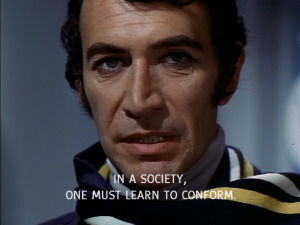 The episode begins with the Prisoner witnessing yet another sudden unleashing of “Rover” the bioelectrical synthetic creation which the Villagekeepers use to subdue outbreaks of disobedient behavior among the Villagers. As usual everyone freezes in their tracks, knowing Rover will attack anyone perceived as resisting.
 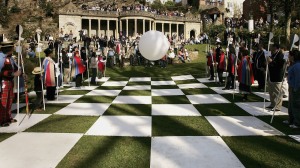 Walking Stick Man invites McGoohan’s character to a game of chess he is heading to. The Prisoner goes along and finds that the game is played with human chess pieces in one of the least subtle of the program’s metaphors.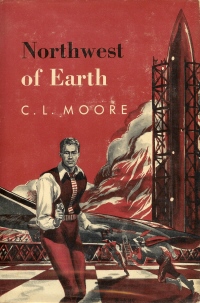
 Here at Balladeer’s Blog I write plenty of items about myths from around the world. I often mention that my blog posts about figures from the American West are along the same lines to me since I think the exaggerated tales of whatever their real-life stories were originate the same way that many religious fables do: the usual human tendency toward superstition and embellishment.
  Episode Title: THE CHIMES OF BIG BEN. In the ongoing debate about the exact numbering of the 17 episodes of The Prisoner I place this as the 3rd in the series. Any comments that I have regarding the Alternate Chimes of Big Ben will be made in this same post.
  Leo McKern’s character’s verbal fencing with Patrick McGoohan is as much fun to watch as Columbo’s cat and mouse games with the murderers on his show. (And yes, I know McGoohan was no stranger to Columbo, both the 1970s series and the later revival.)
 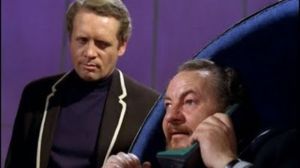 Leo makes it clear that the Village represents the model for the Earth of the future as pursued by highly-placed elements from both sides of the Cold War. He paints a picture of inevitability for the Prisoner in hopes that he can make McGoohan cave in while retaining his sense of personal honor. If a Global “Village” is inevitable there’s no shame in surrendering to it.
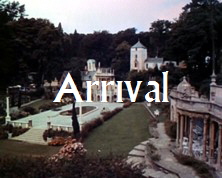 Episode Title: ARRIVAL
  All inhabitants/ captives of the Village are either former Intelligence Operatives like himself, or scientists or figures from the government or military. And from all around the world, too, not just the West.
  OKAY- TECH PROBLEMS SOLVED SO LET’S TAKE THIS BLOG POST FROM THE TOP –
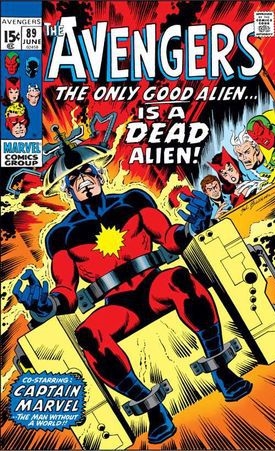
 THE AVENGERS Volume One, Number 89 (June 1971)
