Balladeer’s Blog continues its examination of the many facets of Fool Killer lore.
FOR PART ONE, INCLUDING THE HISTORICAL CONTEXT, CLICK HERE
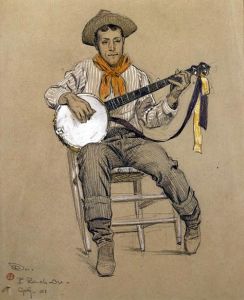
Banjo Player by Maynard Dixon
PART TWENTY-SIX: THE FOOL KILLER (1918) – Last time around I posted plenty of quotes from Mak’s incarnation of the Fool Killer, quotes that would upset both the political left AND the political right here in the 21st Century. FOR THOSE QUOTES CLICK HERE
This time I’ll look at the uniquely stylized America that Mak depicted his Fool Killer traveling through, delivering poetry recitations and lectures plus sharing recipes (?) during down time between slaying fools. Mak’s America seems like a Frank Baum-influenced alternate reality filled with beautiful scenery but marred by politicized religion plus the tyranny of callous tycoons and the elected officials they have in their pockets.
The Fool Killer is followed on his meanderings around the country following the harsh winter of 1916 into 1917 and up through late 1917. Our title figure takes on quasi-chivalric airs and his escapades an urbanized Faerie Queen feel. He spouts original poetry at the drop of a hat but retains the jarring element of violent judgmentalism that afflicts every incarnation of the Fool Killer.
The Klarenc Wade Mak version of the figure seems to regard his mission in a Darwinian way, like he’s a natural force cleansing the land of fools the way that harsh, unforgiving nature inevitably weeds out those too weak to survive. As ever, the delusions of a serial killer taint the high-minded objectives that the Fool Killer pays lip service to.
 Not that our folk figure’s targets don’t deserve to be opposed. This Fool Killer battles the abomination of Child Labor, the profit-mongers who sponsor it AND the Judges who perpetuate it through their decisions striking down attempts to eliminate the ugly practice.
He also champions women’s suffrage and fights for the working class against both the bloated rich pigs who exploit them AND the sleazy Union Leaders who sell out the workers in exchange for privileges that only management can hand out.
Here’s a fuller examination of this Fool Killer’s adventures as he wanders Mak’s Surreal States of America: Continue reading →

 PART TWENTY-NINE – As always part of the fun comes from the way the Fool Killer’s opinions are a mix of today’s left-wing and right-wing attitudes. Some you’ll agree with, others you won’t but it’s always interesting.
  PART TWENTY-EIGHT – Here is a look at some of the Fool Killer’s targets from James L Pearson’s January of 1921 issue of The Fool-Killer. New imagery invoked was of the Fool Killer sitting on a high hill picking off fools as the world revolved around him. (A very odd quasi-Axis Mundi)
  Labor Day weekend is the appropriate time to post this look at neglected working class folk hero Joe Magarac. This figure was the Steel Mill equivalent of Paul Bunyan and John Henry.
  As a lame play on words since this is Labor Day season I’ll present Joe Magarac’s origin and then depict his tales as “Labors” like in The Labors of Hercules.
  PART TWENTY-SEVEN: Here is a look at some of the Fool Killer’s targets from James L Pearson’s April of 1920 issue. As always we find an intriguing mix of attitudes, some of which would please us today or anger us today.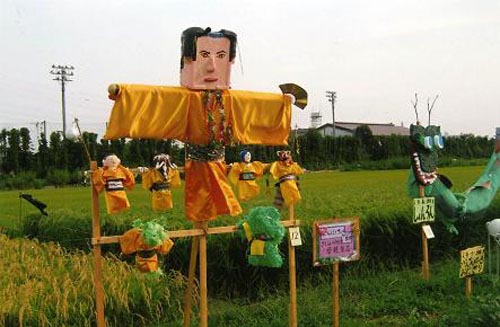
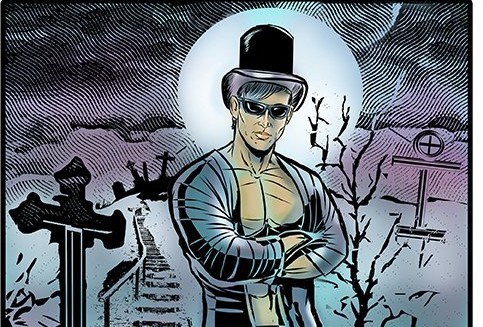
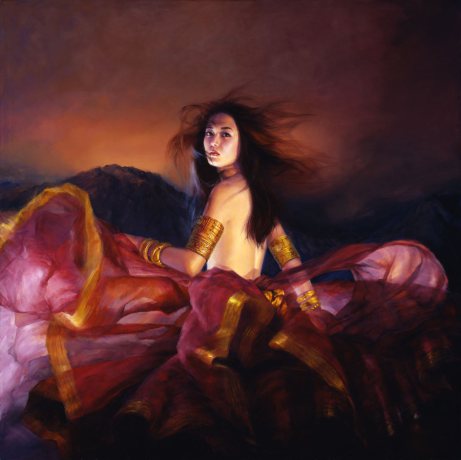
 TALHAE – Also called Tarhae. The wife of King Hamdalpa of Wan-Ha in Yongsong had been married to him for seven years but had yet to produce an heir to the throne. She prayed to the gods for a child and at length she produced a large egg, from which a handsome boy named Talhae emerged.
  Forget Mysterious Dave Mather, most of whose real-life escapades are well-chronicled. THESE gunslingers are little more than names which popped up in occasional newspaper accounts or journal entries. So tantalizingly little is known about them that they’d make great RPG material for those so inclined.
 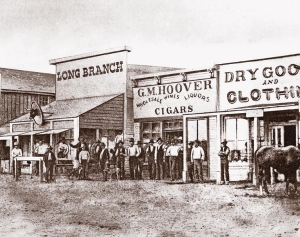 ARKANSAS BILL – A gunfighter who made Dodge City, KS his home base in the late 1870s. Arkansas Bill was sometimes referred to in indignant articles about Western violence written in Washington DC’s Evening Star and other Eastern newspapers. The gunman claimed to be a Bounty Hunter who had slain twenty-two men thus far in his career.
  TUILAKEMBA – This figure was the son of Tuilangi, the god who ruled over the Skyland, and a mortal woman. When Tuilakemba was a little boy he was often ridiculed by the other children for not having a father on hand like they did. One day the young demigod had had enough and threatened to kill his mother unless she told him who his father was.
