 QUESTION: Recently you recapped the saga of Laura Collins the Phoenix from the old Gothic Soap Opera Dark Shadows (1966-1971). Do you plan to review any of the other story arcs from the show?
ANSWER: At this time I don’t but I would emphasize that the original series is always fun to watch for people who like horror, sci-fi and fantasy. Like early Doctor Who episodes, part of the charm comes from the unrefined, seat-of-their-pants, low budget nature of the 5 day a week Dark Shadows.
Even people who aren’t fans of the show seem aware that it featured a vampire, a witch, ghosts and a werewolf. There were also warlocks, a Dorian Gray figure, mad scientists, zombies, an artist whose works came to life because his canvases were made from enchanted wood, plus lots and lots of time travel.
In addition to the aforementioned Phoenix and other tales, Dark Shadows featured two other fun storylines which I’ll summarize briefly:
 The Leviathan Cult: The supernatural Collins family clashed with what was basically an imitation Cult of Cthulhu. Dan Curtis (creator and guiding creative force behind Dark Shadows) made the undersea entity worshiped by the cult be Leviathan from the Bible. (“Try suing us NOW, Arkham House!” I’m kidding.) Other serpentine figures from world mythology were tied to the Leviathans, too, like Nagas.
You know the drill: the Leviathans ruled the world long before the dawn of humanity and wanted to rule it again with the help of their human cultists. The thwarted Leviathans punished Barnabas Collins by returning the curse of the vampire upon him. (In a disastrous move that was up there with New Coke, the show’s creative team had actually had Barnabas cured for a while, but babes just didn’t go for the less-than-smoldering Jonathan Frid without his fangs.)
Even the witch Angelique had given up her evil pursuit of Barnabas for a time and had settled down with wealthy publisher Sky Rumson (Geoffrey Scott of First and Ten). When it turned out Sky was really one of the Leviathan worshipers, the heart-broken Angelique was once again free to stalk the re-fanged Barnabas.
The second of the two storylines came by way of Mary Shelley Continue reading →

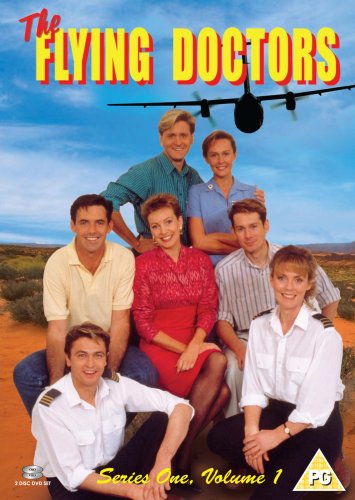 THE FLYING DOCTORS – Not to be confused with The Teleporting Accountants or The Swimming Chiropractors this was a terrific Australian television series about the Royal Flying Doctor Service. The show was based on the real-life Royal Flying Doctor Service of Australia, a brilliantly-conceived non-profit outfit that provided medical care – both emergency AND maintenance – for people who had no other access to doctors due to their locations in remote, lightly-populated portions of the Outback.
  Decades before Bella Swan was torn between a supposedly hunky vampire and a supposedly hunky werewolf in the Twilight novels, female readers of Tiger Beat magazine were torn between Dark Shadows‘ horror heart-throbs. Jonathan Frid’s vampire Barnabas Collins was one and David Selby’s werewolf/ warlock/ Dorian Gray-figure Quentin Collins was the other.
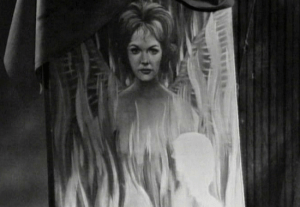
 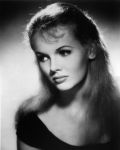 In terms of female horror heart-throbs from Dark Shadows, Lara Parker’s evil witch Angelique is the best known, but obviously this post will address the unusual supernatural menace the Phoenix, aka Laura Collins, played by Diana Millay (right) on the original Dark Shadows.
 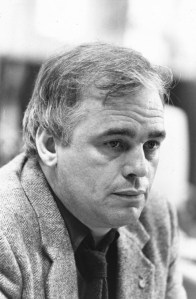 THE MANIPULATORS (1970) – The words “gritty” and “streetwise” seem never to be used when describing vintage television programs from Canada but they certainly apply to The Manipulators (Originally the title was to be The Clients).
 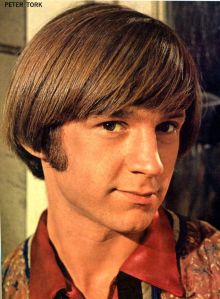 Monkees member Peter Tork is dead. Not since the infamous Day The Music Died has the rock world suffered such a loss. I’m kidding! Still, though, here’s a Balladeer’s Blog goodbye to the one and only member of the Monkees whose name always puts me in mind of the measure of a force’s tendency to produce torsion equal to the product of the force vector and the radius vector from the axis of rotation to the point of application of the force.
 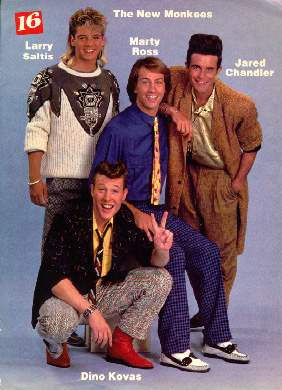 The New Monkees are remembered as the most pointless re-launch of a band in history AND as one of the worst television shows in history. I’ve never listened to their one and only album so I can’t say if they make it a Hat Trick with one of the worst albums in history, too.
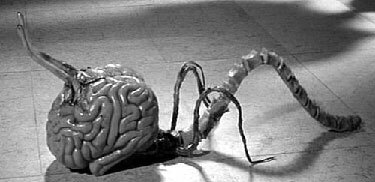 FIEND WITHOUT A FACE (1958)
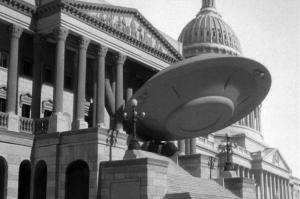 EARTH VS THE FLYING SAUCERS (1956)
 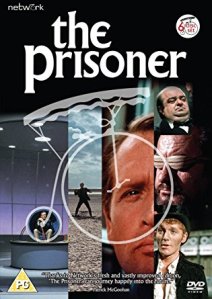 Recently Balladeer’s Blog wrapped up an in-depth examination of all 17 episodes of Patrick McGoohan’s pioneering 1967 series The Prisoner. Before Lost, before The X-Files, before Twin Peaks, there was this innovative British series which was equal parts science fiction and existentialism.
  alladeer’s Blog CONCLUDES its examination of the 1967 science fiction/ existential drama The Prisoner
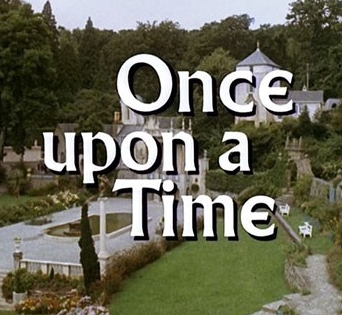 Episode Title: ONCE UPON A TIME … This installment is PART ONE OF THE TWO-PART SERIES FINALE.
  Leo McKern returns as the same Number Two he portrayed back in The Chimes of Big Ben. The Number Twos are the rotating series of executives who manage the prison-city called the Village. The midget Butler (Angelo Muscat), the only character besides Patrick McGoohan to appear in every episode of the series, serves McKern breakfast right there in Number Two’s office inside the Green Dome.
  “Why do you care?” he asks our protagonist when he answers. (I’d have preferred the more specific question “Why do you STILL care?”) McGoohan makes it clear he recognizes the voice and when Number Two asks the same question again he tauntingly replies “You’ll never know.”
 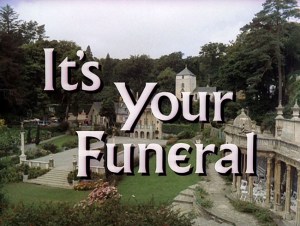 Episode Title: IT’S YOUR FUNERAL … In the ongoing debate over the exact ordering of the 17 episodes of The Prisoner I place this one 3rd from the last.
  It’s Your Funeral centers around an assassination attempt in the Village and features how our main character’s rebellious nature has begun inspiring assorted other Villagers to commit their own subtle acts of defiance to the Villagekeepers.
