
Balladeer’s Blog continues its examination of the science fiction/ existential drama The Prisoner. For Part One, in which I examined the themes and concepts at play in the series click HERE
 Episode Title: DANCE OF THE DEAD
In the eternally-open debate about the exact order of the 17 episodes of The Prisoner I unashamedly hold with those who place Dance of the Dead as Episode Two. My main reason is the fact that the Prisoner himself and other characters bluntly state he is new to the Village.
Plus this episode features him betraying so much lack of awareness of the Villagekeepers’ Head Games and their placement of cameras everywhere that to me Dance of the Dead only makes sense coming immediately after the first episode, Arrival.
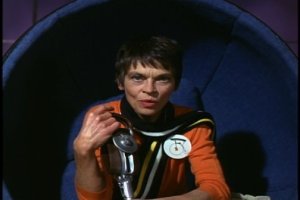 Mary Morris as this episode’s Number Two is one of the most memorable Number Twos in the rotating series of those Village executives. As we all know Trevor Howard was originally slated for this episode but Morris is a more than welcome change.
The title is perfect for anyone with the Prisoner mindset. So-called “mainstream society”, including its bizarre rituals which so many willingly and mindlessly play along with, truly is a Dance of the Dead. Today Facebook and Twitter and social media in general take the whole concept beyond the point of parody.
To me part of the argument for placing Dance of the Dead as Episode Two comes from the way it embodies the television industry problem called Second Episode Blues in which a strong opening episode is often followed by one that is a bit aimless compared to that debut.
Dance of the Dead‘s storyline – fragmented though it may seem – features a nice selection of elements that show up in various combinations in nearly every subsequent Prisoner episode:
“THIS MAN HAS A FUTURE WITH US” – On the literal level it IS true that a talented former Intelligence Agent like Number Six could be an asset to the conspirators behind the Village.
On the allegorical level, the leadership in even the most conformist and oppressive societies stays on the lookout for capable recruits. It’s often the most efficient way of co-opting individuals whose abilities might otherwise lead them to establish rebellions. The Powers That Be can even dangle the carrot of certain privileges not enjoyed by the rest of the population as an added incentive for talented individuals, enticing them to sell out and come over to the side of the ruling class. Continue reading
 Episode Title: ARRIVAL
 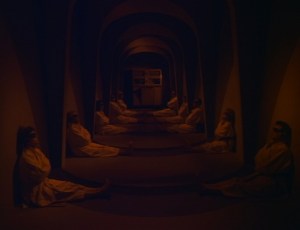 All inhabitants/ captives of the Village are either former Intelligence Operatives like himself, or scientists or figures from the government or military. And from all around the world, too, not just the West.
 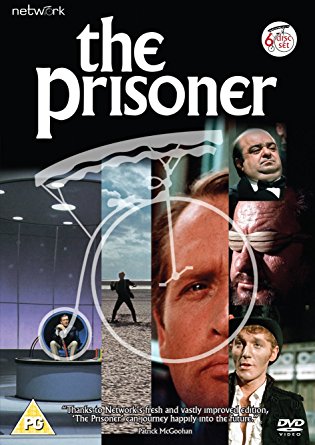 Regular readers of Balladeer’s Blog are very familiar with my high regard for Patrick McGoohan’s 1967 science-fiction/ existential drama The Prisoner. Over the many times I’ve referred to this 17-episode program I’ve heard back from a few readers here and there saying they have heard of the show but never saw any episodes and don’t understand its appeal.
 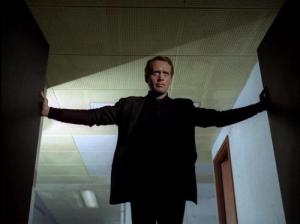 The premise of The Prisoner reflects Patrick McGoohan’s disillusionment and disgust with the way pop fiction romanticized Intelligence Agents, who are actually just government thugs, not heroes. From interviews McGoohan did over the years he seemed to feel a certain sense of personal guilt over his own contribution to that romanticized image, especially from his successful run as Intelligence Operative John Drake on Danger Man and Secret Agent. (His acclaim from those programs was such that Patrick was supposedly approached to play James Bond in Dr No. He declined.)
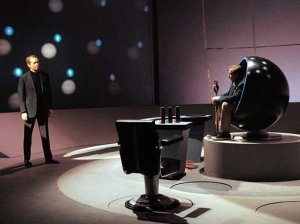 Either way, John Drake or not John Drake, the point is that McGoohan portrays a Secret Agent who resigns from the Intelligence Services in disgust. Soon after, he is gassed into unconsciousness and abducted.

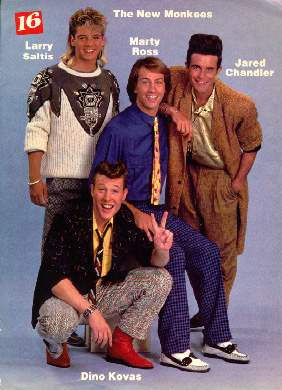 The New Monkees are remembered as the most pointless re-launch of a band in history AND as one of the worst television shows in history. I’ve never listened to their one and only album so I can’t say if they make it a Hat Trick with one of the worst albums in history, too.
 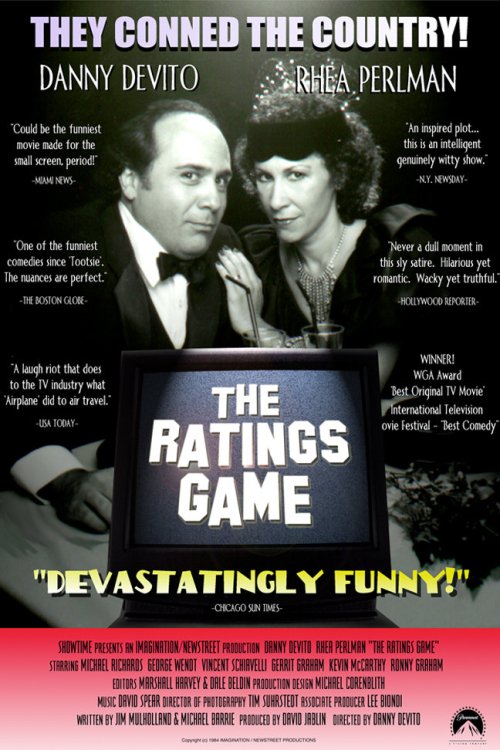 THE RATINGS GAME (1984) – Danny DeVito directed and starred in this telefilm – now being re-released under the vague-to-the-point-of-meaningless title The Mogul, which was produced by Showtime back when they and HBO Films were emerging as a genuine creative force in original content.
  The Ratings Game – written by Jim Mulholland and Michael Barrie – was a perfectly respectable satire on the network television ratings system but it has become unjustly forgotten. The change of title for its latest release seems like a desperate attempt to change the telefilm’s fortunes.
 Usually on President’s Day Weekend Balladeer’s Blog reruns my review of the hilariously bad and weird 1960s superhero cartoon Super President.
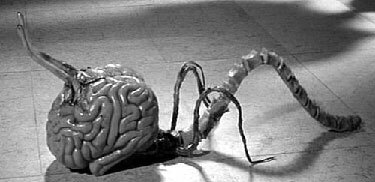 FIEND WITHOUT A FACE (1958)
 EARTH VS THE FLYING SAUCERS (1956)
 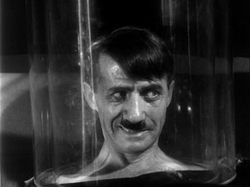 THEY SAVED HITLER’S BRAIN (1963/ 1968)
  Balladeer's Blog