
Balladeer’s Blog’s recurring bit Give Them A Shoutout Before They’re Dead returns with this shoutout for the Go Gos and their song Head Over Heels.
Balladeer’s Blog’s recurring bit Give Them A Shoutout Before They’re Dead returns with this shoutout for the Go Gos and their song Head Over Heels.
Filed under opinion
Balladeer’s Blog’s 2017 post about Revolutionary War Privateer Captain Jonathan Haraden has proven to be a very popular item. Here’s another neglected American Privateer cut from the same cloth. And for the Haraden post click HERE
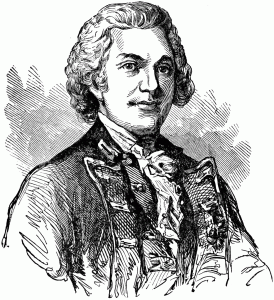 CAPTAIN SILAS TALBOT – Even if he had never gone on to a career in Privateering, Talbot would still have been a fascinating figure from Revolutionary War history. On June 28th, 1775 Silas was commissioned as a Captain in a Rhode Island regiment and served in the military operations which ended with the British surrender of Boston in March of 1776.
During the New York campaign Talbot and a picked crew sailed a Fire Ship into the 64-gun British ship Asia. Under heavy fire from the Asia and with his own craft already burning, Silas was the last man overboard, suffering severe burns which left him temporarily blinded. Talbot was promoted to Major upon recovering and rejoining his unit. Continue reading
Filed under Neglected History, Revolutionary War
With the 4th of July holiday fast approaching here’s a seasonal post: a look at New York’s 4 representatives at the Continental Congress who signed the Declaration of Independence. FOR ALL THE SIGNERS CLICK HERE
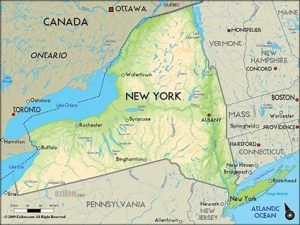 NEW YORK – 1. William Floyd – Prior to being sent to the 2nd Continental Congress in 1776 Floyd was a Militia General who, earlier in the year, had led New York troops in successfully driving off British forces in the Battle of Gardiner’s Bay on Long Island.
2. Francis Lewis – During the war his home was destroyed by the British who also dragged off his wife Elizabeth and imprisoned her. George Washington managed her release by having the wives of two wealthy Philadelphia Tories arrested, then exchanging them for Mrs Lewis. Continue reading
Filed under Neglected History, Revolutionary War
 Author Michael Gingold has collected 450 movie ads for horror films of the 1980s.
The book – Ad Nauseum: Newsprint Nightmares from the 1980s – features more than just the ads of course. Gingold accompanies the ads with anecdotes about what it was like as a filmgoer in the 80s when there was no internet and newspaper ads were one of the major sources for upcoming horror flicks.
The book is available for pre-order Continue reading
Filed under Bad and weird movies

Filed under Uncategorized
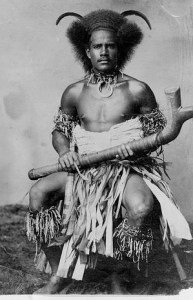 Balladeer’s Blog’s recent look at The Gods of Fiji has been a hit! For another deity from Fiji here is Rokotavo, whom I also went ahead and added to the main article. For more than 20 other gods from Fiji see my blog post HERE
ROKOTAVO – This Fijian god of battle, though technically subordinate to the war deity Rokomoko, plays a much more active role in the myths.
Rokotavo is the general of Rokomoko’s troops, both godly and mortal. Waimoro and Mbau are the centers of worship for these two deities. Continue reading
Filed under Mythology
FRONTIERADO IS COMING UP ON FRIDAY, AUGUST 3rd!
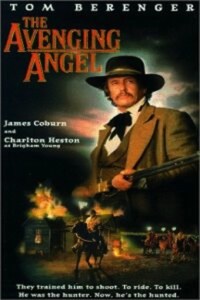 The Frontierado Holiday is about the myth of the Old West, not the grinding reality. The Danites – the gunslinging Knights of the Mormon faith – are an underutilized and underappreciated element of Old West fiction.
The opportunities for action presented to a Danite could start as early as the 1838 Mormon War in Missouri. After that there’s the Illinois Mormon War in the 1840s which ended in the Siege of Nauvoo.
Following that conflict the Mormon Exodus to the West began, with “Deseret” (later called Utah) as the ultimate destination. Danites – like Christian Knights of long ago protecting Pilgrims headed for their “Holy Land” – safeguarded Mormon travelers from attacks by hooded anti-Mormon gangs, from armed outlaws and from various Native American tribes along the way.
 In Deseret itself there were conflicts with Mexican raiders after the end of America’s war with Mexico (1846-1848). Danites would also be called upon to battle various Native American tribes in Deseret, in the role of oppressors rather than oppressed much of the time.
They would also fight Navajo armies to stop them from seizing Paiute Indians as slaves. (The anti-slavery aspect of Mormonism is often overlooked.) Plus the Danites faced the task of driving off armed bands of prospectors wanting the gold and other precious metals of the area.
There was also the Utah War with the Mormons fighting the United States Army from 1857-1858. On top of that add rumored armed conflicts among competing factions of Mormon leaders with the Danites caught in the middle like Mafia gunmen serving their respective “Dons” as it were. Continue reading
Filed under FRONTIERADO
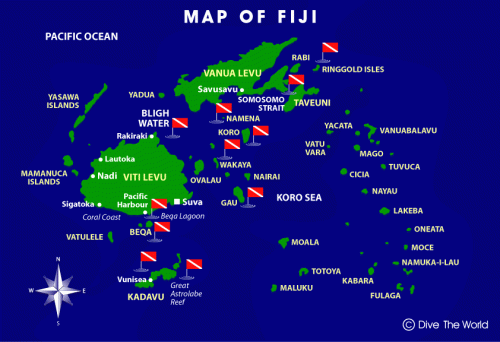 Balladeer’s Blog’s recent look at The Gods of Fiji has been a hit! For another deity for the list here is Vakaleleyalo, whom I also went ahead and added to the main article. For more than 20 other gods from Fiji see my blog post HERE
VAKALELEYALO – One of the entities encountered by dead souls on their epic journey to Mbulu, the land of the dead. Also called Taveta and Thema this deity is often described as “the Charon of Fijian myths.”
As Charon ferried souls across the River Styx, so Vakaleleyalo was the canoe captain who would ferry the souls of the dead from the Rakiraki region across to Mbulu. Continue reading
Filed under Mythology
 Regular readers of Balladeer’s Blog may recall how fond I am of Clive Barker’s novel The Hellbound Heart and the subsequent Hellraiser horror film franchise. Mike LeHan and Paul Gerrard directed and produced a 2013 spec trailer hoping to get a reboot of the series greenlit.
Unfortunately that did not happen, but their trailer shows a lot of work went into it. The depiction of Hell is in keeping with the spirit of the first two Hellraiser movies and the re-imagining of Pinhead is intriguing but not entirely appealing. Anyway, the spec trailer is worth a look if you’ve already read Barker’s The Scarlet Gospels and are starved for more Cenobite material.
Filed under Halloween Season
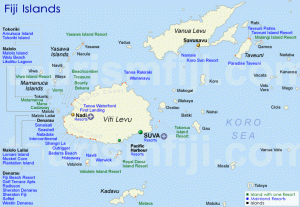 In the past Balladeer’s Blog has examined the gods and myths of Polynesian people in Hawaii, Samoa, Bellona and Rennell. This time around I’m taking a look at the neglected gods of the Melanesian people of Fiji.
NOTE: I am spelling the names of the deities phonetically to make it easier for readers to know how to pronounce them. I’m doing this to avoid the awkwardness of having to remember the odd rules regarding how to pronounce certain consonants.
For instance “Q” is pronounced “ng-g” so with the name of the shark god, spelled Dakuwanqa in that system, I will spell it Ndakuwang-ga so readers don’t have to remember how Q is supposed to be pronounced or that “D” is pronounced “nd”. After all, the Fijians certainly were not using our alphabet prior to contact with Europeans, so I think it’s inefficient to expect readers to remember odd pronunciation rules for letters that the Fijians never used to begin with.
KONOSAU – The god of stillborn infants. Originally born dead to the first Bau woman taken to Rewa, this entity became the patron deity of such offspring. His main temple is called Nai Bili.
NAITONU – The god of nudity. I’m not joking. Naitonu hates the custom of wearing clothing and not only is he constantly naked but he expects nudity from everyone entering his territory – even if they are just passing through. Failure to comply will result in the offender being struck with leprosy.
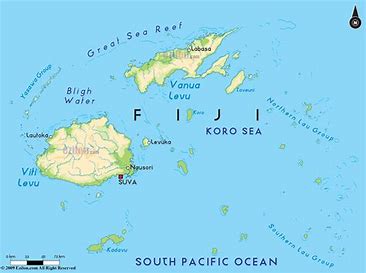 ALEWANISOSO – The patron goddess of travelers and hospitality. Regardless of their tribe, fellow Fijians who reach one of Alewanisoso’s temples can be assured of not being harmed during their stay – usually an overnight one.
Hostility or rudeness of any kind is taboo in her temples and everyone entering is expected to conduct themselves as gently and courteously as they would when wooing a mate.
ROKOMAUTU – A son of the supreme deity Ndengei by his sister. This deity was born from his mother’s elbow as another example of birthing oddities in world mythology. Rokomautu was so headstrong he tried to force even his own parents to worship him.
Rokomautu falls into the mythological category that Balladeer’s Blog’s readers will remember as a Divine Geographer. When Ndengei first created the world the land was featureless, so he sent his son Rokomautu to provide character. The god sculpted the Earth’s various geographic features.
The sandy beaches of Fiji were created by Rokomautu dragging his flowing robe over the terrain. When the god pulled up his robe while walking the land became rocky or filled with mangrove bushes. By some accounts anywhere that he spat a lake or river would form.
Once during a drought in which many were dying, Rokomautu was passing through and used his hair-pin, or milamila, to puncture a hole in a rock from which drinking water then flowed.
SOBO – The goddess of soft breezes on the Fijian island of Thikombia. Her husband Rasikilau, the patron deity of that island, killed their two sons once it became apparent that their strength might rival his some day if he allowed them to live. Continue reading
Filed under Mythology

