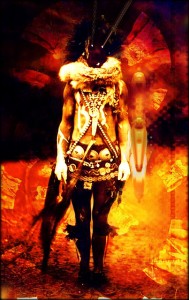
OZIDI – Over the years, Balladeer’s Blog has examined several epic myths from around the world. I’ve reviewed Navajo, Hawaiian, Vietnamese, Chinese, Greek, Roman and African epics. Among the African epics I’ve examined were the Mwindo Epic, the Woi Epic, the sagas of Aiwel Longar, Bakaridjan Kone and others.
For today, the subject is the tale of Ozidi of the Ijo/ Ijaw people in what is now Nigeria. It is another African Epic performed in words and music over the course of several days. Every major character has a musical theme of their own which gets repeated throughout the performance of this epic, a wonderful anticipation of modern-day musical scores for movies.
PART ONE: Among the Orua, the nation’s kingship is rotated among each of its royal clans. (In the popular 1990s adaptations this was instead depicted as the rotating series of political candidates who rise to become the head of state.) It is now the turn of the clan of Ozidi the Elder, commander of the army but Ozidi himself is the second-oldest son and therefore not eligible to become king. Continue reading
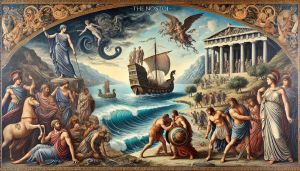 THE NOSTOI aka THE RETURNS is a neglected epic in the Trojan War cycle. It is attributed to Agias or to Eumelus of Corinth. In the Epic Cycle, The Nostoi comes after

 Previously Balladeer’s Blog examined Cypria and Aethiopis, two of the neglected Greek epics. Cypria recounted the events leading into The Iliad while Aethiopis picked up the tale of the Trojan War after the death and funeral of Hector at the end of The Iliad. The neglected epic I’m examining today is Iliad Minor, the next in line chronologically. The author is speculated to have been either Lesches, Thestorides, Diodoros, Kinaithon or even Homer himself.
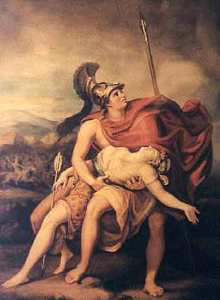 Previously Balladeer’s Blog examined Cypria, the neglected Greek epic myth that dealt with the events leading up to the Trojan War all the way up to Achilles leading the Greek forces in establishing a beachhead at Troy. The Trojan forces were then forced to retreat inside the walls of Troy itself, leaving the outside settlements to be sacked by the Greek forces. This led right into the whole Briseis/Chryseis conflict between Achilles and Agamemnon that opened up The Iliad.
 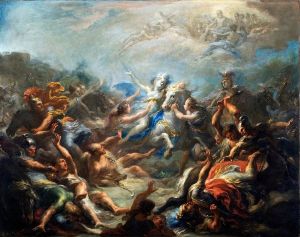 FOUR – A council of the gods is held on Mount Olympus as the goddesses Venus and Juno make their cases for and against Aeneas and his fellow survivors of fallen Troy. Venus argues for them since Aeneas is her son, while Juno retains her position against Aeneas because she wants to prevent the founding of Rome.
 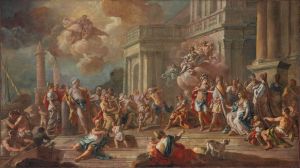 THREE – Aeneas and his fleet of survivors of fallen Troy arrive at Latium in what is now west central Italy. They are made welcome by King Latinus, who offers his daughter Lavinia to Aeneas as a bride per the oracles foreseeing the arrival of strangers possessed of greatness and whose leader he should marry to Lavinia.
 In the past Balladeer’s Blog has examined epic myths from around the world and from many belief systems. Examples include