
 Recent movie news about the latest screen adaptation of The Odyssey happened to make me reflect on the lack of a big screen version of the poet Virgil’s epic The Aeneid. For newbies to the tale, I’m posting this very brief synopsis of the story – the first half a mythic voyage like Jason and the Argonauts and The Odyssey and the second half a tale of warfare as Aeneas leads his fellow survivors of fallen Troy in their mythic conquest of what would become Rome.
Previously, I covered neglected ancient Greek epics about the Trojan War, like Cypria, Aethiopis, Iliad Minor and The Sack of Troy. I mentioned the Trojan named Aeneas and how some Greek sources said he was killed and some said he and a fleet of other Trojans escaped the massacre and sailed away.
Roman legends written hundreds of years B.C. took over from there, linking Aeneas to the founding of Rome after a dangerous journey. Around 19 B.C. to 29 B.C. the poet Virgil wrote The Aeneid to give Rome its very own national epic.
ONE – Aeneas and his fleet search for the place prophesied to be the site of a new nation that the Trojan refugees will found. The goddess Juno (Roman equivalent of the Greek Hera) senses that the great people of this new nation will go on to destroy her beloved Carthage, so she throws assorted obstacles in their way.
Juno gives the sea nymph Deiopea to the wind god Aeolus as a bride in exchange for him causing a windstorm that devastates the fleet of Aeneas. The devastation only comes to an end when the sea god Neptune (Poseidon to the Greeks) intervenes, angry that Juno dared to intrude on his turf.
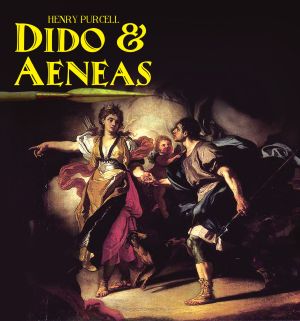 Aeneas gathers the remnants of his fleet along the northern coast of Africa, where Carthage has just been founded by refugees from Tyre. The Carthaginian Queen Dido and Aeneas meet and Cupid causes Dido to fall in love with Aeneas in a bit of irony given what bitter enemies their people will later become.
At a banquet in honor of the Trojans, Aeneas tells the Carthaginians about the Trojan Horse gambit by Ulysses (Odysseus to the Greeks) ending the Trojan War via treachery. The late Hector appeared to Aeneas in a dream and told him to flee with Trojan survivors, which he did after a futile attempt to fight the Greeks.
Our title character goes on to regale Dido and her people with accounts of how he and his fleet first stopped at Thrace, where they find the remains of Polydorus, the youngest son of Troy’s King Priam and realize Aeneas is the sole remaining leader of the Trojan survivors.
From there, the voyagers landed at Delos, where Apollo told them to move on; then Crete, where Aeneas’ new city of Pergamea becomes riddled with disease, forcing the Trojans to evacuate. Next, they tried settling in the Ionian Islands called the Strophades, where the Harpy Celaeno drives them away.
BALLADEER’S BLOG
Following that, our hero and his followers try making a duplicate of Troy at Buthrotum, where Hector’s widow Andromache lives. The ghost of Hector and the prophet Helenus, son of Priam foresee Aeneas’s true destiny. The Trojans move on to look for what is now Italy.
The Trojan voyagers survive the whirlpool Charybdis like the Greek heroes before them, then clash with the Cyclopes Polyphemus. They save the Greek Achaemenides, who had been left behind by Ulysses and has been surviving on his wits since then.
After that adventure, the storm that Juno requested hit the fleet, and so ends Aeneas’s tale to Queen Dido and company about his travels.
*** I’LL MOVE ON TO THE NEXT PART VERY SOON.


Pingback: THE AENEID: FIRST PART – El Noticiero de Alvarez Galloso
Logged, thanks!
How odd! I was just discussing this book, Aeneid, and works by Ovid, particularly Metamorphoses. Glad you still champion classical literature! This shouldn’t be a surprise as you post many classical playwrites. Great post.
Thank you very much for the kind words, Capn! Glad you dropped by! That is quite a coincidence!
Wonderful post as always. I never heard of the ancient epic “The Aeneid” before but found your posts engaging to read. It brought to mind great movies about ancient Greek mythology that I’ve seen and loved. For instance, it reminded me of the film “Troy” released in 2004, Wolfgang Petersen’s movie offered an amazing adaptation of a legendary ancient Greek story.
Thank you! By the way, Troy (2004) features Frankie Fitzgerald portraying Aeneas and escaping the destruction of Troy at the end.
You brought me back to graduate school when I first read The Aeneid. I look forward to your second part forthcoming.
Thank you so much for saying so! Comments like this keep me motivated!