FOR BALLADEER’S BLOG’S SEVENTH PLACE LUDLUM NOVEL CLICK HERE
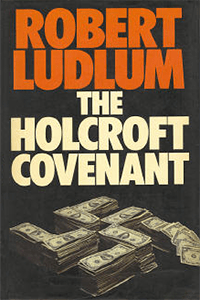 3. THE HOLCROFT COVENANT (1978)
TIME PERIOD: Late 1970s into the near future of the 1980s.
The crowded sub-genre of espionage tales about fugitive Nazi war criminals working with a younger generation of acolytes to launch a Fourth Reich probably reached its height with this Ludlum novel. Every entertaining element of that sub-genre came into play in The Holcroft Covenant, all of them woven into one epic-length story.
Take The ODESSA File, Marathon Man and The Boys From Brazil and roll them in with the Tom Cruise movie Valkyrie plus the real-life files of Nazi Hunters like Simon Wiesenthal. Now stir in Robert Ludlum’s supreme talent for making implausibly melodramatic espionage plots seem chillingly possible and enjoy!
PLEASE DON’T JUDGE THE HOLCROFT COVENANT BY THE HORRIBLE FILM ADAPTATION FROM 1985. THAT MOVIE IS A SILLY AND INEPT BUTCHERING OF THE NOVEL.
HERO: Noel Holcroft, an American architect who is secretly the son of the fictional Heinrich Clausen, a masterful economist whose financial acumen was a cornerstone of Hitler’s Third Reich. Noel’s mother fled Germany when she found she was pregnant and did not want her hated husband Heinrich raising their child. She married an American man who raised Noel with her as if he was his own child.
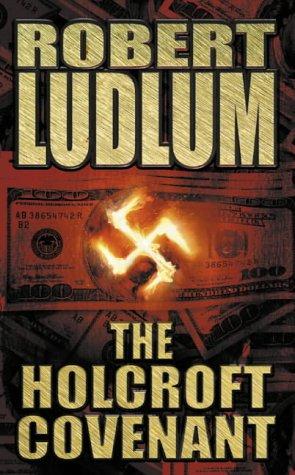 All of that seems like ancient history to thirty-something Noel Holcroft, a successful New Yorker going into business for himself after working as an architect at various prestigious outfits. From out of the blue, representatives from the Grande Banque de Geneve contact Noel about a numbered Swiss Bank Account which his father left to him and the children of two associates.
Holcroft initially wants nothing to do with the bloody, tainted fortune of nearly 900 million dollars but the bankers from Geneva let him read documents from his father. In those aged documents addressed to his then-unborn son, Heinrich Clausen states he regrets being part of Hitler’s organization and – now that he has learned of the ongoing Final Solution at the death-camps – he wants to make amends. The secret account is the tool.
If Noel carries out his father’s wishes, he will inherit two million dollars from the bank account, with the rest going to Holocaust survivors or their families. All of this must be done in secret to prevent the Swiss Bank Account’s funds from being tied up in court for decades by claims against the Nazis from other individuals and nations victimized by the Third Reich.
This story element shows Ludlum at his best: the lure of two million dollars provides the very real incentive to Noel to go along with all the secrecy surrounding this strange Covenant of his father’s. More cynically, readers could say that it actually provides a rationalization for Holcroft to play along.
Our protagonist can assure himself that “Hey, if I don’t go along with this plan then hundreds of millions of dollars will never reach their intended beneficiaries … THAT’s why I’m cooperating, NOT just because of the money coming to ME.” This self-deceiving motive makes Noel Holcroft seem more real than many other Ludlum heroes.
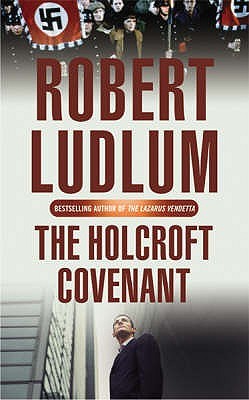 VILLAIN: Johann Von Tiebolt, the son of one of Heinrich Clausen’s cohorts in diverting funds to the Geneva Account. Johann is known to the world at large as John Tennyson and is the designated New Fuhrer who will lead the Fourth Reich.
Yes, as would have been suspected by anyone whose mind wasn’t clouded by the possibility of two million dollars and a life of financial independence, the Geneva Account is REALLY intended for a global network of Nazi descendants and new recruits.
Johann Von Tiebolt/ John Tennyson has emerged as the ideal leader of the conspiracy. Blonde, blue-eyed and in excellent physical condition this New Fuhrer poses as a journalist. That cover lets him roam the world secretly committing political assassinations and otherwise furthering the goals of the gestating Fourth Reich.
SYNOPSIS: The 900 million dollars in the Geneva Account will finance the finalization of the decades-long plans the Nazis’ network has been working on. Those plans are for literal world conquest by way of political, financial and media manipulation. Noel’s father was lying to his son when he wrote about his Covenant. Continue reading →

 CAPTAIN WIZARD
 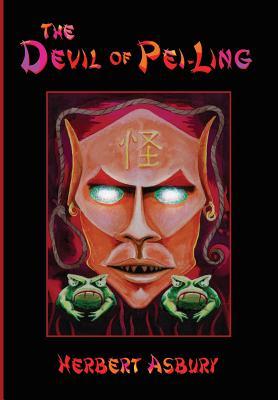 THE DEVIL OF PEI-LING (1927) – This minor masterpiece was penned by the Bard of the Bowery himself, Herbert Asbury! New York Detective Inspector Conroy tries to stop a reign of terror which is in actuality being inflicted on the world by supernatural forces from beyond the grave and from just north of Hell.
 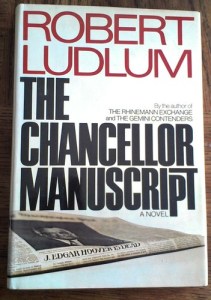 4. THE CHANCELLOR MANUSCRIPT (1977)
  Chancellor’s notoriety also means he gets a lot of conspiracy kooks feeding him “tips” about supposedly real intrigues of varying degrees of believability. Hey, there was no Internet yet, so what do you expect?
  Instead, I’ll deal with the secondary but more active villains: a group of high-level conspirators who go by the code name …
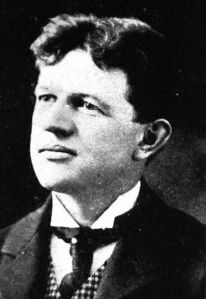 AN INTER-PLANETARY RUPTURE (1906) – Written by Frank L Packard. This work of Science Fiction is set in the far-off year 3102 A.D. Since the year 2532 all of the Earth has been united under one single government, which is headquartered in America’s Washington, D.C. (Yet this was written by a Canadian.)
 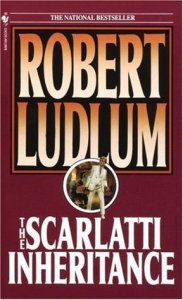 5. THE SCARLATTI INHERITANCE (1971)
  Her heart and loins are finally stolen away by Italian-American Giovanni Scarlatti, a laborer in her father’s factory. Though he speaks broken English, Scarlatti’s mechanical genius is first-rate. The rebellious Elizabeth combines her own business acumen with Giovanni’s aptitude for inventions and before long the two lovers are married and have taken over the companies run by her father and plenty of his friends.
  Balladeer’s Blog spent part of this past summer on a light-hearted, escapist bit of fun by examining the very first Mantis storylines at Marvel Comics. Mantis was brought into the Marvel Cinematic Universe this year in the second Guardians of the Galaxy movie but I reviewed her ORIGINAL appearance and the 1973-1975 Celestial Madonna epic she starred in.
  II. MANTIS 2: NIGHT OF THE SWORDSMAN – Mantis and her romantic partner the Swordsman show up at Avengers Mansion and wind up helping the superteam against one of their old foes. CLICK
 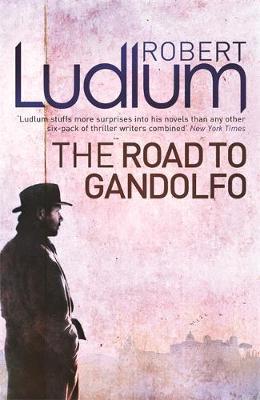 6. THE ROAD TO GANDOLFO (1975)
  VILLAIN: General MacKenzie Hawkins, living legend and a cross between George Patton and Peter Falk’s manipulative CIA agent in the original version of The In-Laws.
 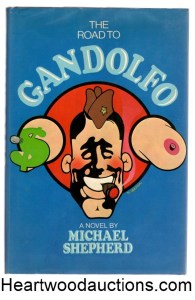 Exiled to a diplomatic post over his tendency to make waves the General’s hard-drinking Bad Boy behavior caused an international incident between the U.S. and China.
  Balladeer’s Blog takes a look at the espionage novels of the late Robert Ludlum. I know it’s odd for me to write about a figure as popular as Ludlum but I’m addressing ONLY his novels in terms of my rankings. Even the novels he wrote under other names.
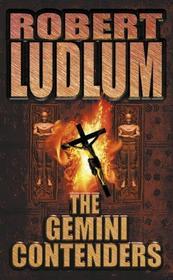 7. THE GEMINI CONTENDERS (1976)
 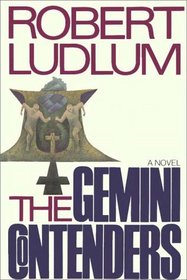 Vittorio was the sole survivor of the family. Sobered up into a more serious worldview over the massacre of his loved ones, Vittorio became a deep cover intelligence agent sabotaging Mussolini’s war effort. His twin sons are the major characters of the 1970s portion.
 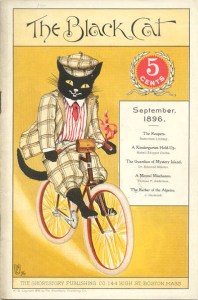 THE GUARDIAN OF MYSTERY ISLAND (1896) – Written by Dr Edmond Molcini. Mystery Island lies off the coast of Maine and everyone near the coast considers the place haunted by a true monstrosity – a large ghost-dog.
