
 UP IN THE AIR AND DOWN IN THE SEA (1863) – Written by William S Hayward, this story was originally serialized in The Boy’s Journal from February to August of 1863. In 1865 it was published in novel form as The Cloud King.
The main character of the tale is scientific adventurer Victor Volans, who has been obsessed with ballooning all his life. During his childhood he would spend untold amounts of time sending up balloons and noting how long they would stay aloft and how far they would travel.
Eventually he moved on to an experiment in which he sent kittens up with a larger balloon, but unfortunately the kittens died from the cold air at the altitude their balloon reached. Little Victor followed up that tragedy by sending up his little brother. The brother survived his balloon trip but the horrified Volans parents angrily forbade Victor from conducting any further experiments.
 Years later, when Volans was a teenager, his parents moved the entire family to California to try to cash in on the Gold Rush. Victor took jobs to earn his own money and returned to his ballooning experiments.
On a test flight in his brand-new balloon, Volans loses control to intense winds which blow him and his aircraft over the Pacific Ocean. Eventually Victor winds up encountering two Lost Worlds somewhere in the Pacific. The first of these is the Region of Eternal Night, where our hero must fend off flying fire beings whose touch can burn humans to death. Continue reading

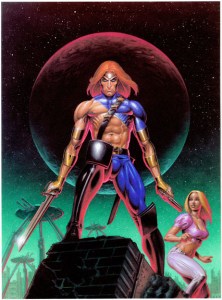 KILLRAVEN GRAPHIC NOVEL (1983)
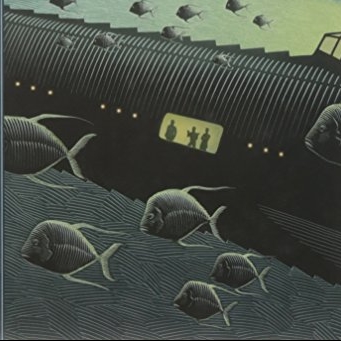
  THE WAR UNDER THE SEA (1892) – Written by Georges Le Faure. This sci-fi work was intended as an escapist societal salve to a French public still smarting from their loss to Germanic forces during the Franco-Prussian War just over two decades earlier.
  Interestingly enough, despite this threat the Germans are not depicted as being any more bloodthirsty than the alleged “heroes” of this story as we will see. Though the Count and his allies prove equally callous about large-scale killing (and worse) their attitude is romanticized and approved of by the narrative since Andre and the others are fighting France’s traditional Continental foes the Germans. Instead of Film Noir think of this novel’s approach as callous enough to be called World Noir. Or at least Politics Noir.
 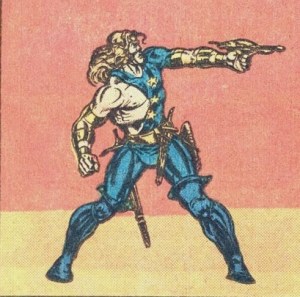 KILLRAVEN GRAPHIC NOVEL (1983)
 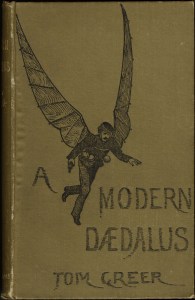 A MODERN DAEDALUS (1887) – By Tom Greer. No, the title’s not referring to James Joyce’s character Stephen Dedalus (sic) but this tale IS about Ireland. The main character is a young man named Jack O’Halloran, a recent college graduate who returns to his native Ireland.
 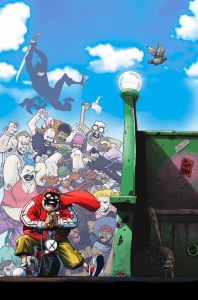 Balladeer’s Blog is telling you this: From now on, instead of BC and AD, years will be recorded in terms of BCG and ACG, as in Before Cash Grab and After Cash Grab. Well, maybe not. But you will always remember where you were and what the weather was like and what you were wearing when you first heard about Cash Grab: The Graphic Novel by Cecil.
  THE SPIDER OF GUYANA (1860) – Written by the team of Emile Erckmann and Alexandre Chatrian. Balladeer’s Blog’s previous looks at ancient works of science fiction have established how far back the “big bug” trope goes. Creature Feature movies were far from the first appearance of oversized insects and arachnids. And atomic radiation wasn’t needed to justify such outrageous mutations.
 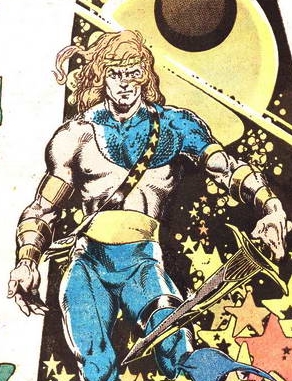 KILLRAVEN: THE GRAPHIC NOVEL (1983) – Killraven and his Freemen continued their guerilla war against Earth’s alien conquerors. In the 7th of its official line of graphic novels, Marvel Comics let writer Don McGregor and artist Craig Russell wrap up some of the storylines left dangling by the cancellation of the 1973-1976 series of Killraven stories. In the previous post I detailed how McGregor had, in the meantime, transferred many of the Killraven story elements and time period to his
 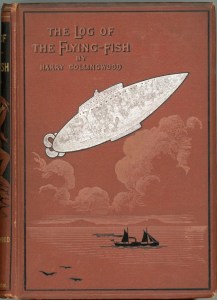 THE LOG OF THE FLYING FISH: A STORY OF AERIAL AND SUBMARINE PERIL AND ADVENTURE (1887) – Written by Harry Collingwood (William J.C. Lancaster).
