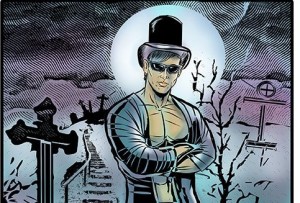
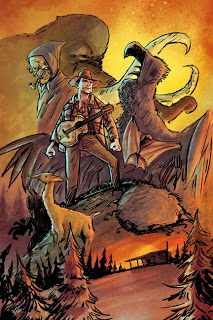
Balladeer’s Blog continues its examination of the many facets of Fool Killer lore. FOR PART ONE, INCLUDING THE HISTORICAL CONTEXT, CLICK HERE
 PART THIRTY-THREE: This latest look at the Fool Killer centers on the February of 1910 issue of James Larkin Pearson’s Fool-Killer. That month’s targets of the Fool Killer (I prefer no hyphen) included:
*** Crooked businessman Charles Wyman Morse, infamous for assorted financial crimes including fraud and corrupt business practices. The previous month Morse had begun his prison term in the Atlanta penitentiary, where one of his fellow prisoners was THE Charles Ponzi, originator of Ponzi Schemes.
*** Three fools in Swain County, NC who used a radiator in the courthouse building to “thaw” a stick of dynamite for blast-fishing. The dynamite “thawed” so well it exploded, destroying the courthouse.
*** News outlets in the pockets of the wealthy, who used those outlets to downplay their plutocratic abuses. (Some things never change.)
*** People who were pushing locations in Pennsylvania, Virginia and North Carolina as “the official birth-place of Daniel Boone.”
*** The people involved in high-stakes card games in Saint Louis. Continue reading
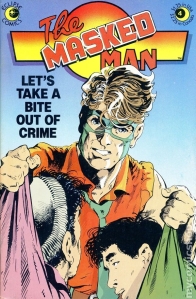 Superheroes continue to dominate pop culture. And not just on the printed page, but on the big and small screens as well. Readers of Balladeer’s Blog are always quick to ask for more superhero entries whenever I go too long without one.
 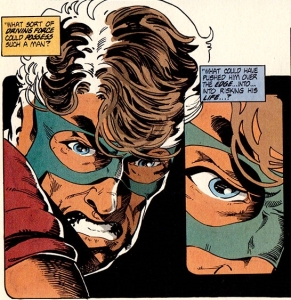 Just as Van Sciver, Meyer and Malin (NOT a law firm) blaze new creative trails today, Eclipse Comics did decades ago, supporting both established names AND new talent, all producing work that the Big Two publishers would have been too corporate-minded to publish.
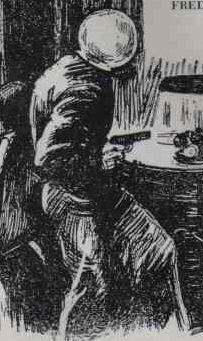 THE SINISTER SPHERE
 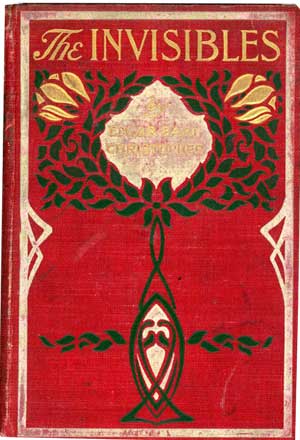 THE INVISIBLES (1903) – Written by Edgar Earl Christopher, this novel nicely anticipates cinematic serials and integrates science fiction and slight occult touches into its storyline.
  The organization can also help the British youth get revenge on Czarist Russia for the torture of his Russian mother years earlier. It turns out that the Invisible Hand is a secret society determined to overthrow the Czars and install a new Russian government.
 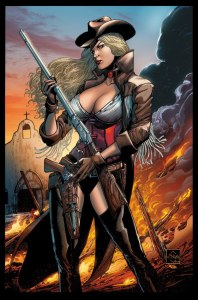 Vestige is one of the most exciting and original graphic novel serials to come along in years. It is currently InDemand on Indiegogo so you can still reserve your own copies.
  An all-star collection of independent comics creators are bringing Vestige to life. ROHAN KUMAR PALL is running the Indiegogo campaign, DONAL DELAY handles the interior art, KYLE RITTER is the colorist and GAT HANZO handles the story.
 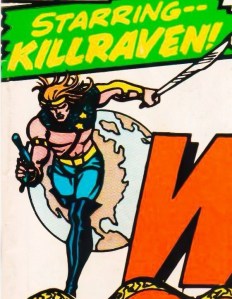 KILLRAVEN: THE END
 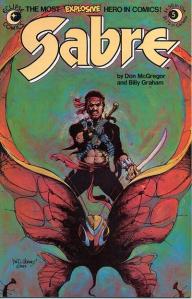 This final Killraven installment will deal with just two issues of Sabre. One that reflects what KR and his band of Freemen would have faced had they reached their Yellowstone Park destination before their 1973-1976 series was canceled, and one that reflects another adventure that the rebellious Freemen might have faced on their long odyssey to Yellowstone.
  PSI CASSIOPEIA, or STAR: A MARVELOUS HISTORY OF WORLDS IN OUTER SPACE (1854) – Written by Dr Charlemagne Ischer Defontenay, a French M.D. and author. Long before J.R.R. Tolkien churned out obsessive amounts of fine detail about his fictional Middle Earth, Defontenay produced this volume of history, poetry and drama from his fictional planets in the star system Psi Cassiopeia.
 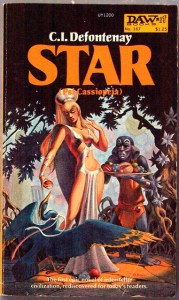 The system where that planet is located is a three-star system. Ruliel is the large, white star at the center, around which orbit the two lesser stars Altether (green) and Erragror (blue). The planet called Star is orbited by large planetoids/ moons named Tassul, Lessur, Rudar and Elier. Throwing all science to the winds the planet is also orbited by a small red star called Urrias.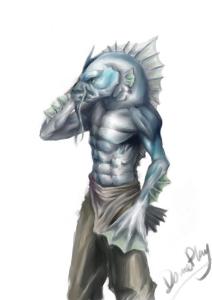
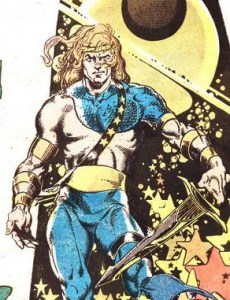 KILLRAVEN GRAPHIC NOVEL (1983)