
 Balladeer’s Blog takes another look at an ancient Greek comedy. Most of my previous examinations of these verse plays dealt with Attic Old Comedy or on what little is known about Susarion, a revered pioneer of stage comedy.
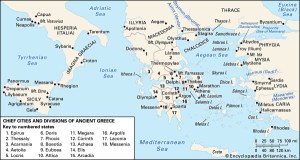
Epicharmus lived from approximately the 530s B.C. to the 440s B.C. He was born in one of the Greek colonies in Sicily, with Megara-Hyblaea, Syracuse or the island of Cos being the three most widely accepted possibilities.
Epicharmus is often credited with adding plots to the comedies but this is sometimes disputed by those touting Susarion instead. Other innovations possibly pioneered by Epicharmus were stock characters like spongers and naïve rustics plus comedic back-and-forth duels of insults or of competing arguments.
The chorus, so important to Attic Old Comedy, was not yet present on stage in Epicharmus’ time, but musical accompaniment was.
Like so many other ancient Greek comedies, the plays of Epicharmus have survived only in very fragmentary form.
THE RUSTIC (No year known) – The Eudemian Ethics refers to the use of rustic figures early on in stage comedies. As we’ve seen in other ancient Greek comedies these rustics were used in two different ways –
 1) As the butts of jokes for their supposed inability to appreciate the sophisticated pleasures of city life and/or for their supposed lack of intelligence.
Or 2) As naïve yet endowed with a common-sense form of wisdom that lets them outmaneuver ill-intentioned city folks who try taking advantage of them or humiliating them. (Think No Time For Sergeants or Beverly Hillbillies B.C.)
In The Rustic the title character is visiting a city and is receiving gymnastic/ athletic training from a menacing instructor called “Knuckles” (Kolaphos). The surviving fragments from this play are so few that even less of the potential plot can be gleaned than from many other ancient Greek comedies. Proceeding fragment by fragment:
“Knuckles moves like the wind.” The trainer is presumably a veritable dynamo, running swiftly, jogging in place, touching toes and other activities of a broadly-drawn athletic stereotype.
“You are making the city the country!” The Rustic is speculated to be failing – or refusing – to conform to citified ways of conducting himself and instead is refashioning metropolitan characteristics to match his rural interpretation of them. Think “SEE-ment pond” for swimming pool. Or maybe “You’re turning New York City into Mayberry!”
Alternately, Laurentianus claimed that turning the city into the country instead referred to lawlessness. Think of a maverick cowboy treating a big city like it’s the Wild West. Or of Crocodile Dundee when he’s in New York. Continue reading
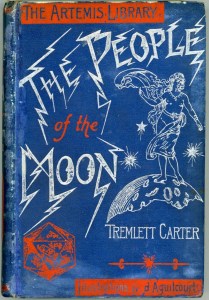 THE PEOPLE OF THE MOON (1895) – Written by Tremlett Carter. An unnamed narrator, a scientist of some sort, sees a glowing 18 inch object floating in the sky. A bird who makes physical contact with the glowing orb is killed by the object’s electric charge.
 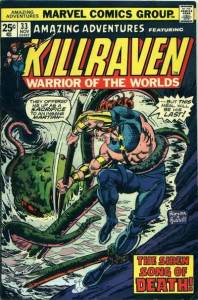 AMAZING ADVENTURES Vol 2 #33 (November 1975)
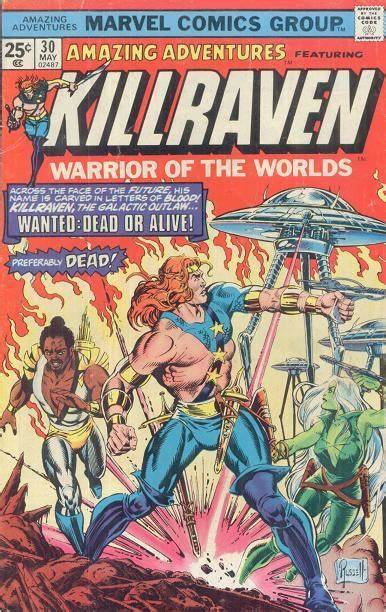 AMAZING ADVENTURES Vol 2 #30 (May 1975)
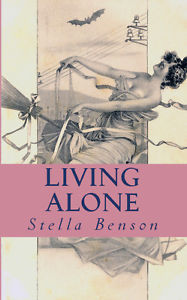 LIVING ALONE (1919) – Written by Stella Benson. This novel is like a World War One forerunner of Bedknobs and Broomsticks. In 1918, during what was then called The Great War, a London woman named Sarah Brown busies herself with War Savings Committee Work.
 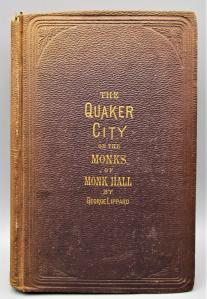 THE MONKS OF MONK HALL aka THE QUAKER CITY (1844-1845) – Written by George Lippard, this strange and macabre story was originally serialized from 1844-1845 before being published in novel form. This bloody, horrific work was America’s best-selling novel before Uncle Tom’s Cabin.
  Think of Monk Hall as a combination of Twin Peaks establishments like the Black Lodge, One-Eyed Jacks and the Great Northern all rolled into one. The vast, multi-roomed Hall is honey-combed with secret passageways and trap doors. Beneath the mansion are a subterranean river plus several levels of labyrinthine catacombs filled with rats, refuse and the skeletal remains of the Monks’ many victims from the past century and a half.
 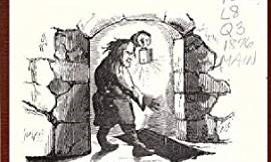 DEVIL-BUG – The deformed, depraved and deranged bastard offspring of one of Monk Hall’s members and one of the many prostitutes who are literally enslaved there. Devil-Bug has spent his entire life in the Hall and has no other name. He is squat, incredibly strong and grotesquely ugly with one large gaping eye and one small, withered, empty socket on his face.
 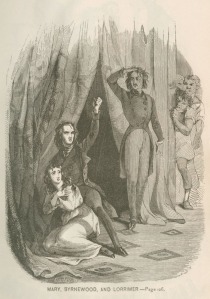 Master of an occult method of eternal youth, Ravoni has been alive for over two hundred years. (The novel repeatedly says just two hundred years, but the villain refers to having been present at the Saint Bartholomew’s Day Massacre, which happened in 1572, so it has to be longer)
 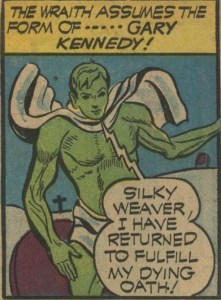 THE WRAITH
  BEATRICE RAPPACCINI
 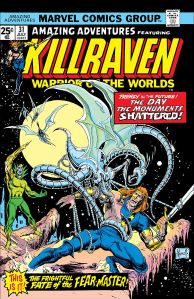 AMAZING ADVENTURES Vol 2 #31 (July 1975)
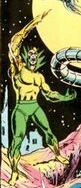 Those pursuers: Atalon – white-shirted human quisling administrator of Death-Birth, the now-destroyed alien fortress where they raised humans like cattle since they eat human flesh – and the Sacrificer, green-clad medical madman who used to prepare those cannibal meals for the aliens, including their favorite delicacy – human infants carved out of their mother’s body shortly before they are due to deliver.
 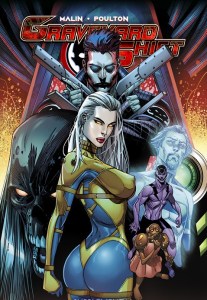 Halloween month continues here at Balladeer’s Blog with a look at the first two volumes of Graveyard Shift, the “monsters as superheroes” sensation drawn by THE Jon Malin and written by Mark Poulton.
  Graveyard Shift Volume Two featured the team taking on the reborn menace of Dracula himself and his legions. The first two installments raised six figures each on Indiegogo and it is presumed that the third volume, expected in 2020, will continue that trend.
  Balladeer's Blog