
For this superhero-crazed world Balladeer’s Blog continues its examination of B.C. Boyer’s neglected 1980s superhero the Masked Man. For Part One click HERE
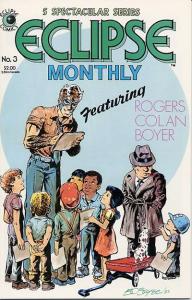 ECLIPSE MONTHLY Vol 1 #3 (October 1983)
Title: The Birth
Villain: The Gypsy King
Synopsis: We open on the Masked Man leaving police headquarters after just having defeated and brought in the Jackson Gang. He is being swamped by reporters asking how he subdued the entire gang, the source of his abilities, the dangers of his vigilante career, etc.
 At last our hero manages to get away from the mob and heads home to the apartment of his alter ego, private detective Dick Carstairs. With him as he arrives home is his newspaper reporter friend Barney McAlister, who publicizes the Masked Man’s deeds while keeping his secret identity confidential.
Dick wants to catch some sleep, anticipating another drab day at the routine tasks of a P.I. the next day. Unfortunately, African American reporter Dan Drekston has dug up the Masked Man’s secret identity and tracked him to his apartment. Continue reading
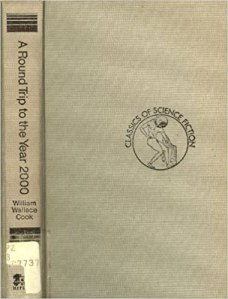 A ROUND TRIP TO THE YEAR 2000 aka A FLIGHT THROUGH TIME (1903) – Written by THE William Wallace Cook, this story was originally serialized in Argosy magazine from July through November of 1903.
  Since Lumley was already on the verge of ending his life anyway, he agrees to be the human guinea pig for Dr Kelpie’s time-car. Just as he’s driving off to the future, however, the relentless Detective Klinch shows up and leaps into the vehicle beside our hero.
 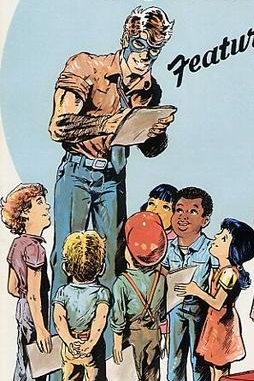 ECLIPSE MONTHLY Vol 1 #2 (September 1983)
  In this issue of Eclipse Monthly, the Masked Man (Dick Carstairs) once again shared the large book with stories featuring Steve Ditko’s superhero Static and other Eclipse characters. Our hero’s friend, newspaper reporter Barney McAlister relates another of the superhero’s adventures, like Watson did with Sherlock Holmes.
  PART THIRTY-FOUR – The Fool Killer’s targets in the March, 1910 issue of James Larkin Pearson’s four-pager included:
 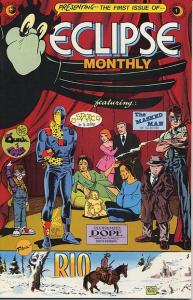 ECLIPSE MONTHLY Vol 1 #1 (August 1983)
 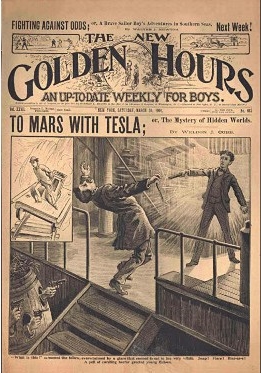 TO MARS WITH TESLA (1901) – Written by Weldon J Cobb, To Mars With Tesla (not to be confused with To Hell With Alexander Graham Bell) momentarily turned the”Edisonade” sub-genre of science fiction into a “Tesla-ade.”
  That intern sees most of the action and is supposedly a distant relative of Thomas Edison. Young Edison relays messages between his scientist bosses and this makes him a frequent target of the nefarious schemes of the villainous Heinrickson, a mad tycoon who has evil designs on the planet Mars.
 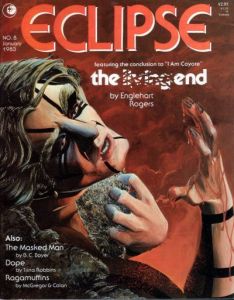 ECLIPSE MAGAZINE Vol 1 #8 (January 1983)
 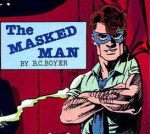 Like an old west gunfighter, the Masked Man’s fame has motivated plenty of would-be tough guys in the criminal ranks to try making a name for themselves by killing him. Even a few random wackos try their hand at bumping off our hero, convinced that it will bring them notoriety and a fortune when they sell the book and movie rights to their story.
 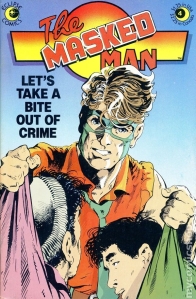 Superheroes continue to dominate pop culture. And not just on the printed page, but on the big and small screens as well. Readers of Balladeer’s Blog are always quick to ask for more superhero entries whenever I go too long without one.
 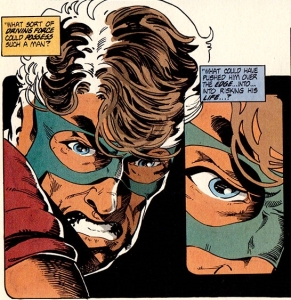 Just as Van Sciver, Meyer and Malin (NOT a law firm) blaze new creative trails today, Eclipse Comics did decades ago, supporting both established names AND new talent, all producing work that the Big Two publishers would have been too corporate-minded to publish.
 THE SINISTER SPHERE
  Balladeer's Blog