
Balladeer’s Blog continues its examination of the stories of pulp heroine Jirel of Joiry, the Medieval French woman-warrior created by female author C.L. Moore in 1934. For the first story click HERE.
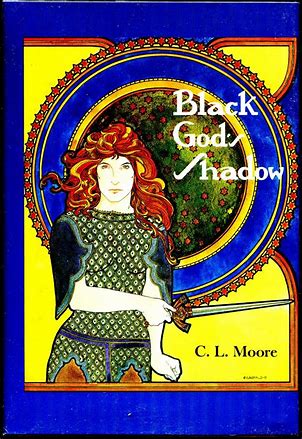 BLACK GOD’S SHADOW (1934) – This was Moore’s sequel to Jirel’s debut story Black God’s Kiss. We pick up an unknown amount of time after the conclusion of the previous tale. Jirel has been having recurring nightmares and visions ever since she killed Guillaume the Conqueror, the man she belatedly realized that she loved.
Of late the nightmares and visions have been intensifying to the point where our heroine is becoming convinced that Guillaume’s soul must be trapped in the hellish netherworld where she herself acquired the weapon she used to kill him. Castle Joiry was immediately evacuated by Guillaume’s troops in their panicked, superstitious reaction to the supernatural death of their leader.
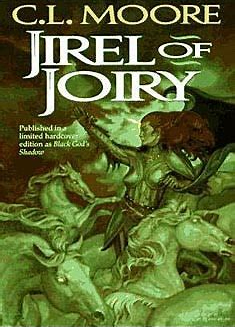 Order had since been restored in the castle but Jirel’s sleep has not been the same. As she lies tossing and turning, she ponders the various lovers she had taken over the years, none of whom took the hold over her heart and thoughts that Guillaume did.
Determined, she armors up, takes a sword and knife with her and sets out to somehow free Guillaume’s soul by daring to reenter the hellish domain that lies far beneath Castle Joiry. Continue reading
 JIREL OF JOIRY – From 1934 to 1939, the female author C.L. Moore wrote six stories featuring Jirel of Joiry, a sword-wielding woman warrior from late Medieval France. Moore’s
 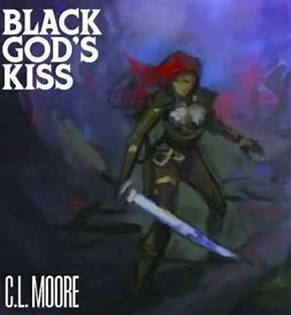 BLACK GOD’S KISS (1934) – This debut story opens with Castle Joiry having for once suffered the fate that Jirel had forced upon so many other strongholds: its armies defeated and their commander, Jirel herself, taken prisoner.
 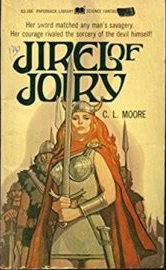 NOTE: Since so many people are still so into the Game of Thrones universe picture a fully armored Jason Momoa as Guillaume and for Jirel picture a fiery combination of Arya, Daenerys and Brienne with Sansa’s long red hair.
 For several years here at Balladeer’s Blog I have been trying to track down, watch and review all of the film versions of Hunterwali (Whip-wielding Woman), Bollywood Cinema’s butt-kicking masked female heroine. Often glibly dismissed as a female Zorro, there is much more cultural context to the Hunterwali figure – contextual significance that goes beyond the particular time period of each film version.
 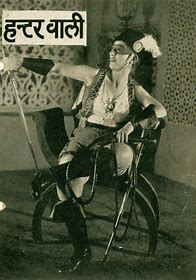 Thus far I have been able to watch the 1935 original, which starred the actress billed as “Fearless Nadia” in India, and the 1988 Hunterwali. I have had no luck tracking down the 1959, 1972, 1977 and 2017 movie versions. Nor have I been able to buy the 1943 film, Hunterwali Ki Beti (Hunterwali’s Daughter), the very first sequel movie in Indian entertainment history.
  The basics of the Hunterwali story involve Princess Madhuri adopting a masked, whip-wielding and stunt-riding identity to combat the many injustices inflicted on the kingdom by her father’s evil Vazier Ranamal. That villain even imprisons the king and lusts after Madhuri, little realizing she is really the swashbuckling “protector of the poor and punisher of evildoers” called Hunterwali.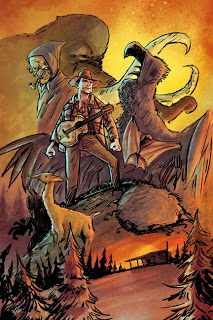
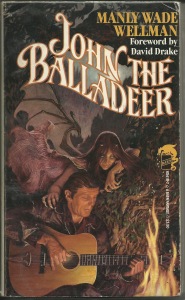 The Old Gods Waken deals with Silver John performing with other musicians at a music festival, then getting drawn into a property line dispute between the Forshay family and two sinister British men calling themselves Brummitt and Hooper Voth. As usual in our hero’s travels there are dark supernatural forces at work behind this boundary dispute – forces ultimately dealing with Pre-Columbian entities and transplanted Druidism.
  With the movie Shang-Chi and the Legend of the Ten Rings trickling out, assorted readers have been asking me if I’ll do a blog post about the character. I did one back in June, but the release of the movie wound up getting delayed. Below is the link to that blog post in which I examined the first twelve Shang-Chi stories in the 1970s.
 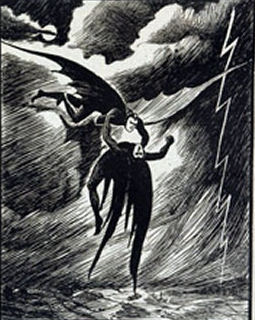 THE WINGED MAN – From Great Britain’s renowned story papers came the Winged Man. British story papers, like Dime Novels and Pulp Magazines, were text stories peppered with a few illustrations. The Wonder, an Amalgamated Press publication, debuted in 1913 and among its offerings was the tragic tale of the Winged Man, whose first story was titled Twixt Midnight and Dawn (the hero’s favorite time to dispense vigilante justice).
 The mysterious Winged Man was “a strange genius” whose real name was never revealed. He possessed such inventive brilliance that he created a suit complete with working wings which allowed him to fly.
  THE JOKER – Time to examine another neglected Pulp Hero in the tradition of Balladeer’s Blog’s looks at the
  For Flashman Down Under, Flashman in the Opium War
 The Action: Sir Harry Flashman and his wife Elspeth visit British Guiana right after their American Tour ended in August, 1876. A combination of Her Majesty’s Government’s interests and Flashman’s own hunger for large amounts of filthy luchre to sustain his and Elspeth’s grand new lifestyle wind up launching the British blackguard into his latest adventure.
  Daniel Craig has been the face of James Bond since Casino Royale’s 2006 premier
  For Flashman Down Under, Flashman in the Opium War & Flashman and the Kings click
 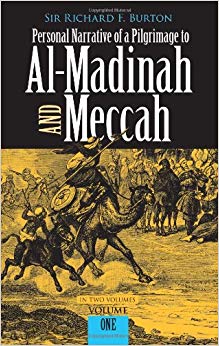 The duo enjoy diving into the darker and more forbidden side of life where sex, booze and other diversions are concerned. Flashman happens to be with Burton in Egypt in early 1853 when the famous explorer begins his journey to Medina and Mecca disguised as a Muslim.
  Balladeer's Blog