
 Recently Balladeer’s Blog covered Robert E. Howard’s stories about his overlooked characters James Allison and Turlogh Dubh. This time around I’m taking a look at another neglected creation of Howard, best known for his Conan, Kull and Solomon Kane stories.
 EL BORAK – This character’s real name was Francis Xavier Gordon, an old west gunfighter from El Paso, Texas, who wound up traveling much of the world outside of the United States. Gordon settled in Afghanistan where his prowess with swords and pistols made him a tolerated outsider and earned him the nickname El Borak.
That epithet means “The Swift” and was a reference to Muhammad’s mythical flying horse the Buraq. F.X. Gordon was renowned for his fast draw, swiftness with a scimitar and quick-wittedness. Robert E. Howard seems to have patterned El Borak along the lines of real-life figures like Lawrence of Arabia or Nicholson of India, but with the distinctly American touch of the character’s gunslinger past.
Let’s dive into these action-packed sword and pistol adventures.
 THE DAUGHTER OF ERLIK KHAN – First published in the pulp magazine Top-Notch in December, 1934. El Borak was hired by a pair of scurvy Britishers to guide them to a nonexistent captive friend of theirs. They secretly plan to loot the treasure of Mount Erlik Khan in the city of Yolgan.
That city was avoided by even the most daring Afghani tribes because its pre-Islamic origins lay in outright devil worship and the Satanic priests were still the ruling caste of Yolgan. When the treacherous Brits lay a trap for El Borak after they no longer need him, then leave him for dead, he sets out for revenge.
The former wild west gunfighter infiltrates Yolgan and comes across a former lady love named Yasmeena. In the years since their last meeting, she had married a Kashmir prince, but when he proved abusive, she fled him. That prince has offered a fortune to any who will return Yasmeena to him so that he may torture her to death. Continue reading
 THE GREY GOD PASSES – This was technically the first appearance of Turlogh Dubh but the story was not published until long after Robert E. Howard’s suicide in 1936. That publication came in 1962’s Dark Mind, Dark Heart. The other two Turlogh stories were published in 1931.
 MARCHERS OF VALHALLA – Ironically, this tale which introduces James Allison was never published during Robert E. Howard’s lifetime, even though the two follow-up stories were. We meet James Allison, a man living in early 1930s Texas.
 Well, after last week’s
 CONAN THE BARBARIAN Vol 1 #58 (January 1976)
 This blog post will review the first meeting of Conan and Belit, then Marvel’s depiction of their first shared adventure (featuring an imaginative “fan theory” regarding why Conan was also called Amra) and finally, the sorrowful finale of the longest romance of our Cimmerian’s life.
 The Marvel Comics run of stories based on Robert E. Howard’s Conan character from 1970-1993 helped maintain the character’s place in the public consciousness after the end of the Pulp Magazine era.
 CONAN THE BARBARIAN Vol 1 #46 (January 1975)
 Before long he passes through the village of Sfanol, where he sees the inhabitants about to burn at the stake a beautiful young woman named Stefanya.
 Our hero saves Stefanya from this fate and learns she was being burned for her service to the late sorcerer Zoqquanor now that he is no longer alive to protect her. The panicked woman tells Conan that they must retrieve Zoqquanor’s body from the ruins of his castle, which was leveled by the same superstitious villagers who tried to burn her alive.
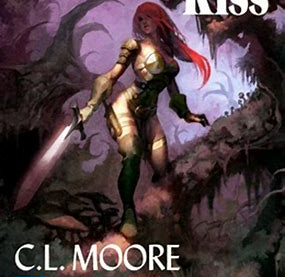 An alert reader reminded me that I did not remember to put up a blog post with links to all my reviews of female author C.L. Moore’s six Jirel of Joiry pulp stories from the 1930s. Here is that collection of links in one convenient blog post.
 Mickey Spillane’s hard-boiled private “detective” Mike Hammer first appeared in the writer’s debut novel I, The Jury in 1947. Spillane filled the Hammer stories with scandalous – for the time period – violence and sex. Critics frowned on the hundreds of millions in book sales that followed but readers continue to make the many Mike Hammer novels a success to this very day.
 MICKEY SPILLANE’S MIKE HAMMER (1954) – This was a failed pilot for what would have been the first Mike Hammer television series. Brian Keith starred as the title dick (as it were) while Blake Edwards wrote and directed, years before his Peter Gunn series.
 THE MOST TERRIBLE TIME IN MY LIFE (1993 in Japan, 1994 in the U.S.) – Masatoshi Nagase IS Maiku Hama, the Japanese rendering of the name Mike Hammer. This unusual film, directed and co-written by Kaizo Hayashi, is in black & white for all but the final 20 minutes.
 HELLSGARDE (1939) – Sadly, this is the last of C.L. Moore’s Jirel of Joiry adventures, but the character gets to go out on a high note. The handsome but treacherous Guy of Garlot ambushes twenty of Jirel’s soldiers and imprisons them in the dungeons of Castle Garlot.
 QUEST OF THE STAR STONE (1937) – It’s crossover time! C.L. Moore decided to do a story in which her two most famous pulp creations –
 THE DARK LAND (1936) – In her tower bedroom at Castle Joiry, Jirel lies in bed, mortally wounded while leading her men at the Battlefield of Sorrow. A pike wound in her side has grown infected and the weak, delirious warrior woman is surrounded by her chambermaids, all of them weeping over their lady’s condition.

