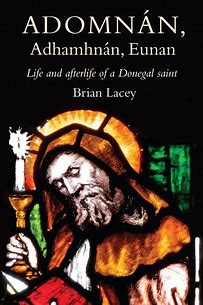
 THE VISION OF ADOMNAN – Dated to the late 600s A.D., This was a tale of the vision that Saint Adomnan supposedly had during his lifetime (c 679-704 A.D.). Several centuries before Dante’s Divine Comedy (Inferno, Purgatorio, and Paradiso), The Vision of Adomnan depicted the future saint being conducted through Heaven, Purgatory, and Hell so that he could share this “vision” with others.
Dante was guided in a different order by the dead poet Virgil, but Adomnan is being guided by his Guardian Angel.
I. On the Feast of Saint John, Adomnan feels as if he has died and his Guardian Angel leads him through the Afterlife. The first stop in Heaven is the Land of the Saints, a realm of eternal fair weather where dwell the saints, all of them clad in white cassocks with white hoods.
Oddly, the saints are placed according to the four cardinal directions – those who were from the north when alive dwelt in the north of the Land of the Saints, those who were from the south when alive dwelt in the south of the Land of the Saints and so on.
Positioned the closest to God in the center of the realm are the Virgin Mary and the Twelve Apostles, then come the other significant figures in Christian beliefs. Angels are all around, and the music of bird-choirs is always heard.
The innermost circle is where sits God’s throne, formed like a canopied chair with four columns of precious stones supporting it. Three birds are perched on the throne, staring in adoration at God while they mark the 8 canonical hours. Along with birds, horses are also depicted in Heaven. Continue reading →

 THE FOURTEEN-YEAR POKER GAME – This legendary poker game in all likelihood never really happened but has come to embody the early 20th Century wildness of Thurmond, WV. During America’s coal boom Thurmond attracted the wealthy including mine and railroad tycoons. It became such a hub of gambling, drinking, prostitution and partying that it’s been called the Las Vegas of its era.
  THE FEAST OF BRICRIU (Fled Bricrenn) – The Book of the Dun Cow version of this tale is dated to around the 700s A.D. and is considered the forerunner of the story of Sir Gawain and the Green Knight in British legends.
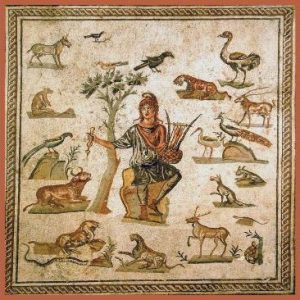 When we left off last time, Medea’s Aunt Circe had informed her that in order to stop the vendetta the Furies were waging against her, Jason, Orpheus and the rest of the Argonauts Medea must be purified from the taint of betraying her father and killing her brother through rites performed by Orpheus and the Meliae – the ash-tree nymphs who nursed the infant Zagreus (in this Orphic version).
 Having obtained the Golden Fleece, Jason, Orpheus and the rest of the Argonauts fled Colchis immediately on board the Argo. King Aeetes’ daughter Medea fled with them because she fell in love with Jason and defied her father to enable the theft of the Golden Fleece.
 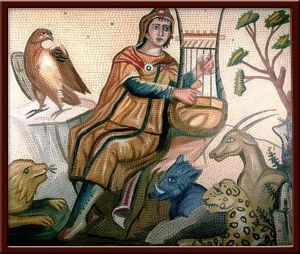 King Aeetes had to break off pursuit so he and his crew could fish up the various fragments of his son’s corpse for proper funeral rites.
  As the Argo pulled into Colchis, King Aeetes and his family – including his daughter Medea – observed their arrival. The Royal Family was on hand because of a dream that the goddess Hera had sent to Aeetes regarding foreign forces that would take Medea across the seas.
  THE BAKARIDJAN KONE EPIC – Djeli, the poet-historians of the Bambara people for over 300 years, would often recite, chant and sing this epic myth while playing their stringed instruments called ngoni.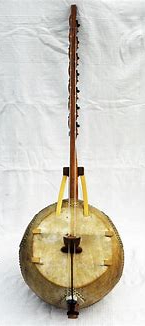
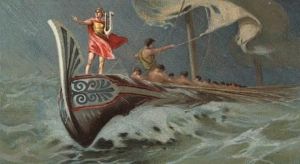 With the Titaness Rhea placated by the funerary rites, libations and games that the Argonauts dedicated to her slain son Kyzikos, our heroes resumed their Quest for the Golden Fleece.
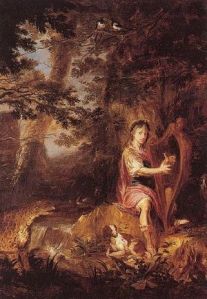 ### After the Argonauts had feasted, they proceeded to the Argo and tried pulling it to the sea for launching. It was snagged on dry seaweed and refused to go further, so the Argonauts began losing their resolve. Remember, this is an Orpheus-centric version of the Quest for the Golden Fleece, so this wimpy loss of resolve was just an excuse for another Orphic lesson.
