
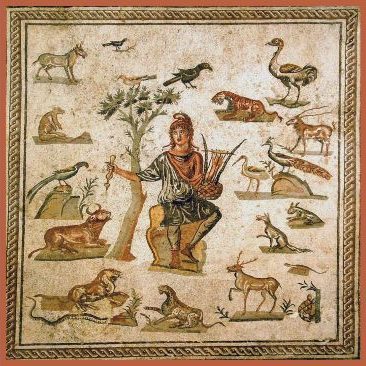
 It’s been years since I’ve written about the Orphic variations of mainstream Greco-Roman mythology. For anyone who is not familiar with the Orphic Hymns, Zagreus, etc. these fascinating offshoots of the myths we all grew up with feature a variety of differences.This version of the tale of Jason and the Argonauts won’t always match the more popular rendition.
 THE ORPHIC ARGONAUTICA – To avoid being too boring I will omit all the arguments about the exact time period in which this variation on the epic was first written. At any rate, as the “Orphic” part of these writings would indicate, this look at the Quest for the Golden Fleece is told from the point of view of Orpheus the musician, poet and keeper of the Mysteries.
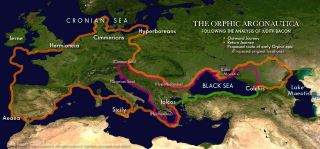 Our famous lyre-player Orpheus is approached in his cave at Thrace by the hero Jason. The hero tells Orpheus how he has gathered a crew that will take to sea in the Argo, the first vessel built specifically for ocean voyages. NOTE: Yes, the Orphic Argonautica depicts the Argo as the first ship ever built for a long-range journey. Various allegorical meanings are read into this, but I’ll spare you the details.
Jason explains that he needs to find and obtain the Golden Fleece of the sacrificed ram in order to mark his claim to the throne of Iolcus. He has named his crew the Argonauts. None of them are willing to risk the dangers of this quest unless Orpheus, he who braved the Netherworld and returned, is with them. Continue reading
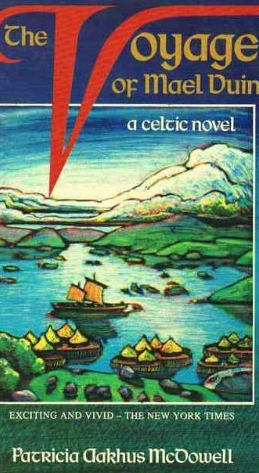 THE VOYAGE OF MAEL DUIN (Immram curaig Mail Duin) – Dated to around the late 900s A.D. or earlier, this story deals with the epic quest of Mael Duin (aka Maildun and Maeldune) and the crew of his ship as he seeks revenge on his father’s killers. This lengthy epic deserves to be as well-known as the Odyssey or the Quest for the Golden Fleece.
 Mael Duin matured, and proved better than his presumed siblings at athletic, martial and academic competitions. Losing their temper over this, one of our hero’s foster brothers ridiculed Mael Duin for not even knowing who his real father and mother were.
  A. Ngai, the creator god, divider of the universe, divider of the land from the sea and owner of the dazzling light, descended to the Earth shortly after making it. Mists covered the entire world because of how freshly made it was.
 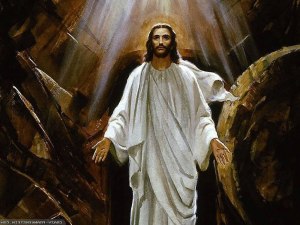 THE GOSPEL OF THE SAVIOR – The narrative of this gospel centers around dialogues between Jesus and his apostles in the last few days before his arrest and crucifixion.
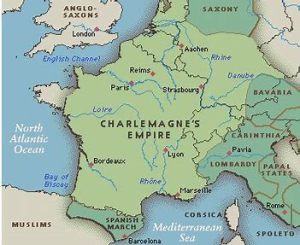 ASTOLPHO RESTORES ROLAND’S SANITY – Picking up where we left off, the Paladin Astolpho and St. John returned from the moon in the latter’s flying chariot and entered the saint’s palace on a mountaintop. (Yes, I just typed those words.)
  Mounting his winged hippogriff (part horse, part eagle), our hero flew down from the mountaintop and returned to the court of King Senapus. When he used the salve to cure the king’s blindness, Senapus felt doubly indebted to the Paladin.
 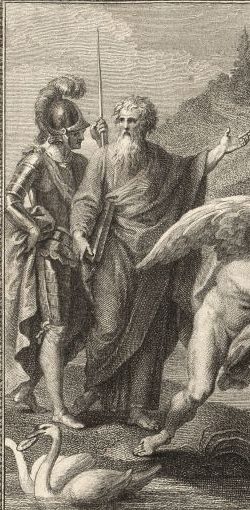 ASTOLPHO IN THE VALLEY OF LOST THINGS – When we left Emperor Charlemagne’s Paladin Astolpho, he had flown his hippogriff to the peak of the Mountain of the Furies where he was greeted by the one and only St. John the Apostle.
  Balladeer’s Blog continues its examination of the many facets of Fool Killer lore.
 PART SEVEN: The seventh surviving Fool Killer Letter. (See Part One for an explanation.)
 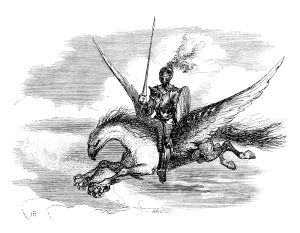 ASTOLPHO IN ETHIOPIA – When we left Charlemagne’s Paladin Astolpho, he had just vanquished the evil sorcerer Atlantes, then freed all of the captives in his invisible castle. Among those captives was the great Roland, the Emperor’s nephew and most accomplished warrior.
 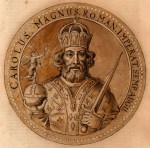 These are the legends about Charlemagne and his Paladins, not the actual history, so there will be dragons, monsters and magic.
  In the Zoroastrian version of the end times the Big Event will happen 3,000 years after Zoroaster/ Zarathustra introduced the world to the belief system that bears his name. For those who date Zoroaster’s birth to around 1,000 BCE that means the end could come any year now, but for those who date his birth closer to 600 BCE the world still has hundreds of years to go.
