
FOR THE FIRST PART CLICK HERE.
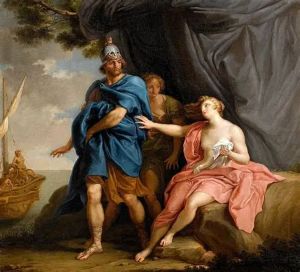 TWO – Aeneas and his companions, the survivors of the Fall of Troy, are still lingering in Carthage. Queen Dido, not knowing that the Roman State which Aeneas will spawn will also be the future destroyer of Carthage, remains deeply in love with Aeneas.
He returns her love, and having Aeneas remain with Dido and never found Rome fits the schemes of the goddess Juno (Naturally, Roman names are used for the gods and goddesses throughout this epic poem by Virgil). During a Royal Hunt in which Dido and Aeneas are accompanied by their courtiers, Juno causes a storm that drives the entire hunting party to seek shelter in an extensive system of caves.
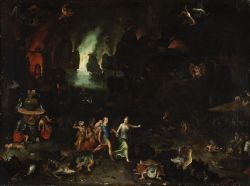 Playing into (or maybe establishing) the enduring cliche about people in a burgeoning romance being driven closer by needing relief from a downpour, Dido and Aeneas start to feel even friskier. Juno manipulates things further by having nature and animal life in the cave behave in ways that parallel a wedding ceremony.
Dido is convinced that she and our hero really are married in the eyes of the gods now, so she and Aeneas not only consummate their love but openly live as man and wife during the days that the supernatural storm confines them and their respective retinues to the caves. They continue this arrangement even after returning to Queen Dido’s palace. Continue reading
 Recent movie news about the latest screen adaptation of The Odyssey happened to make me reflect on the lack of a big screen version of the poet Virgil’s epic The Aeneid. For newbies to the tale, I’m posting this very brief synopsis of the story – the first half a mythic voyage like Jason and the Argonauts and The Odyssey and the second half a tale of warfare as Aeneas leads his fellow survivors of fallen Troy in their mythic conquest of what would become Rome.
