
 Recently, Balladeer’s Blog examined the 1937 Jungle Jim serial and all sixteen Johnny Weissmuller movies in which he was technically in the role. In this third and final Jungle Jim blog post I will look at the one-season series from 1955-1956. Each episode was 30 minutes with commercials.
Jim’s chimp was back to being called Tamba, and the series added a son named Skipper (Martin Huston) for the hero. Fans will remember that Skipper was originally the name of Jungle Jim’s pet dog. Norman Fredric was added to the cast as Jim’s turbaned assistant Kaseem.
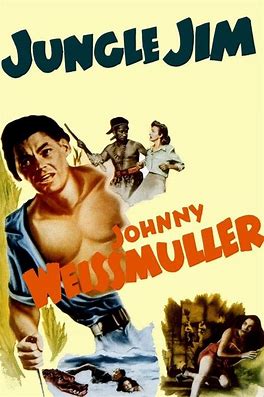 EPISODE ONE: MAN KILLER
Synopsis: Jungle Jim tussles with an inexperienced hunter (Dick Rich) who, while shooting at big game from a riverboat, wounds a lion but fails to kill it, setting the pained animal on a reign of terror. Jim, Skipper, Kaseem and (groan) Tamba must save the locals AND the careless hunter from the lion.
EPISODE TWO: LAND OF TERROR
Synopsis: Helene Marshall, playing the sister of a famous botanist, interrupts Jungle Jim and Skipper’s census of wild animals to help her search for her missing brother. Our heroes and Tamba rescue the botanist from yet another remote African locale teeming with dinosaurs. (The usual stock footage from One Million B.C. that showed up in countless movies.) This time the area gets wiped out by lava after a volcano eruption.
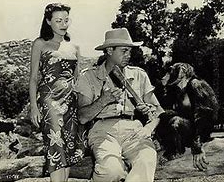 EPISODE THREE: TREASURE OF THE AMAZON
Synopsis: A pair of murderous plunderers posing as archeologists trick Jungle Jim into flying to Brazil with them to lead their expedition. They are searching for a lost city built by the Incas long ago, but naturally just want to loot the place’s treasure. Jim and the villains find it, but face headhunters, piranha, warthogs, jungle cats and boa constrictors. The bad guys get killed as a consequence of their own greed. Continue reading
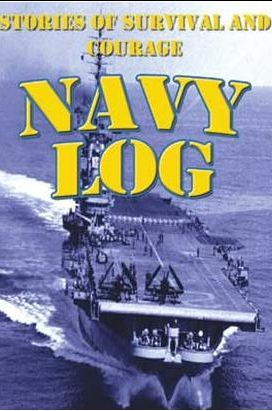 NAVY LOG (1955-1958) – Here’s an unusual segment of Balladeer’s Blog’s recurring Forgotten Television feature. Rather than review the entire series I will take a look at this program’s episodes regarding the often-overlooked Korean War. Most episodes of Navy Log featured half-hour dramatizations of real-life incidents from World War Two, so in keeping with my overall theme of things that slip through the cultural cracks, my focus here will be the few Korean War incidents dramatized on the show.
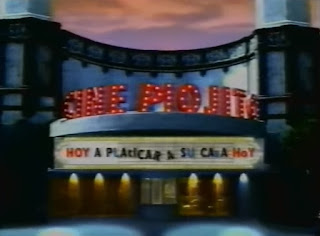 LET’S TALK AT HOME (2001-2003) – This cult program is often called “Mexico’s MST3K.” Its Spanish language title is A Platicar a su Casa, which has been translated into English as Let’s Talk at Home, Do Your Talking at Home and similar titles.
 Balladeer’s Blog has written a great deal about earlier Movie Host shows, from 1950s efforts like Vampira, Mad Marvin and others on up through Moona Lisa and Ghoulardi in the 60s and 70s to 1980s programs like Elvira’s Movie Macabre, Texas 27 Film Vault, Laraine Newman’s Canned Film Festival, etc,
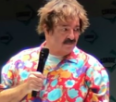 The wisecracking hosts were Andres Bustamente and Trino Camacho, two legends in Mexican comedy. The jokes were what you would expect – shots at the poor quality and/or low budget of the films, their odd storylines plus some social and political commentary about life in Mexico.
 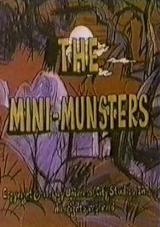 THE MINI-MUNSTERS (1973) – This children’s cartoon version of The Munsters originally aired on October 27th, 1973 as one of the hour-long (including commercials) episodes of the second season of ABC’s Saturday Superstar Movie. That version was 44 minutes long without commercials. ABC later edited it down into a VERY incoherent 22-minute version that they proceeded to combine with commercials to make a half-hour Halloween cartoon which they would broadcast into the 1980s.
 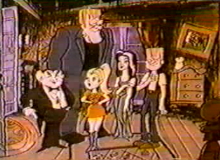 Not that the 44-minute version is a masterpiece, but it holds together much better than the edited version. You can judge for yourself because no less than THREE versions of The Mini-Munsters are available online: The original 44-minute version in color, the 22-minute version in color AND a black & white version of the 44-minute original.
 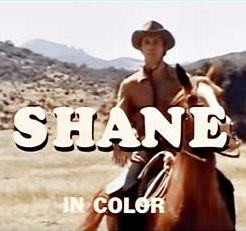 SHANE (1966) – David Carradine starred as the iconic gunslinger Shane in this 1966 television series adapted from the 1953 Alan Ladd movie.
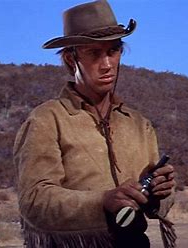 If you’re not familiar with the movie, Shane is a gunfighter who longs to settle down and pursue the non-violent life he would have lived if things had turned out differently for him. He falls in with the Starrett family, who are among the Wyoming homesteaders getting leaned on by dishonest ranchers who want them off “their” land.
  CHASE (1973) – This cop show from the 70s had an odd history and ultimately wasted an initially promising premise.
 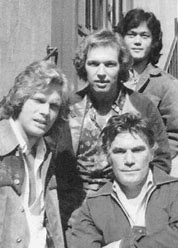 Officer Steve Baker (Michael Richardson) was a former race car driver who handled the car chases. Officer Norm Hamilton (Reid Smith) was a Vietnam War veteran and helicopter pilot who handled aerial activities. And Officer Fred Sing (Brian Fong) was a hotshot motorcycle cop long before CHiPS hit the airwaves.
 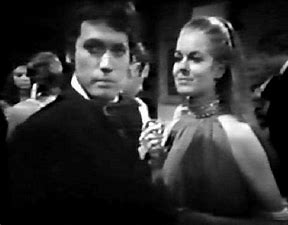 COUNTERSTRIKE is a tragically forgotten British sci fi television series from 1969. Jon Finch (left) portrayed Simon King, an alien agent who worked for the Intergalactic Council. This council had sent him to Earth to protect it from a group of renegade aliens from a dying planet who wanted to conquer the Earth and make it their new home.
 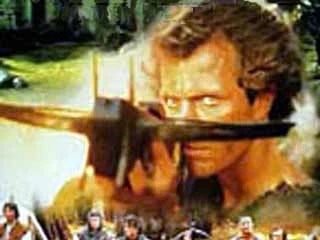 This French-produced (but English language) series about William Tell was the perfect antidote for fans of derring-do who were bored with the umpteen versions of the Robin Hood legend.
  William Tell and his son (the famous one with the apple on his head) defiantly foiling Gessler’s sinister machinations with the aid of fellow rebels.
  THE GREATEST SHOW ON EARTH (1963-1964) – This forgotten television program was yet another attempt to transform a successful movie into a weekly series … in a way. The characters aren’t carryovers from the 1952 movie, but the whole “Circus as a Soap Opera” approach is there. Jack Palance starred as circus manager Johnny Slate, the only true regular since he was in every episode. (By contrast, Stuart Erwin as Otto King had the second most appearances at a mere 9 episodes.)
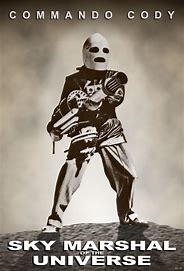 COMMANDO CODY: SKY MARSHAL OF THE UNIVERSE (1953) – This will be a comprehensive look at the winding saga of Commando Cody, the character’s changing names and his status as the inspiration for the much later Rocketeer figure. As a quick preface to this look at the short-lived half-hour television series Commando Cody: Sky Marshal of the Universe I will recap the three Republic serials that preceded it.
 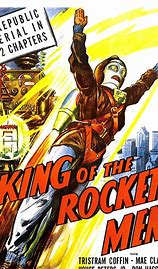 King of the Rocket Men (1949) – This 12-episode serial was directed by Fred C. Brannon and written by Royal K. Cole, William Lively & Sol Shor. An organization called Science Associates finds its major scientists being killed off one by one through the efforts of a mysterious villain calling himself Dr. Vulcan.
 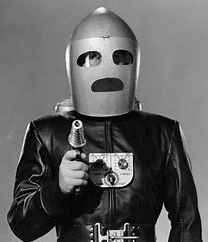 With Dr. Millard playing dead, Jeffrey King dons the experimental rocket pack invented by Millard and takes to the air. King, the title “King” of course, also arms himself with a ray-gun pistol that he and Millard developed together. To keep his identity a secret, Jeffrey wears a helmet that conceals his face in addition to providing protection.
