
 ARE THE PLANETS INHABITED? (1913) – Written by Edward Walter Maunder, this book began with ridicule of the outdated belief that the sun and moon might be inhabited, but it doesn’t exactly embody scientific accuracy itself. Therefore I’m classifying it as science fiction even though in 1913 it was considered to be a series of observations adhering to rigid scientific principles.
MARS – Maunder hilariously refers over and over again to “independent confirmations” that Mars had canals. It was believed that these canals provided water from the planet’s polar ice caps to the rest of the desert planet. The author proceeds to cite observations from no less an authority than Percival Lowell, who in 1894 added “oases” at the “junctions” of Schiaparelli’s Martian canals.
The supposed regularity and precision of those oases (reservoirs might have been a better term, even though it, too, would be in error) “proved” to scientists of the time that they could NOT be mere natural formations. This book explains that the Martians are apparently mounting a monumental engineering project in a losing battle to keep their population alive. Continue reading
 THE NEW HUMANS (1909) – Written by B Vallance. No other name has come to light for the author of this thought-provoking work. Explorer Montgomery Merrick is roaming around the wilds of 1909 Uganda when he falls down a mountainside and into a concealed valley.
 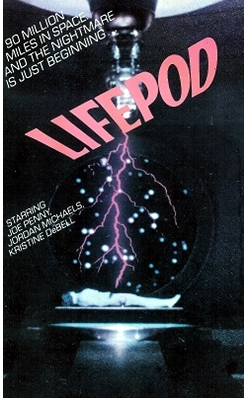 LIFEPOD (1981) – Previously Balladeer’s Blog examined the worst movies from the
 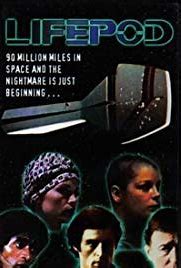 As the Arcturus, on its maiden run, approached Callisto, the Cerebral announced massive system failures and began shutting down life support systems while ordering the crew and passengers to evacuate in lifepods and await rescue from Callisto’s authorities. In their Mayday broadcasts the crew make it clear they no longer trusted Captain Montaine (Christopher Cary), who insisted the Arcturus was fine and the Cerebral was just malfunctioning.
 Steven Spielberg’s sister Anne got her start as a producer for many of the cheapjack science fiction films of Robert Emenegger and Allan Sandler. She had worked with them – and Cameron Mitchell – as far back as 1975’s Death: The Ultimate Mystery. With apologies to fans of the original Doctor Who series, to me “E-Space” will always mean EMENEGGER SPACE, as in the Emenegger-verse of his series of movies in 1980 and 1981.
 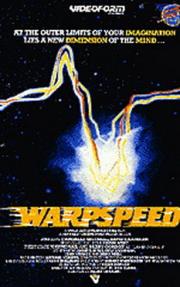 WARP SPEED (1981) – Set in the far-off year 2013 (!) this movie features the crew of a spaceship sent to determine what happened to the vanished crew of a multi-year mission to Saturn. The organization they serve is called Starfleet, which serves as a reminder that by 1981 there was just the original Star Trek series, its cartoon version and one movie, not the enormous universe of spin-offs that we have today. Point being that the term Starfleet was apparently open for use by other creators. Starfleet features in another Spielberg/ Emenegger/ Sandler joint, too.
  OBJECT Z (1965) – Directed by Daphne Shadwell and written by Christopher McMaster, this was one of the many six-episode science fiction serials from British television of the 1950s and 1960s. The Quatermass serials are among the best remembered of those programs but there were also items like The Trollenberg Terror, a serial later adapted into the B-Movie The Crawling Eye.
  ISLAND OF THE LOST (1967) – Directed by John Florea and written by Richard Carlson and Ivan Tors, this family adventure movie starred Richard Greene, known for playing Robin Hood in the 1950s television series and for playing Sir Denis Nayland Smith in a few of the Fu Manchu movies from the 1960s.
  Richard Greene AND Richard Carlson? You know that with a couple of Dicks like them around we are in for some campiness and lame special effects that might have been acceptable in the 1950s … in black & white, not color.
 MY COUSIN’S AIRSHIP, A TALE OF 1950 (1902) – Written by W.F. Alexander. Though written in 1902 this story is set in a fictional 1950 which has seen incredible scientific advances.
 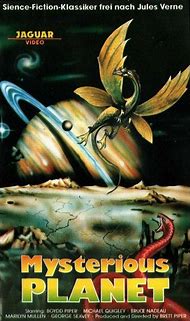 MYSTERIOUS PLANET (1982) – Written, produced and directed by Brett Piper, this was his first film ever and it manages to be bad in every conceivable way, running the gamut from fun-bad to boring-bad to incomprehensibly bad and even rising to “how could you NOT be ashamed to release this under your real name” bad at times.
  As the story opens, some kind of space fleet is informing all of its ships that no take-offs will be permitted until an “asteroid storm” passes through. Most of the captains are content to obey, but not Commander Rogan (Paula Taupier), the combined captain and science officer of the medical transport ship. (If you can make out the name of the vessel you’ve got me beaten, and I replayed most of the dialogue several times to pick out what nuggets of information I could.)
  SIX-HUNDRED & SIXTY SIX (1972) – Directed by Tom Doades and written by Marshall Riggan, this film is a very unusual blend of science fiction, horror, post-apocalypse drama and religious message. Cult actor Joe Turkel, perhaps best known as the ghostly Lloyd the Bartender in The Shining, stars as Colonel John Ferguson.
 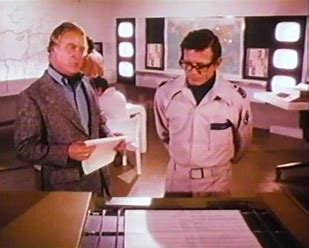 Obviously, a post-Omen film would not blow their story’s final reveal in the title, like we get with Six-Hundred & Sixty Six.
