
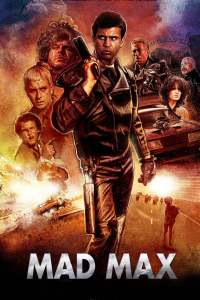
 MAD MAX (1979) – Balladeer’s Blog’s “Weirdness at the End of the World” takes a look at one of the best movies in the best franchise in the crowded Post-Apocalypse sub-genre.
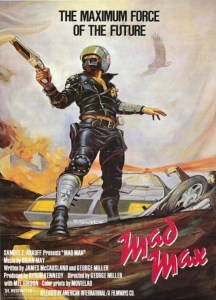
I recently re-watched this 1979 gem in the full 93 minute Aussie “language” version. Using the sub-titles to make sure I missed nothing from the heavy accents, I was struck once again by how part of the post-apocalyptic atmosphere is filled in via the full text of what the Main Force Patrol radio operators are saying AND by the news reports. Outside of those brief touches Mad Max perfectly embodies the cinematic principle of “show don’t tell.”
In a dying world after a limited nuclear war over oil between world powers, Mad Max is set in a few Australian towns which escaped destruction presumably because they were safely away from strategic sites targeted by missiles. Supplies are tight and citizens are warned not to abuse their food rationing privileges.
Law and order have become very tenuous concepts amid this spreading societal collapse. There is no evidence of anyone except local authorities being in charge, including their law enforcement arm, the Main Force Patrol (MFP) which includes Max Rockatansky, brought to life by Mel Gibson.
 Though in real life this sense of no larger government having control may have been a function of the film’s low budget, I find it adds nicely to the uncertain atmosphere. In just a few years the American telefilm The Day After would come close to presenting that same air of confusion about the new state of affairs following a catastrophic war.
Who’s in charge? And who – if anyone – won? Like the opening song One of the Living in Mad Max Beyond Thunderdome would later remind us, a very old saying pointed out that following a nuclear war the living would envy the dead.
Getting back to the Main Force Patrol, their “uniform” is the all-black outfit with thigh holsters for their shotguns that became Mad Max’s signature look. Their bronze badges are why the lawless element derisively refers to them as “the bronze.” Continue reading
 HELLRAISER (1987) – “Jee-zuz WEPT!” Clive Barker helped translate his novel The Hellbound Heart to the big screen in this film. It’s incredibly rare for a novelist to get to DIRECT a movie version of one of his own works but Barker made the most of it.
 THE DEAD PIT (1989) – This horror film was the directorial debut of the very prolific director Brett Leonard. While not a four-star movie The Dead Pit is enjoyable enough for the Halloween Season and should certainly appeal to anyone into 1980s horror flicks. This movie’s hybrid of zombie elements and slasher elements is both its charm AND the reason behind its love-it-or-hate-it status.
 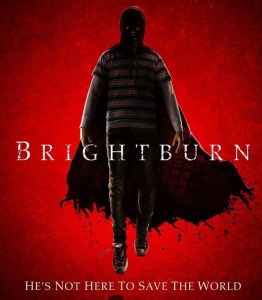 BRIGHTBURN (2019) – This mid-level budget movie has been criminally underrated in my opinion. Its horror twist on the usual superhero story (especially Superman) is well-handled and should have been just the thing audiences flocked to for a change of pace from the flood of superhero movies in recent years.
  I have been getting a lot of readers asking me to review some of the more recent releases from major studios. Balladeer’s Blog regulars know that I tend to focus on incredibly obscure items or hilariously bad movies from decades ago.
  SOLO: A STAR WARS STORY – Thankfully someone FINALLY addressed the elephant in the room of the Star Wars universe: the origin of Han Solo’s last name.
 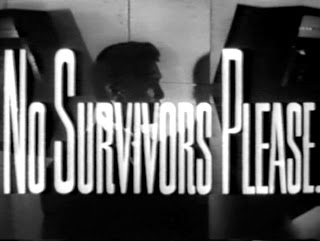 NO SURVIVORS PLEASE (1964) – This obscure black & white wonder from West Germany is one of the most memorably weird movies of its time. It’s not easy to describe what makes it so appealing. The fundamental story – aliens plan to wipe out all life on Earth – has been done too many times to count. Not even their method is all that unique – the ET’s project their consciousness into the bodies of freshly-dead human beings – which has been done in other movies.
 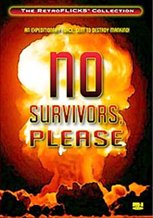 No Survivors Please
 BARTHOLOMEW
  MISTER RABBEY
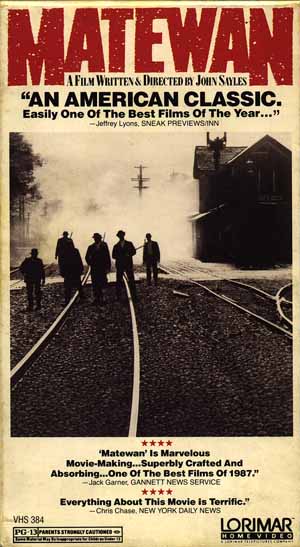 MATEWAN (1987) – This John Sayles film examines the 1920 Matewan Massacre in the West Virginia coal fields. The workers were attempting to form a union and the owners – the kind of people that the one percenters’ beloved New York Times has proclaimed to be “the conscience of the country” used hired thugs to harass – and even kill – the laborers.
 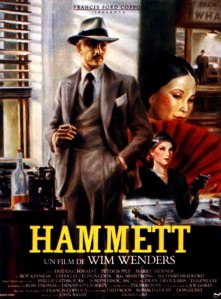 HAMMETT (1982) – Directed by Wim Wenders and produced by Francis Ford Coppola’s Zoetrope Studios, Hammett is a criminally neglected valentine to Hard-Boiled Detective Stories and Film Noir. The flick is based on the novel by Joe Gores.
 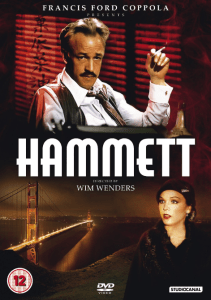 Booze and coughing fits figure prominently in the movie, as you would expect given a protagonist who was an alcoholic with tuberculosis. For the sake of convenience the story that Hammett just finished before blacking out was one featuring his character the Continental Op (as in an operative for the fictional Continental Detective Agency).
  PRECIOUS FIND (1996) – This is a hilariously bad attempt to do a science fiction version of The Treasure of the Sierra Madre. That description makes this movie sound much, MUCH better than it really is.
  Balladeer's Blog