
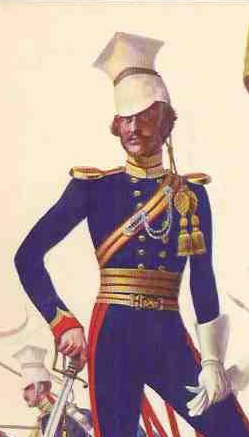
 George MacDonald Fraser’s series of novels about his infamous anti-hero Harry Paget Flashman are thought-provoking, educational, thrilling and most especially – gloriously dark-humored.
Collectively referred to as The Flashman Papers, the books are DEFINITELY for adults only and not just because of the raucous sexual escapades of the main character. The historical and philosophical themes explored are not for the squeamish nor the simple-mindedly outraged.
Fraser’s first Harry Flashman novel appeared in 1969, the same year as the American novel Little Big Man. The two books are similar in approach since they both depict a main character who gets caught up in a series of historical adventures involving Great Events and Great Figures with the events being looked at in a critical light and the figures largely lampooned.
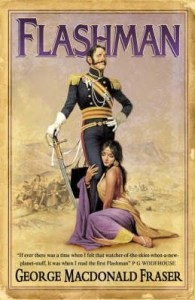 In the case of Harry Flashman, however, the adventures are much more detailed because Fraser used an entire series of novels. (The 4th book in the series, not the 1st, is my Number One listing) Flashman himself is amoral, ruthless and driven largely by his lust for loot and sex.
And therein lies the genius of Fraser’s writing: the reader is permitted to feel THEIR OWN outrage over the atrocities depicted in the novels. There are no shrill lectures in the narrative, just an often bleak backdrop in which the misdeeds of history’s Great Names often make Harry Flashman’s mere monetary and carnal pursuits look almost noble by comparison.
Flashman himself often brings to mind James Garner’s slick-talking gambler/ gunslinger Bret Maverick from 1950s television. Like Maverick, Harry Flashman proudly calls himself a coward who tries to avoid violence and thrives on trying to con or outsmart his adversaries rather than fight them. (But he often winds up having to fight them anyway.)
And like Maverick, the needs of adventure fiction eventually make the claims of cowardice wear thin because – no matter how reluctantly – both Harry and Bret always wind up in situations requiring conduct above and beyond the call. But when it comes to underhandedness “Ol’ Flash Harry” beats Maverick hands-down. Continue reading
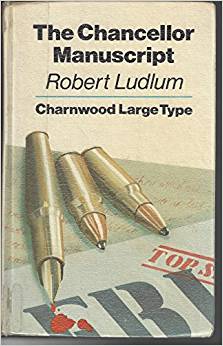
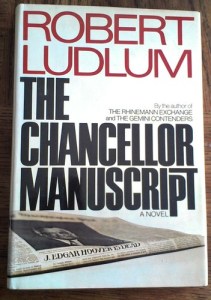 THE CHANCELLOR MANUSCRIPT (1977) – With the latest revelations about blatant abuses by the FBI and other politicized agencies here’s Robert Ludlum’s novel about the dangers of such abuses by BOTH the left and the right. There are Deep State operatives and an ugly “we know best” mentality like in today’s headlines. (Think of fascist garbage like the CIA’s John Brennan.)
  Chancellor’s notoriety also means he gets a lot of conspiracy kooks feeding him “tips” about supposedly real intrigues of varying degrees of believability. Hey, there was no Internet yet, so what do you expect?
  Instead, I’ll deal with the secondary but more active villains: a group of high-level conspirators who go by the code name …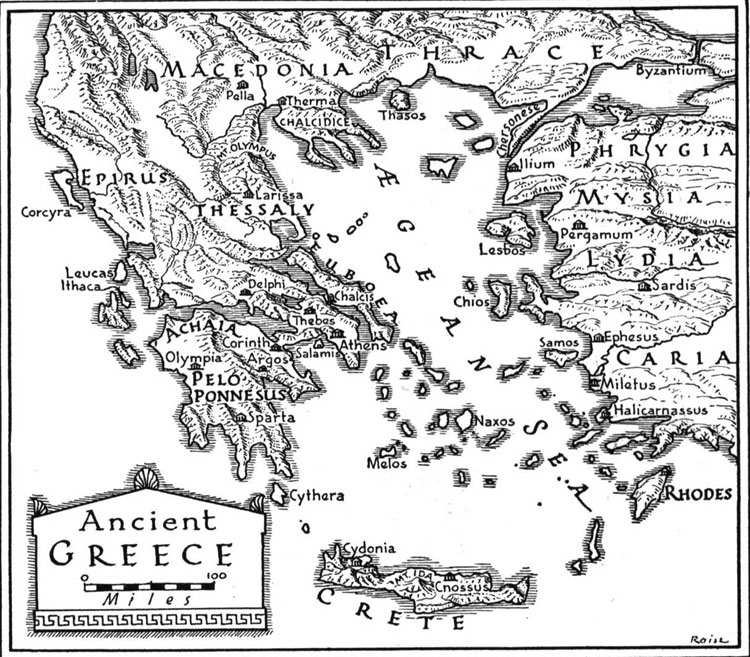
 THE ARCTIC DEATH (1927) – Written by Wilford Allen, On A Far World, covered below, was a prequel to this same tale. The Arctic Death is set in the 1930s, which was “the near future” when the story was first published.
 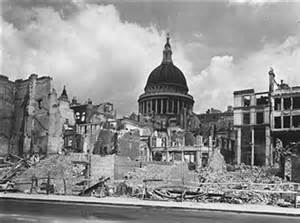 THE THAMES VALLEY CATASTROPHE (1884) – Written by Grant Allen. The story is presented in the form of a memoir about the destruction of London as seen from “the futuristic” 20th Century.
 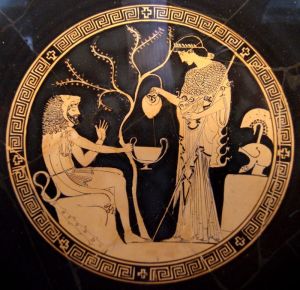 CRATES – Crates’ career spanned from approximately the 450s B.C. to the 430s B.C. We have fragments from nine or ten comedies from an unknown total output. From other sources we know that comedies as stage productions began sometime around 500 B.C. or earlier so Crates came fairly early to the artform.
  NEIGHBORS – We do not have even a hypothetical year for this work, unfortunately. Since titles sometimes referred to the all-important Chorus of a Greek comedy there is speculation that the chorus members were “Neighbors” of some sort (Duh!) but nothing is known about the plot.
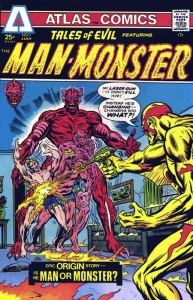 MAN-MONSTER
 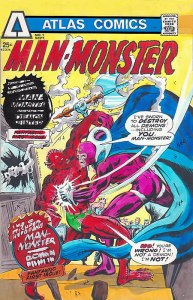 Paul barely escapes the bacteria and makes it back to shore, where he transforms into a red-scaled amphibious monster. After a brief rampage he becomes human again and the female reporters take him home.
  MY COUSIN’S AIRSHIP, A TALE OF 1950 (1902) – Written by W.F. Alexander. Though written in 1902 this story is set in a fictional 1950 which has seen incredible scientific advances.
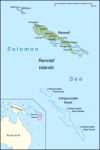 NUMBER ONE – Two gods of Bellona and Rennell Islands – NGUATUPU’A AND TEPOUTU’UINGANGI – As part of my look at gods and goddesses from various Polynesian island groups.
 NUMBER THREE – A look at how CHE GUEVARA AND GUY FAWKES came to symbolize the opposite of what they were in real life. CLICK
  Balladeer's Blog