

Raizo Ichikawa as the red-haired Samurai Kyoshiro Nemuri, the Son of the Black Mass.
Balladeer’s Blog begins its examination of various Samurai films from Japan. In keeping with my blog’s overall theme I won’t be covering the uber-popular Samurai flicks like Yojimbo, The Seven Magnificent Samurai or the Musashi Miyamoto Trilogy. Regular readers who are familiar with my contempt for organized religion will not be at all surprised that I’ll be starting out with the Son of the Black Mass series of films starring Raizo Ichikawa, often called “the James Dean of Japan.”
In addition to the twelve Ichikawa movies I will also cover the two entries in the series made after Raizo’s untimely death from cancer. After that, to be a fully comprehensive look, I will also examine the original novels as well as the three Son of the Black Mass movies made in the 1950’s, even though they did not have the cinematic impact of the films starring Raizo Ichikawa.
 The odd title of the movie series comes from the fact that the title character, former Samurai turned Ronin Kyoshiro Nemuri, is the child of a Japanese woman and the crazed Portugese missionary who raped her. The insane missionary was dabbling in Satanism and Nemuri was conceived during a Black Mass ritual, hence the series title. The deadly swordsman inherited his hated father’s red hair and when a heavy rain washed out the black dye Nemuri was disguising it with, his exposure as a half-breed led to his shunning and his fallen status. Continue reading

 DASH DIXON
 Powers: Dash Dixon, the Man of Might, possessed the strength of fifty men, could leap incredible distances, was invulnerable to harm and could live forever. (Originally he had the strength of just three men but that was changed to fifty. You know comic books.)
 BLACK ANGEL
 For Balladeer’s Blog’s review of the very first episode of this 1971-1973 series about London by Gaslight detectives from both the Victorian and Edwardian Ages you can simply click
 Episode: THE MOABITE CIPHER (March 26th 1973)
 Here at Balladeer’s Blog I’ve always had a soft spot for the Resident Evil movies. I’m not implying that they’re good by any means, but as guilty pleasures I consider them pretty watchable in a Spaghetti Western sense. You don’t expect logic or well-maintained continuity in the original Django or Sartana series any more than you do from the Stranger or Hallelujah flicks or any of the other lower-level pulp series of Italo-Westerns.
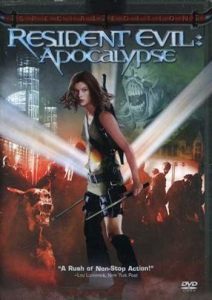 Seventies chop-socky films are another example. You might watch them but you sure as hell can’t defend them from criticism.
 GIZMO! (1977) – Though the exclamation point in the title makes this seem like it might be a stage musical, Gizmo! is actually an entertaining documentary about some of the oddest inventions you could possibly imagine. Some never made it anywhere close to actually working, while others worked but proved so hopelessly impractical that you’ll howl with laughter at the wasted effort.
 The people of Fiji believed in an epic journey for the souls of the deceased. That journey is even more detailed than the Soul’s Journey envisioned by the Tupari of Brazil.
 Balladeer’s Blog takes another look at a political cartoon from Puck magazine (1871-1918), the famous humor magazine. For more Puck click
 ISLAND OF THE LOST (1967) – Directed by John Florea and written by Richard Carlson and Ivan Tors, this family adventure movie starred Richard Greene, known for playing Robin Hood in the 1950s television series and for playing Sir Denis Nayland Smith in a few of the Fu Manchu movies from the 1960s.
 Richard Greene AND Richard Carlson? You know that with a couple of Dicks like them around we are in for some campiness and lame special effects that might have been acceptable in the 1950s … in black & white, not color.
 MY COUSIN’S AIRSHIP, A TALE OF 1950 (1902) – Written by W.F. Alexander. Though written in 1902 this story is set in a fictional 1950 which has seen incredible scientific advances.

