
Happy Fourth of July! I’ll have my FULL Independence Day blog post later, but we’ll start the day with this look at the earliest stories of the Quality Comics superhero Uncle Sam in the 1940s. For over 20 more Quality Comics heroes click HERE.
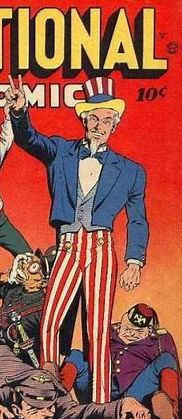 UNCLE SAM
Secret Identity: Ezra Smith (assumed name)
First Appearance: National Comics #1 (July 1940) His final Golden Age appearance came in 1944.
Origin: During the Revolutionary War, a dying American soldier named Sam (last name unknown) felt such a fervent desire to continue fighting for the new country that he assumed supernatural status. Over the decades he incarnated as Uncle Sam whenever the United States needed him.
In 1940 he appeared to young Buddy Smith, whose father Ezra was just killed for opposing a Fascist organization called the Purple Shirts. Uncle Sam defeated that group and became Buddy’s substitute father, pretending to be his late father Ezra to legal authorities.
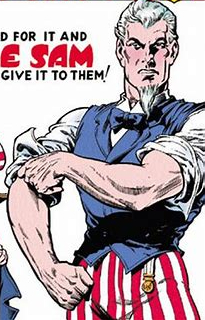 Powers: This hero had Superman-level strength and invulnerability. He could fly in a sense by making enormous Hulk-sized leaps. He had a mystic ability to know where he would be needed. Due to his supernatural nature, Uncle Sam could not be photographed or filmed.
Comment: When he was no longer needed in a given time period, this hero faded away, to once again incarnate during the next period of crisis for the country.
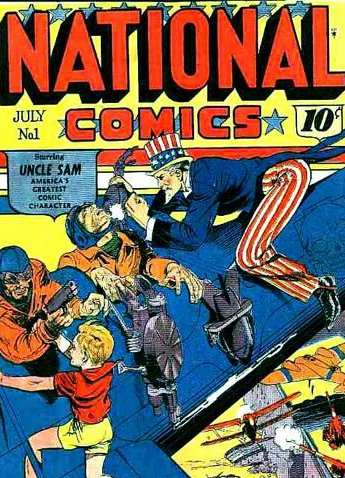 NATIONAL COMICS #1 (July 1940)
Title: The Coming of Uncle Sam
Villains: The Purple Shirts
Synopsis: The origin of Uncle Sam, including his “adoption” of Buddy Smith, the scrappy kid in short pants depicted on the cover. Uncle Sam wages war on the Purple Shirts army, which is being financed by an unnamed – but obvious – foreign power.
Our hero invades the Purple Shirts’ secret stronghold at Box Valley in the southern Rocky Mountains. Uncle Sam clobbers the villains and rescues the U.S. President, whom they kidnapped earlier in a commando raid. Continue reading
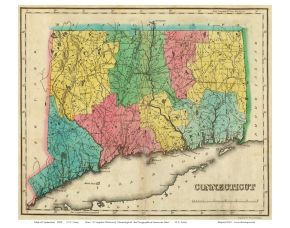 CONNECTICUT –
 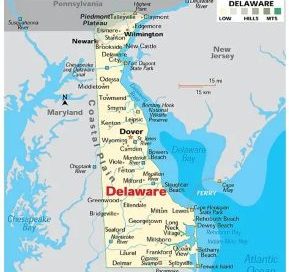 DELAWARE –
 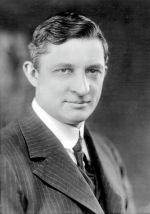 America’s 250th birthday is mere days away and as we honor men and women from long, long ago the current heat wave should remind us that Willis H. Carrier, the inventor of modern air conditioning, is truly the lion of the hour.
 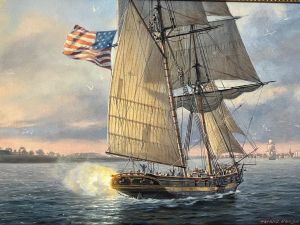 THE CHASSEUR – This vessel was granted its Letter of Marque to prey on British shipping and take prizes on February 23rd, 1813. The Chasseur had 16 cannon and a crew of 160.
 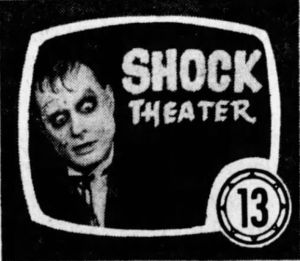 RONALD THE GHOUL, real name Jerry Sandford, hosted the WVEC Norfolk and Hampton, Virginia version of Shock Theater on Friday nights at 11:30.
 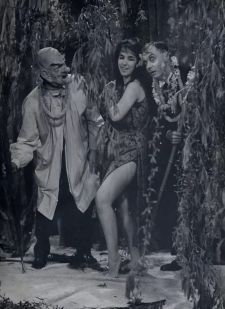 Jerry Sandford’s Shock Theater had its own Maurice the Cool Ghoul (Frank Van), who was a beatnik ghoul and wore a monster mask in the show’s early years but then donned a beret and a goatee to enhance his beatnik image. Completing Ronald’s supporting cast was Vicki McKee as the beauty to Ronald and Maurice’s beasts.
  CAVALCADE OF AMERICA (1952-1955) – This terrific 30-minute anthology series dramatized real-life events in U.S. history from the Revolutionary War onward. Sometimes fictional works appropriate for the series would be presented as well. Even if you don’t want to watch the show you can just pick out historical names below and look them up online.
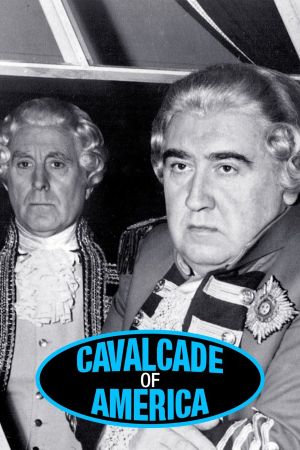 POOR RICHARD – Benjamin Franklin and John Adams surreptitiously delay pretended negotiations with General William Howe for an American surrender just to help buy time for General George Washington’s withdrawal from New York. Starring Dabbs Greer, Alan Napier and Henry Brandon.
  GEORGE C. ADAMS – As part of Balladeer’s Blog’s seasonal posts headed into America’s 250th birthday I recently reviewed the 1970s miniseries The Adams Chronicles – Part One
 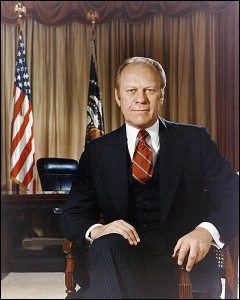 U.S. President: Gerald Ford Vice President: Nelson Rockefeller Speaker of the House: Carl Albert Chief Justice: Warren Burger
 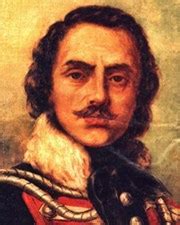 CASIMIR PULASKI (1747-1779) -Obviously from my last name I’m Polish-American and therefore grew up immersed in the role played by Casimir Pulaski and Tadeusz Kosciuszko in America’s War of Independence. I’m often surprised by how comparatively unknown they are to the public at large, so in keeping with Balladeer’s Blog’s theme here’s a look at Pulaski. I’ve covered Kosciuszko separately
 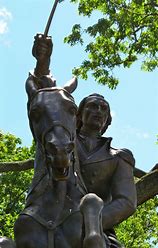 The war never became as romanticized as the later Greek War of Independence from the Ottoman Turks, but the conflict drew attention to Russian totalitarianism and to the abilities of Polish officers like Casimir Pulaski. In fact, it took an invasion by Russian-allied Austria and Prussia to help Russia put down the rebellion in 1772.
 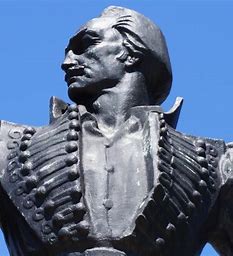 Franklin was impressed with what he could learn about Pulaski and sent him on to America with a letter of introduction to George Washington. Franklin described the Pole as “an officer famous throughout Europe for his bravery and conduct in defence of the liberties of his country against the three great invading powers of Russia, Austria and Prussia … may be highly useful to our service.”
