
This weekend’s escapist and light-hearted superhero post from Balladeer’s Blog will look at the early stories about the Fantastic Four in the 1960s.
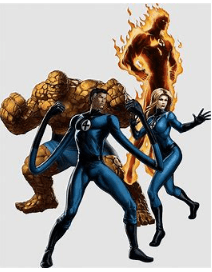 THE FANTASTIC FOUR – There can be no over-stating the importance of the Fantastic Four to Marvel Comics and by extension to much of pop culture the last several years regarding superhero movies and television programs. Though the Fantastic Four are now considered as dull as any b&w sitcom family of long ago, the team’s success convinced Marvel the market was right to recommit to superhero comic books.
As Timely Comics in 1939 and throughout the 1940s Marvel had participated in the massive superhero boom of the era. Many of their signature characters were introduced, like Captain America, Sub-Mariner, and many, many others.
As Atlas Comics in the 1950s Marvel abandoned superhero stories as that market had dropped out. They briefly revived some of their Golden Age characters and tried launching new ones, but sales were poor enough to get canceled, so they focused on monster and sci-fi comic books instead.
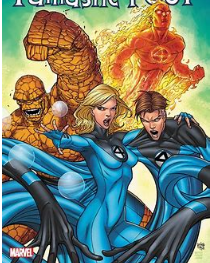 As Marvel Comics in 1961 the company decided to dabble in superhero comic books again, with Stan Lee and Jack Kirby, two veteran comic book hands since the 1940s, putting together a brand-new team of superheroes. That team was, of course, the Fantastic Four.
The first issue was scheduled to hit the stands late in the year, but June of 1961 was when the bulk of the work was done and the approach finalized. The vaunted “616 Universe” was established, based on 61 as in the calendar year, and 6 as in the month of June. Continue reading
 NATIONAL CHAMPIONSHIP GAME – Fighting it out for this division’s crown were the 5 seeds – the NATIONAL PARK COLLEGE NIGHTHAWKS – and the 2nd ranked SOUTH SUBURBAN COLLEGE BULLDOGS.
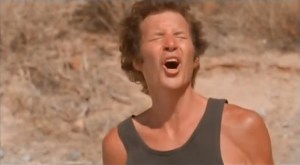 Here at Balladeer’s Blog my love of enjoyably bad movies has been well established. You can count me as one of the many “Human Breens” as fans of filmmaker Neil Breen are called.
 As with the best of the bad auteurs Neil churns out productions that are uniquely his own. There is no mistaking a Neil Breen film with a film made by anyone else. Picture The Room’s Tommy Wiseau trying to make a David Lynch movie. But with a LOT more needless violence against laptop computers.
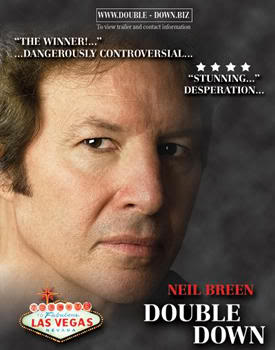 DOUBLE DOWN (2005) – Neil Breen starred, wrote and directed this movie – and quite obviously he or an associate even wrote the IMDb description of the plot. That description calls Double Down “an edgy action thriller,” which would certainly come as a surprise to anyone who has actually SEEN the film.
 FRANCOIS VILLON PART THREE – We left off last time with Villon forced to flee Paris after killing the priest Sermoise in a duel over a woman named Isabeau. Already well-versed in the criminal underworld of the region from his career as a thief, Francois hid out just 17 miles southwest of Paris at the Abbey of Port Royal-des-Champs.
 NATIONAL CHAMPIONSHIP GAME – The top seeded NORTH LAKE COLLEGE BLAZERS vied with the 3 seeds – the HERKIMER COLLEGE GENERALS – for the NJCAA’s D3 title.
 LOOK WHAT’S HAPPENED TO ROSEMARY’S BABY (1976) – With The First Omen currently in theaters, its creative team’s obvious desire to make their Omen prequel seem more like Rosemary’s Baby made me decide to review the often forgotten made-for-television sequel to that horror classic.
 NATIONAL CHAMPIONSHIP GAME – The TRINE UNIVERSITY THUNDER clashed with the HAMPDEN-SYDNEY COLLEGE TIGERS for the D3 title.
 HULK Vol 1 #150 (April 1972)
 NOTE: Thanks to sorcerers on Jarella’s home planet in the Microverse, Hulk was able to retain Bruce Banner’s mind there even when he was the Hulk, so she technically loved both his personae.
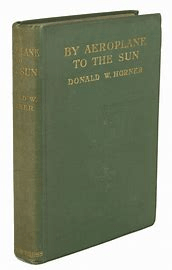 BY AEROPLANE TO THE SUN (1910) – Written by Donald W. Horner. This British novel features ideas that wouldn’t have been out of place decades earlier but in 1910 it’s astounding to encounter concepts like an alleged scientist believing that the sun is inhabited.
 FRANCOIS VILLON – This part picks up with one of the most infamous incidents from Villon’s career as an outlaw and iconoclast. He graduated from the Sorbonne as a Master of Arts and had acquired such a reputation for youthful rebellion and hard-drinking bad craziness that “Villonerie” had become a catch-all term for disorder and disobedience.

