Tag Archives: Ancient Greek Comedy

CRATES: ANCIENT GREEK COMEDY

Balladeer’s Blog takes another look at the surviving fragments of an ancient Greek comedian, in this case Crates.
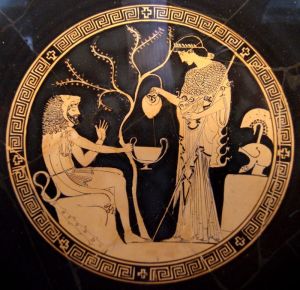
CratesCRATES – Crates’ career spanned from approximately the 450s B.C. to the 430s B.C. We have fragments from nine or ten comedies from an unknown total output. From other sources we know that comedies as stage productions began sometime around 500 B.C. or earlier so Crates came fairly early to the artform.

Crates was credited with being the first Athenian comic poet (the comedies were written in verse and included songs) to introduce drunken characters, still a comic staple over 2,400 years later. Aristotle himself credited Crates as being the first to abandon the “glorified comic monologues” approach of the oldest comedies and introducing fleshed-out plots and storylines.

Be that as it may, there is still a great deal of academic arguing over whether or not Crates’ work simply reflected the influence of Epicharmus, who may well have been the TRUE innovator.

Crates was supposedly an actor before he began writing comedies (But I’m sure he really wanted to direct. – rimshot – ) and his brother was Epilycus, one of the Epic Poets. Eusebius’ Chronicles stated that Crates was a well-known comedian by 451 B.C. and Demetrius Lacon in his work On Poetry indicates that Crates may have acted in some of Aeschylus’ tragedies before switching genres. 

KNOWN WORKS 

NeighborsNEIGHBORS – We do not have even a hypothetical year for this work, unfortunately. Since titles sometimes referred to the all-important Chorus of a Greek comedy there is speculation that the chorus members were “Neighbors” of some sort (Duh!) but nothing is known about the plot.

 Athenaeus argued that Crates’ use of a drunken character in this comedy PRE-DATED Epicharmus’ use of stage drunks, so apparently even back in ancient times this was being debated.   

The closest thing to an intact joke from the fragments of Neighbors is a lecherous reference to the delectable young males and females on hand serving whatever feast was being celebrated in the comedy. For today you could insert a Harvey Weinstein or Kevin Spacey type of joke, I guess.

The next closest thing to an intact joke is a possibly wry reference to ” playing at pessoi” which could refer both to pebbles used in a board game and pebbles used to wipe one’s bottom after defecation. Since the ancient Greek comedies are LOADED with scat jokes it’s possible that a very grotesque mix-up occurred.

Other fragments from this comedy are virtually useless: “I do not possess a lampstand.” (I want a T-Shirt that says that, dammit!) … “You must be quiet and not make a sound.” … “And had an aroma like sweetest myrrh.” … “If you’re smart, boy” … “A pig through roses” … “You led astray” … and “Scooping out a trough.”  Continue reading

16 Comments

Filed under Ancient Greek Comedy

CALLIPIDES (c 400 B.C.) – ANCIENT GREEK COMEDY

Annoy your friends with your pretentiousness: refer to shows like I Love Lucy and Make Room for Daddy as "Parathespian Comedies."

Annoy your friends with your pretentiousness: refer to shows like I Love Lucy and Make Room for Daddy as “Parathespian Comedies.”

Balladeer’s Blog presents another examination of an ancient Greek comedy. Callippides was written by the comedian Strattis and falls into that comic poet’s specialized area: Parathespian Comedies.

Another fun element of our shared humanity with the ancient Athenians who flocked to attend these plays is the fact that even 2,400 years ago audiences were fascinated and entertained by the trappings of “showbiz”. “Parathespian Comedies” were just one of the many sub-genres of ancient Greek comedy but Strattis is the writer most associated with them … by me and the .000001 percent of the population who are into such things.

Yes, a few thousand years before I Love Lucy, The Dick Van Dyke Show, Seinfeld and other such sitcoms the spectators at the Theatre of Dionysus were laughing at comedies depicting what it was like to be one of the performing, writing and singing stars of the Athenian stage. The Parathespian Comedies sometimes featured fictional stars as the characters but would also depict real-life figures of the stage in stories that were either wholly fictional or based on backstage gossip of the time.  

Callippides was based on the real-life actor and megastar of ancient Greek tragedies. In this particular case Strattis presented a very unflattering comedic poke at Callippides, making jokes that depicted him as a William Shatner-esque ham instead of the accomplished thespian he was often hailed as.   Continue reading

4 Comments

Filed under Ancient Greek Comedy

DEMOI (C 417 B.C.) – ANCIENT GREEK COMEDY

FOR BACKGROUND INFORMATION IF YOU MISSED MY FIRST POST ON ANCIENT GREEK COMEDIES CLICK HERE: https://glitternight.com/2011/09/22/at-long-last-my-ancient-greek-comedy-posts-begin/

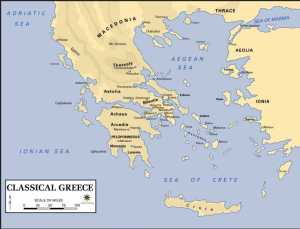
map of greeceAs promised this time around I’ll depart from the works of Aristophanes to examine the fragmentary remains of a work by another genius of Ancient Greek Comedy, in this case Eupolis. 
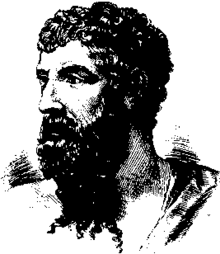
Eupolis was part of the Big Three of Ancient Greek Comedy (henceforth AGC) along with Aristophanes and Cratinus. Some people confuse Eupolis with the later Greek comedian Eubulus but manage to lead fairly normal lives just the same. (rimshot)

THE PREMISE

Demoi is considered to be Eupolis’ greatest political satire. The premise is simplicity itself. An Athenian named Pyronides, like many of his fellow citizens, is disgusted with the pettiness, corruption and incompetence of the current crop of political and military leaders in the great city-state. Thus motivated, Pyronides retrieves four of the greatest figures of Athens’ storied past from the Netherworld and brings them back with him so they may set things right.

THE PLAY

In my introductory post about AGC (see above) I illustrated the similar problems faced by the Athenians’ ancient experiment in popular rule and our own often teetering enterprise. Corruption, partisanship and a tendency to subordinate the general good in the name of personal gain  were as rampant then as now.

As all societies are prone to do, the Athenians romanticised the leaders of the past, believing them to be of a heroic stature lacking in the current crop of Athenian politicians and generals. Continue reading

18 Comments

Filed under Ancient Greek Comedy

THE KNIGHTS (424 B.C.) ANCIENT GREEK COMEDY

Here’s a rerun of Balladeer’s Blog’s examination of the Ancient Greek Comedy called The Knights by Aristophanes. For background info on ancient Greek comedies see my original post on the topic: https://glitternight.com/2011/09/22/at-long-last-my-ancient-greek-comedy-posts-begin/

This comedy deals with the still-relevant situation in which honest people stand no chance against vile, corrupt demagogues.

In The Knights Aristophanes pioneered a new sub-genre of Attic Old Comedy: the  Demagogue Comedy. The villain of this masterpiece of political satire was a figure called the Paphlagonian, who was patterned on Cleon, a notorious Athenian politician of the time period. I’ll have Continue reading

8 Comments

Filed under Ancient Greek Comedy

BAPTAE (Circa 415-413 B.C.): ANCIENT GREEK COMEDY

Dr Frank N FurterFor Balladeer’s Blog’s latest post on Ancient Greek Comedy I will examine another fragmentary work by Eupolis, who, along with Aristophanes and Cratinus was one of the Big Three of Attic Old Comedy.

BAPTAE was a comedy satirizing the latest faddish belief system to hit Athens: the cult of the Dorian and Thracian goddess Cotyto. Just like Kabala or transcendental meditation and other systems have enjoyed a brief vogue with entertainers and even some movers and shakers various foreign deities would periodically develop a following in ancient Athens. Eupolis was lampooning the fashionable appeal of one such cult and also ridiculed other elements of Cotyto worship as we will see.

The title Baptae came from the fact that the worshippers of Cotyto would immerse or “baptize” their garments in blue, green or purple dye, an expensive and very ostentatious indulgence for the time period. And yes, Baptae and baptizing are from the same root word, since it originally referred to immersion in any liquid, not just water.

The main element of the Athenian version of the cult of Cotyto was the fact that her devotees were exclusively male and all of them DRESSED AS THE GODDESS as part of their rites of worship. Even today we can Continue reading

4 Comments

Filed under Ancient Greek Comedy

PYTINE aka THE WINE FLASK (423 B.C.)

CRATINUS

Cratinus

Welcome to another Balladeer’s Blog post on ancient Greek comedies. If Pytine was an episode of Friends it would be titled The One Where Cratinus Fires Back At Aristophanes. This play is also known under English language titles like Wine Flask, Flagon, The Bottle, and others along those lines.

Cratinus, seen at left posing for the Attic Old Disco soundtrack album for Saturday Night Fever (Travolta stole all his moves from Cratinus, by the way) and galvanized by the tongue-in- cheek caricature that Aristophanes presented of a drunken, washed- up Cratinus in his previous year’s comedy The Knights, turned that caricature into the premise of his final comedy.

THE PLAY

From the fragments of Pytine that remain it seems Cratinus had an actor portraying himself (Cratinus) as the booze-soaked Grand Old Man of Attic comedy at the time. I always picture the character as a cross between Dudley Moore in Arthur and Tom Conti in Reuben, Reuben. Anyway, in the play Cratinus is  married either to Thalia, the Muse of Comedy or to simply a female personification of Comedy.  

Comedy complains to Cratinus’ friends, who make up the chorus, that she wants to take her husband to court for abandonment. She states that he is neglecting their marital bed because he has been spending too much time sleeping around with Methe, in this comedy a personification of  Drunkenness.

Academic opinion varies on whether or not Methe is supposed to be a hot young woman or a hot young man, and since this is an ancient Greek comedy it definitely could go either way. Not enough of the comedy survives to make it clear so Methe’s gender will remain a controversy.

Cratinus’ friends plot to save their buddy’s marriage by stopping him from drinking. They enact their “intervention” by smashing every last one of his containers of wine, and some of the comedy came from how many different types of vessels Cratinus had been hiding his booze in.

Cratinus counters the destruction of all his drinking vessels by purchasing a pytine, a very durable wine flask reinforced with wicker. The pytine is so strong it will withstand all the friends’ attempts to destroy it, thus foiling their plan to save Cratinus’ marriage to Comedy or the muse Thalia. 

Cratinus defends his drinking by saying wine is the source of all his poetic inspiration (the comedies were all in verse). This line of reasoning sets up the most famous line from Pytine when Cratinus says “You’ll never write great poetry if all you drink is water.”   Continue reading

4 Comments

Filed under Ancient Greek Comedy, humor

THE BIRDS (c 414/6 BC): ANCIENT GREEK COMEDY BY ARISTOPHANES

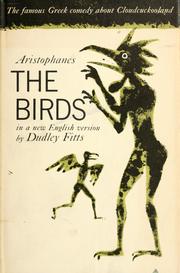
Birds by Aristophanes 1Balladeer’s Blog presents another examination of an ancient Greek political satire. This comedy by Aristophanes was one that I was planning on covering very soon when I started posting my reviews of Attic Old Comedy years ago. For various reasons it kept falling by the wayside.
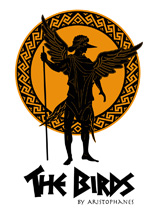
Where am I going with this? For Aristophanes’ line “In Cloud-Cuckooland things become what they are called rather than being called what they are” make it “In Ivory Towerland things become what they are called rather than being called what they are.” But I’m getting ahead of myself.

The Birds is Aristophanes’ lengthiest surviving comedy and also the most analyzed (some would say over-analyzed). So much has already been written about this particular work that I’ve decided to forego my usual intensive examination of every scene. Instead I’ll go with a brief synopsis followed by a way I feel The Birds could be adapted (as opposed to translated) for the present day. 

SYNOPSIS

Birds by Aristophanes 2More than 2,300 years before George Orwell’s Animal Farm and 1984, Aristophanes was dealing with some of the same political themes. 
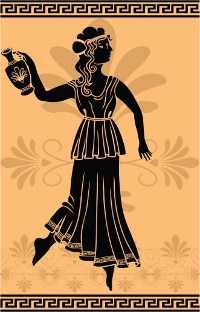
Pisthetaerus and Euelpides, Athenians feeling alienated by the increasingly restrictive laws and lawsuits of their home city have left Athens behind to start over with a new society. Part of the comedy centers around the ages-old theme of how those who seek to overthrow oppression often wind up becoming the new oppressors themselves. (Think of the 1960s generation of American liberals who became just as oppressive as they claimed previous generations had been) 

Another Orwellian theme finds Aristophanes satirizing the way in which the ruling class in any society uses and corrupts language to strengthen the subjugation of the populace. The Birds even features the importance of religious and historical myths in any culture as the leaders of the new civilization conjure up an all-new cosmology with “the birds” at the center to justify their own rule. Continue reading

84 Comments

Filed under Ancient Greek Comedy, Education or Indoctrination

ANTEIA: ANCIENT GREEK COMEDY

Hetaera 3Anteia was written by the comic poet Philyllius. This comic poet’s career seems to have spanned approximately from the 410s BCE to 390 BCE. One of his comedies won 1st prize at a Lenaea festival in the 390s and he won 1st prize at an unknown Dionysia. His fellow comedian Strattis credited him with being the first Attic Old Comic to use real torches on stage.

My favorite random line from Philyllius’ fragments: “The most important element of health is to breathe clean and unsullied air.”

THE PLAY  

ANTEIA – This comedy was an example of the sub-genre of Attic Old Comedy called Hetaera Plays. The term hetaera is often lazily translated as “prostitute” but the reality was a bit more complex. I’ve always felt that “kept woman” would be a better way to capture the concept. Hetaerae (plural) did NOT walk the streets and were not just for quickies like the lower-level prostitutes. They had their own luxurious digs with the expenses being footed by whichever wealthy man was enjoying bedroom privileges at the moment.

Hetaera 2A hetaera could move from man to man or keep one man for extended periods. What they were was openly known but the hetaerae occupied the top rung in the open “sex for pay” business in ancient Greece. Political figures could be publicly known as a hetaera’s steady man and it was not a career ender, but the man would be in for a lot of ribbing in the comedies of the time, usually as the butt of jokes pointing out how such an “ugly” man could ONLY get such a beautiful sex partner by paying her. Continue reading
6 Comments

Filed under Ancient Greek Comedy

DEMOS-TYNDAREUS (410BC): ANCIENT GREEK COMEDY

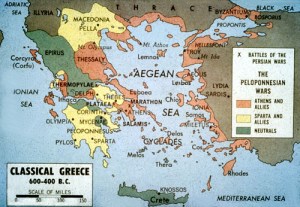
classical greeceDEMOS-TYNDAREUS (410 BC) – Written by Polyzelus.
The Tyndareus part of this political comedy’s title refers to the mythical figure who came back from the dead like Lazarus in Christian beliefs. The Demos part is the embodiment of “the people” and comes from the same root word that “democracy” does. In this satire Demos represents the Athenian people just like he did in Aristophanes’ The Knights and in other comedies. Think of a figure like Uncle Sam representing Americans or John Bull representing the British or a person on their knees with their hands raised in surrender representing the French (rimshot). 

The title is referring to the resurrected democracy of Athens following the fall of the government imposed by the oligarchic coup of 411 BC – 410 BC. This restoration would later be followed by ANOTHER oligarchic coup six years later and another restoration of democracy, but of course none of this was known when Demos- Tyndareus was first performed. The scattered fragments reveal that the comedy dealt with an unknown figure orienting the resurrected Demos to the political climate of the newly- restored democracy. Continue reading

11 Comments

Filed under Ancient Greek Comedy

YES, THE FILM CHI-RAQ IS BASED ON LYSISTRATA

AristophanesMany of you have been kind enough to let me know that the new movie Chi-Raq, about black-on- black violence in Chicago, can be added to the long list of adaptations of Lysistrata by Aristophanes.
For new readers here is my examination of Lysistrata:

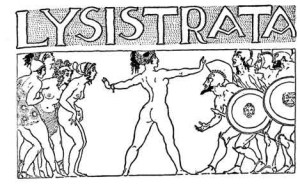
Lysistrata was written by the Big A himself, Aristophanes, and this comedy always makes a perfect introductory play for newcomers to Ancient Greek Comedy (henceforth AGC). Part of its accessibility to modern audiences obviously comes from the risque premise of the play, of course.

For me the notion that we can understand and laugh at the same simplistic but brilliant story that Athenian audiences from 2,427 years ago laughed at and appreciated embodies the value of these ancient works. 

THE PREMISE

Lysistrata1By 411 BCE the Peloponnesian War between Athens (and its allied city-states) and Sparta (and its allied city-states) had been raging for roughly 20 years. The war provides the backdrop for many of Aristophanes’ surviving comedies and is especially apt where Lysistrata is concerned.   

Weary of the long, drawn-out conflict the women of Athens, led by the title character Lysistrata (supposedly based on Lysimache, the Priestess of Athena in Athens at the time), join forces with the women of Sparta and decide to withhold sex from the men until they agree to bring an end to the war.  Continue reading

14 Comments

Filed under Ancient Greek Comedy