Balladeer’s Blog continues its examination of the many facets of Fool Killer lore. FOR PART ONE, INCLUDING THE HISTORICAL CONTEXT, CLICK HERE
 MELUNGEON VARIATIONS PART ONE
In the previous installments I reviewed the various surviving Fool Killer Letters recounting the folk figure’s homicidal adventures in North Carolina, Virginia (including what is now West Virginia) and Kentucky.
Those tales presented the Milton Chronicle‘s Fool Killer from the late 1840s or early 1850s on through the late 1870s or possibly as late as 1880. That figure slew fools with his club/ walking stick/ cudgel and his set of Bowie knives, each blade inscribed with the words “Fool Killer.”
The very first Fool Killer Letter by Charles Napoleon Bonaparte Evans’ fictional Jesse Holmes has not survived, so if Evans made reference to being inspired by any older Fool Killer traditions we have no way of knowing it.
 If he had, one possible source would be the Fool Killer figure from Melungeon folklore in East Tennessee and other Appalachian areas. Or, since we have no way of checking exact dates, Evans’ darkly satirical tales may have influenced the existing Melungeon lore since Melungeons at the time were scattered from Tennessee to North Carolina, Kentucky and Virginia. Continue reading

 And especially “Why are we forgiving student loans for people that go to Harvard? Which, according to Scott Galloway, quite accurately, is nothing but a hedge fund that has classrooms. Well, they got a $52 billion f*cking surplus. Why are taxpayers going to bail these people out? Why don’t you come out with a proposal to tax every university with an endowment of over $5 billion and use that money to give their former students relief?”
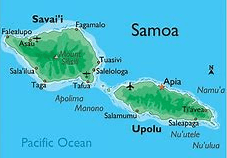 THE CONFLICT – On August 22nd, 1898 Malietoa Laupepa passed away. He had been the ruling King of Samoa by agreements among the German Empire, Great Britain and the United States. With his passing, the U.S. and Great Britain supported the ascension of his son Malietoa Tanumafili to the throne. The Germans supported Mata’afa Iosefo, a former rival of the late king who returned from exile.


 GANGSTER WARFARE FROM THE SKIES – November 12th of 1926 saw the very first aerial bombing on United States soil. It was not a foreign power or terrorist group behind the attack, however.
  The two gangs were fighting it out for control of the bootleg whiskey racket in the area. Being so far away from Chicago and vicinity, the Shelton-Birger War was not well known to the rest of the United States.
 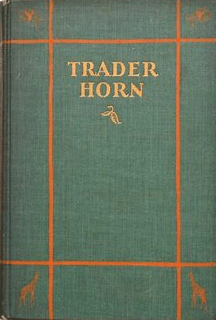 PART TWO – Aboard the S.S. Angola, the teenaged Alfred Horn approached Africa on his first assignment as a Trade Agent for the firm of Hatson & Cookson, whose business operated from Bonny Brass to Old Calabar and up the Niger River as well as coastal ports along Cameroon.

 Over five years ago Balladeer’s Blog began a detailed look at the neglected folklore surrounding the Fool Killer figure. It’s been a while since I left off and I’m about to dive back in. There are so many new readers here that I’m posting a recap of the very first Fool Killer item from the 1850s. Next time I’ll resume where I left off – in 1913.
 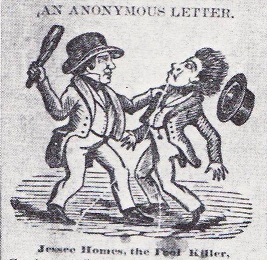 Balladeer’s Blog kicks off a multi-part examination of the neglected 1800s folk figure called the Fool Killer. I will cover the various stories featuring the Fool Killer and the different ways the character was used by the authors. If I ever examine the related character called the Rascal Whaler it will be in a separate series of blog posts.
  However, since Evans was all about the written word, he used the Fool Killer as a much more active figure. Evans’ Fool Killer – claiming Jesse Holmes as his real name – roamed North Carolina and Virginia (which at the time still consisted of what would become West Virginia) looking for fools to kill with a club/ walking stick he always carried with him. The character would then send letters to Editor Evans explaining why he had chosen victims, defending his actions with puckish commentary.