
Balladeer’s Blog takes another look at a neglected epic myth, this one from Africa.
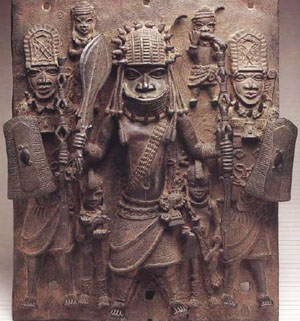 The mythic tale of Aiwel Longar comes from the Dinka pantheon. Nhialic is the supreme deity to the Dinka and the first man and woman he created were Garang and Abuk. The Dinka people live in the Upper Nile in Sudan, as they have for centuries.
AIWEL LONGAR
I often cover the way in which cultures which come into contact borrow mythic material from each other to embellish their own respective belief systems. The story of Aiwel Longar clearly influenced (and vice versa) Egyptian, Jewish, Christian and Muslim myths. It also bears striking similarities to the Gnostic Hymn of the Pearl.
PART ONE – Born as simply Aiwel, this figure was a gift from the god of the Nile River to Aiwel’s widowed and childless mother. The infant already had a full set of teeth when his mother picked him up out of the Nile River, where the river god had set him adrift.
Like many mythic figures Aiwel could talk and function like an adult at a very young age. While still a toddler he often stole and drank entire gourds full of milk. After one such binge Aiwel’s mother caught him and the young demigod warned her not to tell anyone or else she would die. Continue reading
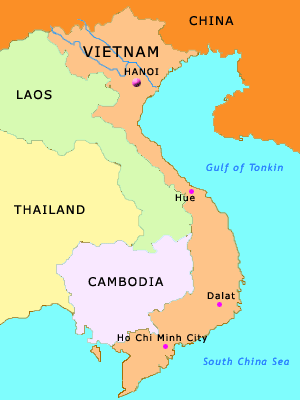 CANTO ONE – The jungle and mountain god Tan Vien was accompanying the semi-divine Emperor Hung Vuong XVIII on a Royal Hunt. A turn of fate puts them in a position to save the imperiled son of Long Vuong, the chief sea god. CLICK
  Happy Labor Day! And yes, I know it’s traditionally the Labors of Hercules, but last week’s blog post about
 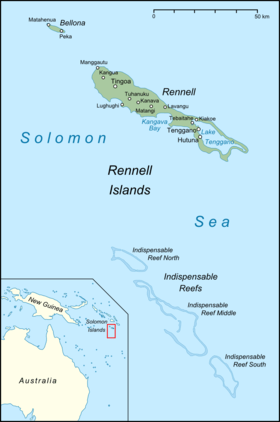 In the style of Balladeer’s Blog’s separate examinations of Hawaiian and Samoan myths as a subset of Polynesian Mythology comes this look at the deities worshipped on the Polynesian outliers Bellona Island and Rennell Island. Despite its much smaller size Bellona had a larger population for much of their history.
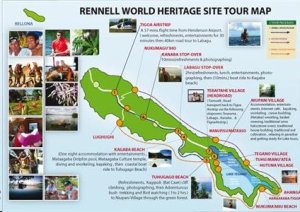 MAHUIKE – The earthquake god of Bellona and Rennell Islands (henceforth Bel-Ren). Like his counterparts in Hawaii and Samoa, Mahuike lived far underground and caused earthquakes by pushing at the earth with both of his arms.
 In the past Balladeer’s Blog has examined epic myths from around the world and from many belief systems. Examples include
  PART THREE – Trader Horn’s skills at bartering and deal-making with the indigenous people grew as he acquired more and more experience. His account always expressed his awe at the high populations of animal life throughout the region in the 1870s-1880s.
  PART TWO – Aboard the S.S. Angola, the teenaged Alfred Horn approached Africa on his first assignment as a Trade Agent for the firm of Hatson & Cookson, whose business operated from Bonny Brass to Old Calabar and up the Niger River as well as coastal ports along Cameroon.
  FRANCOIS VILLON PART SEVEN – We pick up this time in 1460, as Villon’s roaming career as a highwayman and armed burglar among the Coquillards was fast approaching its end, though the poet seems not to have realized it. None of his poetry from 1458 and 1459 has survived, unfortunately.
 FRANCOIS VILLON PART SIX – We pick up at the point in 1457 when the fugitive outlaw Villon found a warm and unexpected welcome in the court of Rene, Duke of Anjou. This figure was also known as “Good King Rene” because technically the crown of the Kingdom of Sicily was part of his royal inheritance.
  Balladeer's Blog