
Balladeer’s Blog continues its examination of the many facets of Fool Killer lore. FOR PART ONE, INCLUDING THE HISTORICAL CONTEXT IN THE 1850s, CLICK HERE.
 PART 70 – Some of the Fool Killer’s targets on both sides of the aisle in the April 1914 edition of James Larkin Pearson’s version of the folk figure:
*** Politicians who wanted to invade Mexico because of the continuing chaos there, stating it was being considered just to protect the property of American millionaires in Mexico.
*** Civilian Jingoists who talked tough about invading Mexico, claiming that if war actually did break out those same people would try to avoid military service.
*** The scamming Marriage Brokers of the time period.
*** People who opposed North Carolina’s law prohibiting alcohol. Despite Pearson’s usual pro-liberty stances, he and his Fool Killer supported bans on alcohol and tobacco. Continue reading
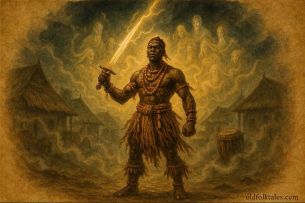 PART TWO: Ozidi’s maternal grandmother Oreame performs the ritual to transform him from a mere mortal into a spiritual warrior who is as strong as ten men, has eyes that blaze like lightning and can see through the lies of deceitful men and ears that can hear the whispers of the Niger River gods. The ritual includes bathing Ozidi in palm oil and river water.
  OZIDI – Over the years, Balladeer’s Blog has examined several epic myths from around the world. I’ve reviewed Navajo, Hawaiian, Vietnamese, Chinese, Greek, Roman and African epics. Among the African epics I’ve examined were the Mwindo Epic, the Woi Epic, the sagas of Aiwel Longar, Bakaridjan Kone and others.
 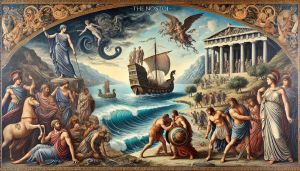 THE NOSTOI aka THE RETURNS is a neglected epic in the Trojan War cycle. It is attributed to Agias or to Eumelus of Corinth. In the Epic Cycle, The Nostoi comes after

 Previously Balladeer’s Blog examined Cypria and Aethiopis, two of the neglected Greek epics. Cypria recounted the events leading into The Iliad while Aethiopis picked up the tale of the Trojan War after the death and funeral of Hector at the end of The Iliad. The neglected epic I’m examining today is Iliad Minor, the next in line chronologically. The author is speculated to have been either Lesches, Thestorides, Diodoros, Kinaithon or even Homer himself.
 PART 67 – Some of the Fool Killer’s targets on both sides of the aisle in the January 1914 edition of James Larkin Pearson’s version of the folk figure:
 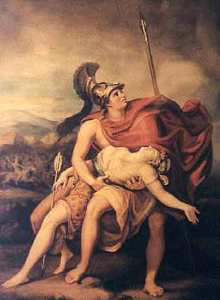 Previously Balladeer’s Blog examined Cypria, the neglected Greek epic myth that dealt with the events leading up to the Trojan War all the way up to Achilles leading the Greek forces in establishing a beachhead at Troy. The Trojan forces were then forced to retreat inside the walls of Troy itself, leaving the outside settlements to be sacked by the Greek forces. This led right into the whole Briseis/Chryseis conflict between Achilles and Agamemnon that opened up The Iliad.
 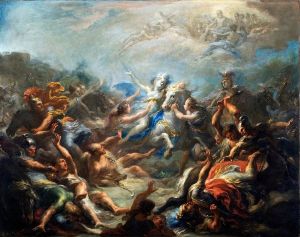 FOUR – A council of the gods is held on Mount Olympus as the goddesses Venus and Juno make their cases for and against Aeneas and his fellow survivors of fallen Troy. Venus argues for them since Aeneas is her son, while Juno retains her position against Aeneas because she wants to prevent the founding of Rome.
