Tag Archives: mythology

MORE HAWAIIAN GODS AND GODDESSES

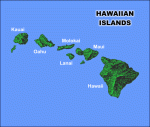
HawaiianislandsBalladeer’s Blog’s examinations of the Hawaiian pantheon of deities have been some of the most popular items here. As a nod to that popularity here are some of the neglected Hawaiian gods and goddesses.  

INANEA – A fascinating lizard-goddess. CLICK HERE 

KUMUHEA – This caterpillar god was a son of Ku, the god of war. CLICK HERE.   Continue reading

2 Comments

Filed under Mythology

TITIKANOHIMATA: GOD OF FLYING FOXES

Flying FoxTITIKANOHIMATA – The god of flying foxes, animals which figure very prominently in the myths and culture of Bel-Ren.

Rituals would be performed in this god’s honor before going out to hunt flying foxes. Titikanohimata was considered the brother of the goddess Tehahine’angiki. Continue reading

6 Comments

Filed under Mythology

COMPARATIVE MYTHOLOGY: THE GOSPEL OF NICODEMUS

Balladeer’s Blog continues examining various accounts of dead and resurrected deities, as is customary at this time of year.

facepalm jesusTHE GOSPEL OF NICODEMUS – Despite the title of this gospel, Nicodemus doesn’t even show up until section five. This alternate scripture started out as The Acts of Pilate, and covered the story of Christ’s trial and execution from the point of view of Pontius Pilate. This half of the gospel serves the purpose of making Pontius Pilate look even more reluctant to prosecute Jesus than the canonical gospels do. Continue reading

Leave a comment

Filed under Mythology

BAAL: DEATH AND RESURRECTION

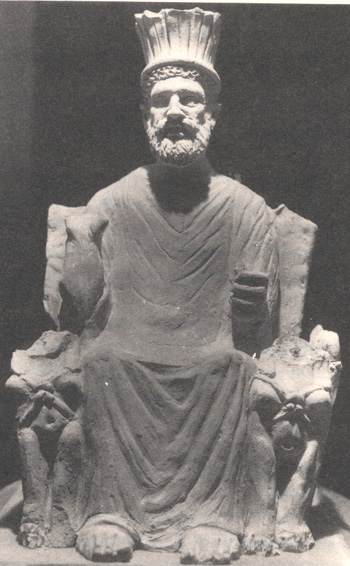
BaalSpring is the time of year that always puts me in mind of the many dead and resurrected deities who were featured in various seasonal myths around the world. This is a look at Baal, but if you want more dead and resurrected gods and goddesses click HERE  

BAAL

Pantheon: Canaanite

The Tale: Baal, the storm god of the Canaanites, had emerged triumphant in his war with the sea god Yam and became very hubristic. He insisted he had authority even over Mot, the god of death and warned Mot that the only places on Earth that he could visit were the deserts.

Infuriated, Mot invited/ dared Baal to visit him in his subterranean realm, the land of the dead. Baal accepted the dare/ invitation lest he lose face and once there Mot fed him the food of the dead – mud – thereby trapping Baal in the Netherworld.

With Baal thus imprisoned no rains fell on the Earth and drought consumed the world, killing vegetation and the animals who fed on that vegetation, then the animals who fed on THOSE animals, etc.

In an interesting variation on these other seasonal myths in the story of Baal the “dead season” is not winter but summer, which, given the intense heat in that part of the world, was potentially more destructive to nature than winter. Continue reading

12 Comments

Filed under Mythology

THE GOSPEL OF JUDAS

Jesus laughingIt’s the time of year when Balladeer’s Blog highlights comparative mythology, both in terms of other cultures’ dying and resurrected deities or in this case by showcasing alternate gospels that Christian authorities of long ago deemed to be non-canonical. 
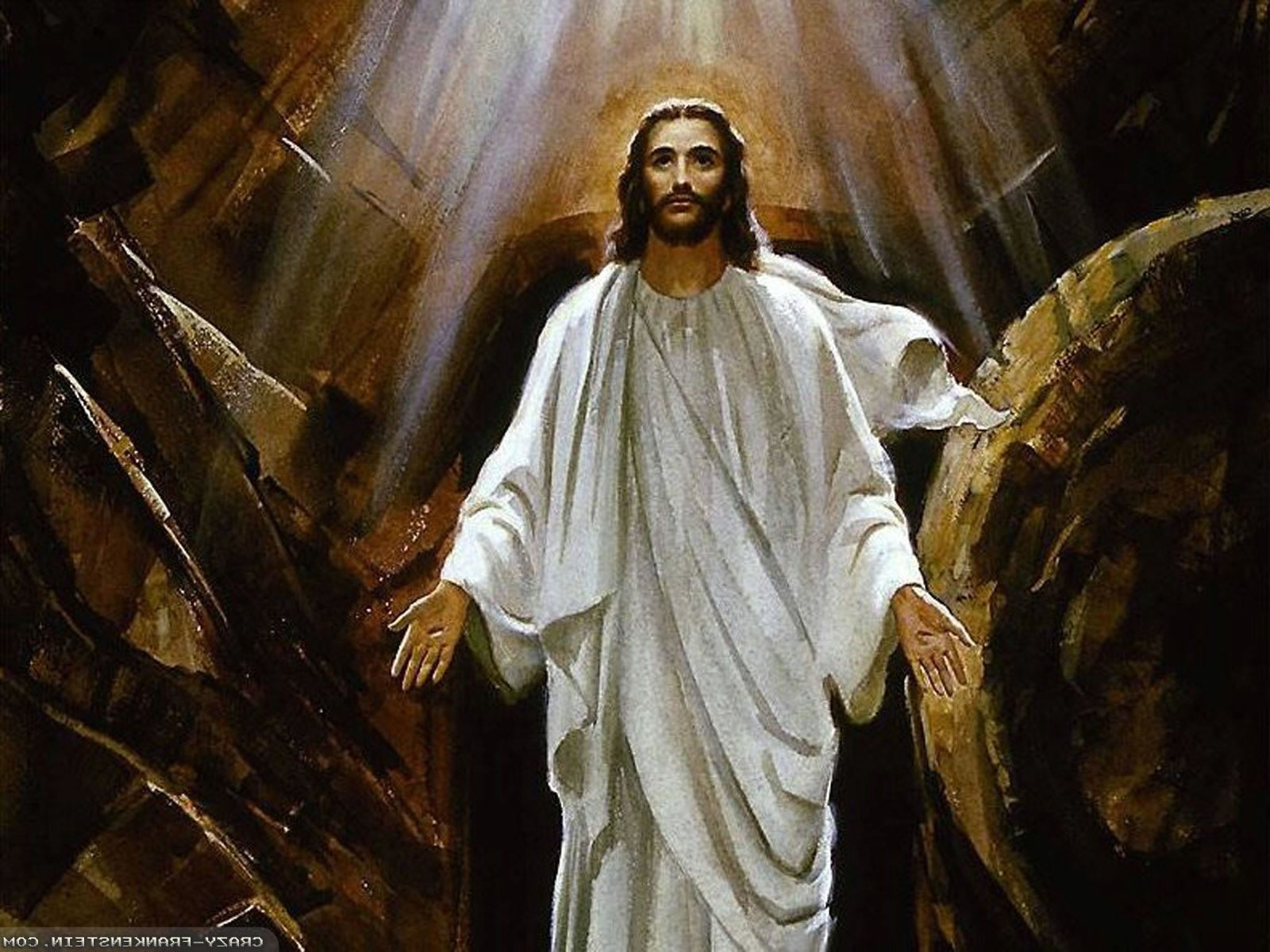
THE GOSPEL OF JUDAS – Yes, it’s the “tell-all” memoir of the figure remembered as the traitorous apostle. Among the many explosive aspects of this gospel is the credence it gave to the long-argued possiblity that Judas  lived on for a time after Jesus’ death and may have even had disciples of his own, like the other followers of Jesus when they dispersed.

The other gospels generally depict their attributed author (yeah, right) as being the apostle who was closest to Jesus and who understood his teachings the best. The Gospel of Judas plays the same game, even going so far as to imply that Judas alone was privy to a particularly secret teaching of Jesus. 

This “secret” is a full-on, flat-out Gnostic interpretation of Jesus and his mission. Jesus is shown laughing at the disciples’ misunderstanding of who he really is and identifies the god of the Old Testament with the Demiurge. The “Savior” is even referred to in connection with the goddess Barbelo from Gnostic myths. Continue reading

6 Comments

Filed under Mythology

THREE POTENTIAL ALTERNATE EASTERS

Jesus ResurrectedTry imagining how different modern-day Easter celebrations might be if any of the following Gospels had been deemed “authentic” (lol) instead of just the traditional four. This continues Balladeer’s Blog’s annual examination of the Apocryphal Gospels that provide the best opportunities for comparative mythology. 

THE GOSPEL OF PETER – This Gospel was in wide use in the Middle East until at least the 2nd Century A.D. Its contents would still be completely unknown if not for a fragment of the Gospel being discovered in the tomb of a Christian monk in Egypt late in the 1800s.

In The Gospel of Peter when Jesus emerges from his tomb upon being resurrected he is the size of a giant “whose head reaches above the Heavens” and is being helped from the tomb by a pair of equally giant-sized angels. Next the Cross itself emerges from the tomb for some reason and a voice from the Heavens asks “Have you preached to those who are sleeping?” The cross speaks and replies “Yes.”   Continue reading

6 Comments

Filed under Mythology

TOP ELEVEN DEITIES IN AZTEC MYTHS

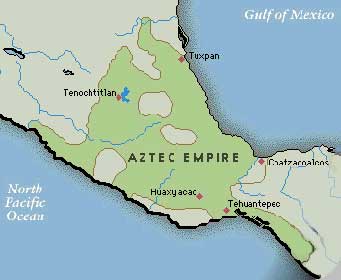
The underappreciated mythological pantheon I’ll be looking at this time will be the Aztec pantheon. It seems all anybody ever wants to talk about with the Aztecs is human sacrifice, blood, hearts being pulled out, etc. There are many more intriguing elements to their forms of worship than just blood and guts, however. Here is a list of some of their major deities. For other pantheons I’ve addressed see these links:

KOREAN MYTH – https://glitternight.com/2011/03/24/the-top-11-deities-in-korean-mythology/ 

SHINTO MYTH – https://glitternight.com/shinto-myth/

HAWAIIAN MYTH – https://glitternight.com/2011/02/20/the-top-eleven-deities-in-hawaiian-mythology/

HAWAIIAN MYTH PART 2 – https://glitternight.com/2011/03/02/eleven-more-deities-from-hawaiian-mythology-2/

NORSE MYTHS – https://glitternight.com/2011/04/10/the-eleven-most-neglected-deities-in-teutono-norse-mythology/

INUIT MYTHS –  – https://glitternight.com/2011/06/06/the-top-12-deities-from-inuit-mythology-2/

Plus see my pages on Navajo, Vietnamese and Bunyoro myth.

11. OMETEOTL – The primordial and hermaphroditic deity who embodied all duality and from whom all existence sprang. Ometeotl did not just personify male and female but also space and time, light and dark, order and chaos, etc. As both male and female Ometeotl conceived and gave birth to the god Tonacatecuhtli and the goddess Tonacacihuatl, who mated and went on to produce most of the rest of the deities in the Aztec pantheon, sort of like Izanagi and Izanami in Shinto myths.

Ometeotl was considered distant and aloof and took no more active role in myths after setting the ball of creation rolling, although he/she was considered to be present in every aspect of ritual. This god sat enthroned in the thirteenth and highest heaven, Omeyocan, often considered the Mt Olympus/ Asgard/ Hunamoku/ Takamagahara of Aztec myths.      Continue reading

12 Comments

Filed under Mythology

KIKOMIHCI: MUSCOGEE CREEK GOD

human chartKIKOMIHCI – The god who created human beings and animal life after the supreme deity Ibofanaga was finished creating the Earth, the heavens and the underground world. Kikomihci animated people and other animals with their “ghosts” which could leave their bodies at night in dreams and wander around, returning to their host body by morning to avoid causing illness.
Ibofanaga was solely responsible for the actual “souls” of the beings Kikomihci created. Like the Inuit and other peoples the Muscogee Creek distinguished between an animating force and an actual “eternal” soul.

Kikomihci created humans in the underground world and it was from there that the ancient Creek people eventually emerged from caves near what we call the Rocky Mountains. The Muscogee called those mountains “the spine of the world”  (although in some versions it is instead the Appalachian Mountains that are given that designation). The realm of the gods was on the other side of those mountains. Continue reading

4 Comments

Filed under Mythology

BAYBAYAN: EPIC MYTH OF THE PHILIPPINES

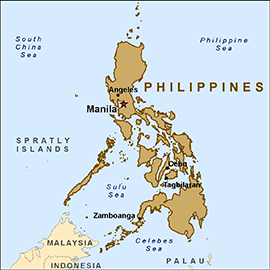
Philippines Map 3Here’s another piece in the tradition of Balladeer’s Blog’s guides to my examinations of the epic myths about Nayanazgeni, the Navajo War God and Pele & Hi’iaka, the Hawaiian volcano goddess and her sister.

I. PART ONE – After Baybayan’s miraculous birth and rapid growth the demigod travels the Philippines performing miracles and gathering a huge band of followers around him. Soon, the day of apocalyptic danger arrives. CLICK HERE   

II. PART TWO – As Baybayan performs a multitude of wedding ceremonies for his disciples all the merriment ends with the arrival of the gigantic, world-destroying monster called the Makadingding. CLICK HERE   Continue reading

4 Comments

Filed under Mythology

VIETNAMESE GOD: NGOC HOANG

ngoc-hoangNGOC HOANG – The Vietnamese equivalent of the Jade Emperor in Chinese mythology. Said in some myths to be the eldest child of Khong Lo and Giat Hai. His actual name is sometimes presented as Ong Troi, though his fellow deities and High Priests are permitted to address him as Thuong De. (But everyone knew him as Nancy for you Beatles fans)

He rules over the Vietnamese pantheon and the heavenly home of the gods – the 18th Heaven above the 18th Heaven (aka the 36th Heaven). He is also in charge of each god and human’s destiny.

While his father Khong Lo was creating the geographical features of the Earth to try to convince Giat Hai to marry him, Ngoc Hoang was creating the animals of the Earth and when he created people, the Twelve Heavenly Midwives (more children of Khong Lo and Giat Hai in some myths) sculpted the faces, as they do today, and these celestial artists take such pride in their work that is why everyone looks different. 

He was also noted for meting out strict punishments when subordinate gods displeased him. Here are some of what I like to call “Don’t Mess With Ngoc Hoang” Myths: Continue reading

6 Comments

Filed under Mythology