Balladeer’s Blog continues its retrospective of The Best of 2018 with this look at June’s Best.
 GODS OF FIJI – Balladeer’s Blog’s examinations of neglected pantheons of deities from around the world are always a hit.
The ancient belief system of the islands of Fiji were covered in this blog post which featured nearly 30 Fijian gods and goddesses. CLICK HERE
 MOTHER JONES: RECOMMENDED TRUMP LINKS – Balladeer’s Blog once again posted a roundup of links to the most thought-provoking articles about President Donald Trump.
All of them recommended by Mother Jones.
CLICK HERE
 HAMMETT (1982) – I reviewed this 1982 Wim Wenders film that was produced by Francis Ford Coppola’s Zoetrope Studios. Frederic Forrest (Chef from Apocalypse Now) plays real-life mystery writer Dashiell Hammett as he gets caught up in a real-life mystery.
A friend from Hammett’s days as a Pinkerton Detective shows up asking for a favor in the mid-1920s, when Dashiell is still working for just pennies a word for Black Mask and other Pulp Magazines. What follows is a fun homage to Film Noir and to Hammett’s stories. CLICK HERE
 PHELIM MCALEER ON THE AMERICAN LEFT’S TOTALITARIANISM – Like me and so many others, Phelim McAleer used to consider himself part of the political left but was driven away by the left’s growing fondness of censorship, blacklisting, totalitarianism and their support of ONLY reactionary Muslims, not Muslims who seek reform in their faith to bring it into the 21st Century.
His excellent take can be read HERE
 HELLRAISER: ORIGINS TRAILER – My love of Clive Barker’s horror novel The Hellbound Heart and the subsequent Hellraiser film series is well known.
In this spec trailer for Hellraiser: Origins you can take a look at a reimagined Pinhead and a depiction of Hell that is a bold departure from Barker’s own. CLICK HERE
 SNOPES CONFIRMS BARACK OBAMA’S ADMINISTRATION TURNED ILLEGAL IMMIGRANT CHILDREN AT THE BORDER OVER TO HUMAN TRAFFICKERS – Just one of the many, MANY scandals of Obama’s presidency ignored by the Democrats in the media.
When even Snopes can’t slant an item to try to cover up for their beloved Hollow Man Barack you KNOW the evidence is monumental. CLICK HERE
 SILAS TALBOT: REVOLUTIONARY WAR HERO – Balladeer’s Blog took a look at the Revolutionary War career of Silas Talbot.
BONUS: A descendant of Talbot showed up in the comments for a quick acknowledgement of this recognition of his ancestor’s heroics.
CLICK HERE
 TRUMP-HATERS: ARE THEY INSANE OR ONLY PRETENDING TO BE? – A look at the slobbering, psychopathic behavior of those bizarre people who devote their every waking moment to drooling hatred of de facto Third Party President Donald Trump.
To read this item you can simply CLICK HERE
 THE INDEPENDENCE DAY SPEECH THAT NEVER WAS – This item examined a much-discussed speech during the deliberations over the Declaration of Independence.
The only problem is, it never happened. But it SHOULD have! Read the fiery speech and the notes about the odd theories surrounding the man who allegedly delivered that speech. CLICK HERE Continue reading →

 Voodoo mythology is a fascinating hybrid of Yoruban, Dahomey, Fon and Christian mythology intermixed with touches from Caribbean belief systems.
  PART THIRTEEN: FABLES IN SLANG (1899)
 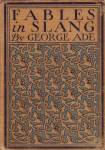 “The written word equivalent of political cartoons” might be another way of describing the fables. In any event Ade did accompany the fables with assorted illustrations.
  PART TWELVE
 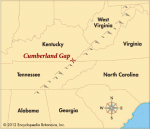 Now we’re in the 1880s and 1890s. The Fool Killer lore of the Melungeon people was absorbing traces of Mormon influence from the wider culture. The Melungeons were NOT Mormons but their Fool Killer tales took on pseudo-religious elements from Mormon lore, like the notion that the Melungeons may be even older than the previously held legends about pre-Columbian Portuguese explorers or ancient Phoenicians.
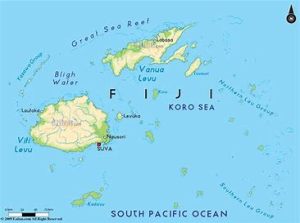 ADI-MAILAGU – This goddess was one of the evil deities driven from the Skyworld by the Fijian demigod Tuilakemba. When Adi-Mailagu first fell from the sky humans witnessed her landing in Uruone, Fiji. She fell into the small Kele Kele River and caused the water to overflow the banks. Embarrassed, the goddess emerged from the water in the form of a large grey rat and fled into the jungle since Fijian deities are vulnerable when in animal form.
 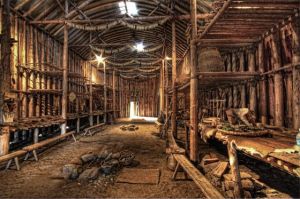 HODADEION PART 11: THE WRATH OF HODADEION – As the demigod Hodadeion stalked angrily toward the large longhouse lodge in which the cannibal wizards and their women were tormenting his younger brother Otgoe, he had but one regret. That was that the Chief of the cannibal wizards, Dagwahgweoses, was away at his private lodge and would need to be dealt with separately.
  HODADEION PART 10 – THE CANNIBAL WIZARDS – Now safely on the northern side of Niagara Falls following his battle with the whirlwind, the demigod Hodadeion continued walking toward the northeast.
  HODADEION PART 9 – BATTLE WITH A WHIRLWIND – At what is now called Niagara Falls, the demigod Hodadeion stood facing an enormous Dagwanoenyent. Those beings were the ancient whirlwinds so often fought by Iroquois deities.
 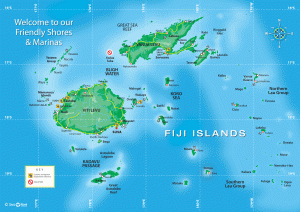 The people of Fiji believed in an epic journey for the souls of the deceased. That journey is even more detailed than the Soul’s Journey envisioned by the Tupari of Brazil.
