Tag Archives: mythology

TUPARI MYTHS: GODS AND GODDESSES OF THE AFTERLIFE

The Tupari of Brazil had a very rich pantheon of deities. For the full list click HERE  This blog post looks at the Soul’s Journey after death. 

Tupari live near the Rio BrancoTHE SOUL’S JOURNEY TO THE LAND OF THE DEATH-GOD PATOBKIA – Like  many other groups of people the Tupari distinguished between an animating force and an actual spirit.

After death, while the spirit, or Pabid, proceeds to the land ruled by the god Patobkia, the Kiapoga , the animating force or “ghost” remains in the heart of the dead human. Eventually it bursts from the heart like a bird from an egg. The village shamans clean the Kiapoga, shape its clay-like form to resemble the deceased, and then release the ghost, which forever floats invisibly in the air near the place of death.
masc graveyard newThe Pabid, meanwhile, journeys far away from the land of the living, completely blind as it makes its way. First it proceeds over the backs of two gigantic male and female crocodiles. The male crocodile attacks the moon god Puepa at times, causing eclipses of the moon, and the female crocodile attacks the sun goddess Karam at other times, causing eclipses of the sun. Though Puepa and Karam are both elderly they are still powerful – Karam more than Puepa in fact – and always drive the crocodiles away eventually. Continue reading

16 Comments

Filed under Mythology

FOOL KILLER THIRTY-SEVEN: JULY 1910

Balladeer’s Blog continues its examination of the many facets of Fool Killer lore. FOR PART ONE, INCLUDING THE HISTORICAL CONTEXT, CLICK HERE 

Fool Killer timelessLORE ADDITION: For the first time the Fool Killer added a hand-cranked chainsaw to his arsenal of weapons. The Fool Killer’s targets in James Larkin Pearson’s July of 1910 issue:

*** Preachers who smoked. Pearson and his version of the Fool Killer held smoking in such low regard that they felt people who indulged in it should not be trusted with ministering to people’s souls. Shooting the cigarettes, cigars and pipes out of the mouths of smoking preachers was going too far in my opinion, but what can you do?

*** Sid Beckwith of New York, who insisted that the best cure for insomnia was to buy a passenger balloon and take a trip through the skies. He said this would make an insomniac sleep like a baby after that. The clueless Beckwith also warned against spending more than FIFTY THOUSAND DOLLARS for such an airship. Well, okay, then.

*** Nebraskans who – incensed at the Fool Killer’s criticism of William Jennings Bryan – had taken to bashing and agitating against Pearson’s publication. The Fool Killer dubbed them the Independent Order of Self-Made Fools and proclaimed that their “double-barreled Devil-guns” would kick backward upon firing with more force than would propel their pellets forward. 

*** Writer and philosopher Elbert Hubbard.

*** Ferdinand von Zeppelin, who was considering flying one of his eponymous airships to the North Pole. After the Cook debacle Larson and his Fool Killer were fed up with what they called North Pole Yarns. Continue reading

12 Comments

Filed under Mythology, Neglected History

TWENTY MORE HAWAIIAN GODS AND GODDESSES

hawaiianislandsBalladeer’s Blog’s Top Twenty Lists For 2020 theme continues with this look at 20 more Hawaiian deities. FOR THE ORIGINAL LIST OF HAWAIIAN GODS AND GODDESSES CLICK HERE
OPUHALA – The goddess of coral, coral reefs and canoe bailers. Because of the sharp, abrasive nature of coral, fish with spiny scales were also considered to be under her rule. She was the daughter of the sea god Kanaloa and the aunt of the demigod Maui. In some traditions it is said she provided enormous jagged chunks of coral for Maui to use as hooks when he was fishing up islands.  

KALAIPAHOA – The Hawaiian poison god. His images were always carved from the nioi, a poisonous pepper tree sacred to him. He was believed to be able to ride comets across the sky. Kalaipahoa was originally worshipped only on the island of Molokai but his worship spread to all the other Hawaiian Islands after their unification into a single kingdom under Kamehameha I. Oddly, this god is also associated with gamblers.     Continue reading

51 Comments

Filed under Mythology

FOOL KILLER THIRTY-SIX: JUNE OF 1910

Balladeer’s Blog continues its examination of the many facets of Fool Killer lore. FOR PART ONE, INCLUDING THE HISTORICAL CONTEXT, CLICK HERE

Fool Killer timelessPART THIRTY-SIX: Here’s a look at the Fool Killer’s targets in the June of 1910 issue of James Larkin Pearson’s Fool-Killer publication:

*** Women who chewed snuff, whom Pearson and his Fool Killer called “snuff-dipping girls.” (Snuff-dipping girls, they make the rockin’ world go ’round! … Had to be said.)

*** Human traffickers. 

*** People who drank, since Pearson was oddly stuffy about alcohol consumption.

*** In a tongue-in-cheek bit he targeted Bronchitis itself, since stories were in the news about ex-President Theodore Roosevelt battling the illness. The Fool Killer implied that Bronchitis was a “fool” for daring to tangle with Teddy. He also made a joke about Teddy’s personality being so huge it took attention away from Halley’s Comet.

*** People who had predicted that the comet would hit the Earth, wreaking immense damage.

*** Scholars who thought they had discovered the Missing Link in Illinois.

*** Religious hypocrites who wore pointlessly expensive clothes to church just to show off their wealth. Continue reading

11 Comments

Filed under Mythology, Neglected History

ANGUTA: INUIT DEITY

Detailed entry on the father of the sea goddess Sedna. For more entries on the gods and goddesses of Inuit mythology click here: https://glitternight.com/inuit-myth/

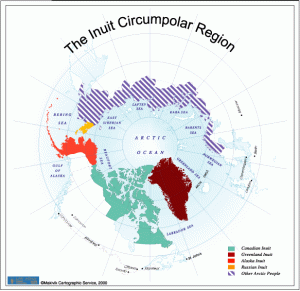
Inuit regionANGUTA – This father of the sea goddess Sedna was originally the god who ruled over Pugtulik Island. He was responsible for inflicting punishments on deserving souls when they reached Sedna’s subaquatic realm of the dead.
At the dawn of time, after his unruly daughter devoured both of her mother’s arms and had consumed one of Anguta’s own, he took her out in a canoe to abandon her at sea in the apotheotic event that saw Sedna’s ascension to sea goddess. Continue reading

4 Comments

Filed under Mythology

FOOL KILLER PART THIRTY-TWO: JANUARY OF 1910

Fool Killer 1910-1929Balladeer’s Blog continues its examination of the many facets of Fool Killer lore. FOR PART ONE, INCLUDING THE HISTORICAL CONTEXT, CLICK HERE 
Balladeer’s Blog’s readers have been asking me to back up a bit and cover the 1910-1917 run of James Larkin Pearson’s Fool-Killer publication before following it any further into the Roaring Twenties. As always, I aim to please the readers, so here we go:

Fool Killer timelessPART THIRTY-TWO: The targets of Pearson’s Fool Killer (I prefer no hyphen) in this debut issue from January of 1910:

*** A flim-flam artist called Grammar who was selling bogus “eternal youth” treatments via his book Perpetual Life, or Living in the Body Forever.

*** Frederick Cook, who, the previous December, had seen his claim to have reached the North Pole ruled invalid and possibly fraudulent by the University of Copenhagen. (The Fool Killer was unable to locate Cook, however.)

*** The “Idle Rich” who had never worked a day in their gilded lives. One memorable line: “A good deal of ‘the cream of society’ ought to be churned.”

*** A Professor Pickering who wanted to raise 10 million dollars to send a message to the planet Mars. Continue reading

8 Comments

Filed under Mythology

TWENTY BUNYORO DEITIES: AFRICAN MYTHOLOGY

The year 2020 will see plenty of Top Twenty lists here at Balladeer’s Blog. Here’s a look at 20 Bunyoro Gods. Bunyoro was located in and around present-day Uganda. The people had an elaborate pantheon of deities. For the top gods of the Nyanga people instead, click HERE

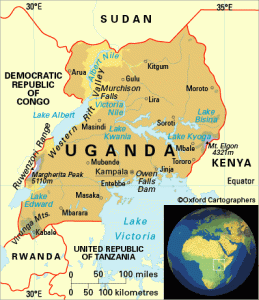
UgandaRUHANGAThe supreme god of the Bunyoro pantheon. The creator and initiator of the world after he separated the Earth from the sky and adorned the sky with stars. Ruhanga stayed remote and, though omnipotent, was seldom invoked or prayed to. He provided the Banyoro people (Bunyoro for the place, Banyoro for the people) with children, animals and the harvest, but also was the author of disease, sickness and death.  

On the freshly-created Earth Ruhanga put three seeds into the ground and in 1 day 3 calabashes had grown. all on one stem. He took a man/woman couple out of the first 2 calabashes but found just a lone man in the third.  Ruhanga named the men KAKAMA, KAHIMA and KAIRU.  

After subjecting the men to tests to determine their worth, Kakama was judged the most worthy and Ruhanga decreed his descendants would be the ruling class. He further decreed that Kahima’s descendants would be the cattlemen class and Kairu’s descendants would be the farmer class. (No the myth doesn’t say who Kairu has the children with.) Continue reading

20 Comments

Filed under Mythology

FOOL KILLER PART THIRTY-ONE: JULY OF 1921

Balladeer’s Blog continues its examination of the many facets of Fool Killer lore. FOR PART ONE, INCLUDING THE HISTORICAL CONTEXT, CLICK HERE 

Fool Killer picPART THIRTY-ONE: Moving on to the July 1921 issue of James Larkin Pearson’s monthly Fool-Killer publication. The Fool Killer’s (I prefer no hyphen) targets this time around were: 

*** Politicians and pundits who were still pushing the notion that the World War which ended in November of 1918 really was “The War to End All War” and that the world was poised for an era of peace and tranquility with no more bloodshed.

*** Nations which were still trying to develop ever-deadlier chemical weapons, despite the uproar over the long-term consequences of such weapons in the war from 1914-1918.

*** In particular the Fool Killer targeted jingoistic U.S. War Department scientists and /or officials who spoke of a deadly gas that our country had just developed – a gas which could supposedly “depopulate a whole city in a few minutes.” 

              Mascot new lookPearson and his Fool Killer wondered if, despite official claims that the government was trying to prevent other nations from getting hold of the formula, the U.S. might wind up using the gas ourselves at some future time and therefore become “the Huns” of a new war. 
              Here in 2020 we are accustomed to the notion that our own elected officials – from both parties – may be as totalitarian and destructive as any others. That realization came after decades of real-life scandals plus fictional espionage and science fiction stories using (eventually overusing) the “Are we are own worst enemy? theme. 

              I find it incredibly intriguing to see a contemporary 1921 example of that justifiable suspicion. The image of the Fool Killer – homicidal vigilante though he’s always been – taking down scientists, military men or politicians gambling with such poisonous gasses is wildly ahead of its time.  

*** In a REALLY prescient bit, he targeted people who felt that Germany should be forced harder and harder to try to pay war reparations no matter what damage it did to that nation’s economy. We all know where that wound up taking the world. Continue reading

16 Comments

Filed under Mythology, Neglected History

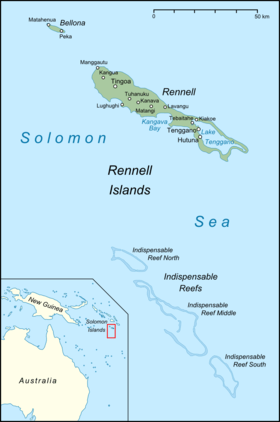
GODS OF BELLONA AND RENNELL ISLANDS

bellona-and-rennellIn the style of Balladeer’s Blog’s separate examinations of Hawaiian and Samoan myths as a subset of Polynesian Mythology comes this look at the deities worshipped on the Polynesian outliers Bellona Island and Rennell Island. Despite its much smaller size Bellona had a larger population for much of their history.

NGE’OBIONGO – The goddess of the stone ovens used by the people of Rennell and Bellona. The ovens were shown such reverence that it was forbidden to eat near them or to scatter firewood or even to speak in raised voices in their vicinity. Nge’obiongo would punish anyone who violated those taboos, just as she punished women who were bad or lazy cooks or who prepared meals without first properly cleaning their hands.

Undercooking the food would also invite this deity’s wrath. On rare occassions some of the prepared food would be left in the ovens as an offering to Nge’obiongo.

bellona-and-rennell-world-heritageMAHUIKE – The earthquake god of Bellona and Rennell Islands (henceforth Bel-Ren). Like his counterparts in Hawaii and Samoa, Mahuike lived far underground and caused earthquakes by pushing at the earth with both of his arms.
Once, after a particularly destructive earthquake, the god Tehu’aingabenga fought Mahuike for injuring his worshippers and broke off one of the earthquake god’s arms. Continue reading

26 Comments

Filed under Mythology

CHARLEMAGNE: REINOLD, MAUGRIS THE MAGICIAN AND BAYARD

Here’s a bonus Charlemagne post in honor of Twelfth Night. FOR THE FIRST CHAPTER ON CHARLEMAGNE’S PALADINS CLICK HERE

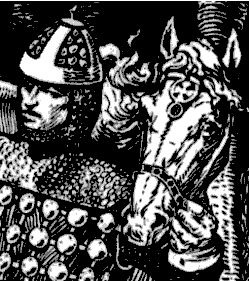
Reinold and BayardREINOLD, MAUGRIS THE MAGICIAN AND THE ENCHANTED HORSE BAYARD – Reinold was another of Charlemagne’s nephews, like the Paladin Roland. Reinold, also called Rinaldo, was the son of the Emperor’s sister Aya and her husband, Duke Aymon of Ardennes. Reinold’s sister Bradamante, covered previously at Balladeer’s Blog, was the white-armored Paladin in Charlemagne’s court, making her literally a “white knight.”

Reinold, like his three older brothers and his sister distinguished himself in battle and was knighted by the Emperor. Reinold, already showing the maverick streak that he would become famous for, declined a sword at the knighting ceremony, vowing that as one of Charlemagne’s Paladins he would carry a sword taken from the next adversary he bested in combat.

MaugrisOnce, while riding outside Paris, Reinold was presented with a magnificent suit of armor by Maugris the magician, the younger, more active counterpart to Merlin from Arthurian lore. (In some versions Maugris – aka Malagigi – also gives Reinold a horse, but since this tale centers around Reinold’s taming of the mount Bayard I’m omitting that to keep the story stream-lined.)

Not long after, Maugris the enchanter again appeared before Reinold, this time in the forest of Arden. Maugris told the young Paladin that a mightier steed than the one he currently rode was on the loose in the forest, killing everyone who tried to tame him.

Maugris went on to explain to Reinold that the horse, named Bayard, once belonged to Amadis of Gaul. After Amadis’ death, Maugris had cast a spell on the horse that granted it supernatural powers, making it impossible for the beast to be subdued by anyone except another Paladin as brave and capable as Amadis himself.

All the other Paladins that Maugris had sent to try taming Bayard had been killed by the horse. Reinold was undeterred by that knowledge and rode off toward the cavern lair of Bayard.  Continue reading

6 Comments

Filed under Mythology