
 ONHDAGWIJA – The moose goddess. Onhdagwija wandered the forests interacting with and looking after the animals she ruled over. The most prominent myth featuring her depicts her falling in love with an Iroquois hunter. She assumes human form and begins preparing acorn bread for him in his temporary bark cabin while he is off hunting during the day. Continue reading
Tag Archives: mythology
IROQUOIS DEITY: ONHDAGWIJA THE MOOSE GODDESS
Filed under Mythology
FOOL KILLER FORTY-FOUR: FEBRUARY 1911
Balladeer’s Blog continues its examination of the many facets of Fool Killer lore. FOR PART ONE, INCLUDING THE HISTORICAL CONTEXT, CLICK HERE
 PART FORTY-FOUR: Among the Fool Killer’s targets in the February of 1911 issue of James Larkin Pearson’s publication:
*** Religious leaders who were more into money than anything else. As Pearson and his version of the Fool Killer pointed out: “When the dollar rules the pulpit, the Devil rules the pew.”
*** The frivolous fashionistas who decreed that men’s coats and vests must now be “corset-cut” and their pants be more form-fitting. (Remember, they also targeted the way fashion trends arbitrarily changed women’s clothing, too.)
*** Sir Oliver Lodge, a famous spiritualist of the time who warned that the walls between the realm of the living and the realm of the dead were “wearing thin in places.” Continue reading
Filed under Mythology, Neglected History
The Twelve Handmaidens of Frigga
Love this post from Neptune’s Dolphins blog.

 By Grace Palmer
At her hall of Fensalir, Frigga, the Norse All-Mother, has twelve handmaidens or ladies-in-waiting to attend to Her. Not much is known about who these handmaidens were since the Lore is scanty about Goddesses in general. Much of what is known today is by Group Verified Gnosis. Diane Paxson and Raven Kaldera, both, have collected this information and written their views about the Twelve Goddesses.
The listing is as follows from Snorri in The Younger Edda.
Saga
At her hall, Sokkvabekk (Sunken Hall), Saga drinks with Odin, the All-Father. The two Gods spend their time trading stories. In common usage, “saga” means “a long tale.” Since She is the Patroness of Historians, Saga collects and passes on knowledge.
Eir
A master physician, Eir lives with Mengloth, the Jotun healer, at the Mountain of Healing, Lyfja. As the Healer of the Gods, Eir could be considered a…
View original post 427 more words
Filed under Mythology
FOOL KILLER FORTY-THREE: JANUARY 1911
Balladeer’s Blog continues its examination of the many facets of Fool Killer lore. FOR PART ONE, INCLUDING THE HISTORICAL CONTEXT, CLICK HERE
 PART FORTY-THREE: The targets of James Larkin Pearson’s version of the Fool Killer in the January of 1911 issue:
*** The Government Printing Office, for its extravagant waste, which is STILL infamous.
*** Jackleg lawyers who gave the rest of the profession a bad name. Pearson depicted them as lecherous villains trying to ravish the blind female embodiment of Justice.
*** Horace Fletcher once again. Fletcher’s “health plan” which consisted of thoroughly chewing one’s food was still a popular fad.
*** People who were throwing themselves into the craze to own and pilot airplanes as they were coming into wider use. Many of these unskilled wannabes wound up just getting themselves killed in spectacular accidents. Continue reading
Filed under Mythology, Neglected History
TWENTY VIETNAMESE GODS AND GODDESSES
Balladeer’s Blog’s theme of Top 20 Lists for 2020 continues! For a look at U.S. Presidents click HERE
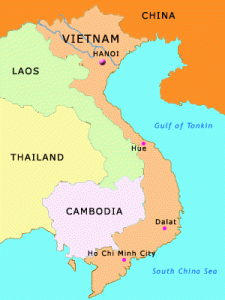 MAT GA TRONG – “Sun rooster”. The Vietnamese sun goddess. A daughter of Ngoc Hoang. Her sister is the moon goddess. The sun is her palanquin, adorned with rooster images, and carried across the sky by her attendants as she reclines on it and gives the world light and warmth. Seasonal changes in the length of the days and nights are explained by saying that in summer she is borne across the sky by virile young attendants who take their time because they like to flirt with the goddess on the way, resulting in longer days.
In winter she is borne across the sky by older attendants who hurry across the sky so they can rest their arms and backs all the sooner, resulting in shorter days. In summer her sister has the older attendants and in winter the younger ones. Her son is the Vietnamese fire god Ah Nhi. Continue reading
Filed under Mythology
THE EPICS OF ENKIDU: AVAILABLE NOW!
 AHMED ALAMEEN, motion-comic creator and best-selling author of the novel PSYCHS, has just launched his independent graphic novel project THE EPICS OF ENKIDU! Regular readers of Balladeer’s Blog are familiar with my obsession with ancient mythology, so it goes without saying that I love the premise of this tale, which combines super-heroics with mythology and autism awareness.
The man-beast Enkidu, the foe-turned-friend in The Epic of Gilgamesh, has survived to the present-day. He surfaces in a hospital, suffering from amnesia. Can an encounter with an enigmatic superhero revive his memories or will these two figures, who should be allies, instead be doomed to fight it out in a tragic misunderstanding of Earth-shaking proportions? Continue reading
Filed under Mythology, Superheroes
SEASONAL MYTHS WHICH HAVE THE SAME THEME
 This is a good time to examine some of the ancient myths about winter and the coming of spring.
The celebration of those myths plus the fact that many of those myths centered around dead and resurrected deities necessitated Christianity’s attempt to superimpose its OWN dead and resurrected deity over top of those older stories. Hence the celebration of Easter in springtime. (And it’s not just Christianity that behaved that way – other religions also would superimpose their own celebrations over top of those held in honor of the previously dominant gods in their region. I’ll cover the behavior of those other belief systems – especially Islam and the Incan faith – another time.)
Not all seasonal myths conformed to the following pattern. I’m limiting this list to the ones that did.
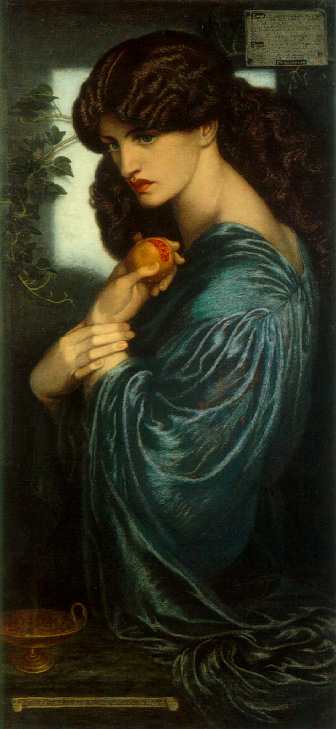
PERSEPHONE
Pantheon: Greek (The Romans called her Proserpine)
The Tale: Persephone was the beautiful daughter of the goddess Demeter (Ceres to the Romans). Persephone caught the eye of Hades, the god who ruled over the realm of the dead. Overcome with lust Hades (Pluto to the Romans) emerged from his subterranean domain and stole Persephone away to his realm to become his Queen.
The Savior: Demeter went searching for her daughter throughout the world, often assuming the form of a mortal woman. Her search wore on and on with no results, causing Demeter to fall more and more deeply into despair. Because she was the goddess of nature that despair manifested itself in colder weather, in the leaves falling off the trees, other vegetation dying and some animals hibernating or migrating to flee the cold. Continue reading
Filed under Mythology
MERINA MYTHS: TOMPONDRANO

The French who first came into contact with the people of Madagascar mistook Tompondrano for Leviathan from Christian mythology.
TOMPONDRANO – “Lord of the waters.” The supreme snake deity in Merina mythology. Not only were all other serpents subordinate to Tompondrano but he often acted as an ambassador between snakes and human beings, negotiating the end to conflicts between the two groups.
A major myth about this deity includes its role in advising the Vazimba how to use sacrifices to appease gods and demons. The Vazimba were little people who were previously the dominant race of Madagascar. They are similar to the Menehune in Hawaiian myths and to “little people” who figure into mythology and folklore from around the world.
One day a Vazimba boy was playing with a seven-headed serpent monster. That serpent decided to keep him and make him live with him under the water. The Vazimba prayed to Tompondrano to save him. Tompondrano advised the Vazimba boy to be patient, then sent the Kingfisher bird to the Vazimba’s parents with word that sacrificing a chicken and a sheep to the seven- headed serpent would appease it and get it to release their son. Continue reading
Filed under Mythology
ELEVEN AZTEC DEITIES
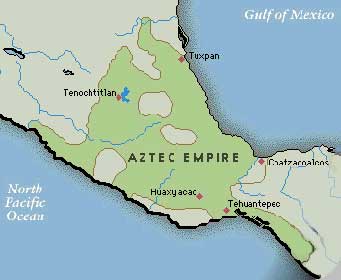
The underappreciated mythological pantheon I’ll be looking at this time will be the Aztec pantheon. It seems all anybody ever wants to talk about with the Aztecs is human sacrifice, blood, hearts being pulled out, etc. There are many more intriguing elements to their forms of worship than just blood and guts, however. Here is a list of some of their major deities.
11. OMETEOTL – The primordial and hermaphroditic deity who embodied all duality and from whom all existence sprang. Ometeotl did not just personify male and female but also space and time, light and dark, order and chaos, etc.
As both male and female Ometeotl conceived and gave birth to the god Tonacatecuhtli and the goddess Tonacacihuatl, who mated and went on to produce most of the rest of the deities in the Aztec pantheon, sort of like Izanagi and Izanami in Shinto myths.
Ometeotl was considered distant and aloof and took no more active role in myths after setting the ball of creation rolling, although he/she was considered to be present in every aspect of ritual. This god sat enthroned in the thirteenth and highest heaven, Omeyocan, often considered the Mt Olympus/Asgard/Hunamoku/ Takamagahara of Aztec myths.
10. XIUHTECUHTLI – The god of fire who was also considered the god of time, which puts you in mind of the expression “time is the fire in which we are burning”. In addition Xiuhtecuhtli was also the patron deity of the nobility. In Aztec cosmogeny fire was itself the Axis Mundi (my fellow mythology geeks will get the significance of that), manifesting on the Earthly plane in hearths, in the realm of the dead as a furnace and in the heavenly realm as the forge of the fire god himself.
Xiuhtecuhtli was the psychopomp in the Aztec pantheon, assisting the souls of the deceased to their home in the afterlife. He was also a copatron of the athletic games. Continue reading
Filed under Mythology
FOOL KILLER THIRTY-EIGHT: AUGUST 1910
Balladeer’s Blog continues its examination of the many facets of Fool Killer lore. FOR PART ONE, INCLUDING THE HISTORICAL CONTEXT, CLICK HERE
 PART THIRTY-EIGHT – Some of the Fool Killer’s targets in the August of 1910 issue of James Larkin Pearson’s Fool-Killer:
*** The owners of mills and sweatshops in which children age 10 and under worked under grueling conditions. (Child labor was not yet against the law.) Regular readers of Balladeer’s Blog will recall that child labor was one of the MAJOR beefs of Klarenc Wade Mak’s 1917 Fool Killer.
*** Lobbyist Jake L Hamon Sr, who was accused by Senator Thomas Gore (author Gore Vidal’s maternal grandfather) of offering him a $25,000.00 bribe. The alleged bribe was for Gore to vote in favor of a land purchase that attorney J.M. McMurray was trying to make from the Choctaw and Chickasaw tribes. Hamon allegedly stood to earn 10 percent of the Thirty Million Dollar deal.
 *** Senator Gore himself, for muddying the waters of his own accusations by accusing Vice President James S Sherman of an illicit interest in the land deal. Gore wound up having to admit that his accusation was based on hearsay.
*** “Frenzied Financiers” – the name for shady Wall Street dealers who exploited loopholes to fleece their clients and endanger the economy. (See my review of the 1907 novel Friday the Thirteenth for more details on Frenzied Finance.)
*** President William Howard Taft, whom Pearson and his Fool Killer accurately predicted would NOT get reelected in 1912. Continue reading
Filed under Mythology, Neglected History
 Balladeer's Blog