
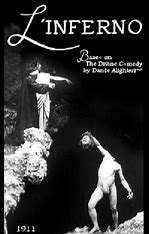
 L’INFERNO (1911) – This 71-minute movie was an adaptation of Dante’s epic poem Inferno, one-third of his Divine Comedy along with Purgatorio and Paradiso. It was also Italy’s first feature-length film, beating Cabiria to theaters by three years.
Three directors collaborated on this production – Francesco Bertolini, Giuseppe de Liguoro and Adolfo Padovan. Obviously, L’Inferno is a very condensed version of Dante’s work but the special effects are impressive for the time period.
Even if I wasn’t a silent film geek aspects of this movie would have stood out to me. First, it was made in Italy toward the end of the Belle Epoch, lending it a certain poignance as the global conflict was approaching an oblivious world.
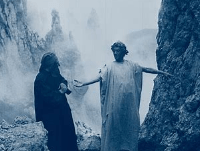 Second, L’Inferno has a certain grandeur from being filmed in Italy itself, the home of Dante Alighieri and his guide through Hell, Virgil. And third, nearly all of the footage set in the realm of the damned was filmed amid extinct and semi-extinct volcanoes in Italy, adding immeasurably to the infernal atmosphere. Continue reading
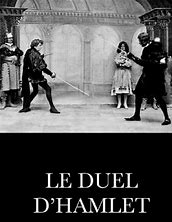 LE DUEL D’HAMLET (1900) – In this roughly 2-minute short, the 56-year-old Bernhardt gave cinema a gender-flipped Hamlet as she fenced with Pierre Magnier as Laertes in the climactic duel.
  TOSCA (1908, 1912) – Bernhardt portrayed Floria Tosca in this adaptation of the Puccini opera. (Yes, it’s a silent movie version of an opera.) The entire story was condensed into just 40 minutes and Sarah was so appalled with the production that she insisted that it not be released and, in fact, wanted it destroyed!
  Here at Balladeer’s Blog my love of enjoyably bad movies has been well established. You can count me as one of the many “Human Breens” as fans of filmmaker Neil Breen are called.
  As with the best of the bad auteurs Neil churns out productions that are uniquely his own. There is no mistaking a Neil Breen film with a film made by anyone else. Picture The Room’s Tommy Wiseau trying to make a David Lynch movie. But with a LOT more needless violence against laptop computers.
 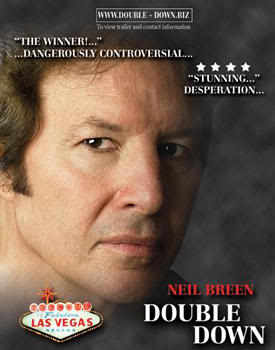 DOUBLE DOWN (2005) – Neil Breen starred, wrote and directed this movie – and quite obviously he or an associate even wrote the IMDb description of the plot. That description calls Double Down “an edgy action thriller,” which would certainly come as a surprise to anyone who has actually SEEN the film.
  LOOK WHAT’S HAPPENED TO ROSEMARY’S BABY (1976) – With The First Omen currently in theaters, its creative team’s obvious desire to make their Omen prequel seem more like Rosemary’s Baby made me decide to review the often forgotten made-for-television sequel to that horror classic.
 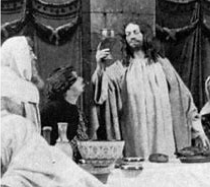 HAPPY EASTER, LADIES AND GENTLEMEN! The good response to my blog post about
 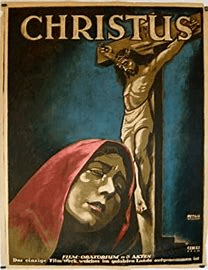 CHRISTUS (1916) – Directed by Giulio Cesare Antamoro, this is a fascinating look at Jesus, from the Angel visiting Mary through his Resurrection and subsequent visit with his Apostles. Christus runs 88 minutes and features some inventive variations on Biblical tableaux. The Star of Bethlehem is depicted as a comet; when Mary finds young Jesus preaching to his teachers His shadow appears as a cross; and Judas gets three visions of the Devil – first urging him on to betray Jesus, then taunting him when he regrets that betrayal, and finally welcoming him into Hell, which opens up under Judas’ swinging corpse.
 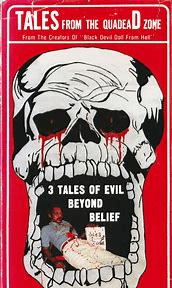 TALES FROM THE QUADEAD ZONE (1987) – The second and – to date – final movie written and directed by Chester Novell Turner. The man’s films became so renowned for being legendarily bad that in 2014 a documentary about their making was released under the title Return to the Quadead Zone.
  ALIEN: NO MAN’S LAND (2024) is a top tier Fan Film that goes far beyond the majority of such efforts. This item runs less than 29 minutes and deals with an encounter between the Alien franchise’s xenomorphs and World War One Brits and Aussies set in No Man’s Land.
 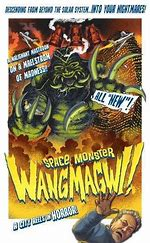 SPACE MONSTER WANGMAGWI (1967) – This attempt by South Korea to compete with Japan in kaiju films came out the same year as the much more famous Yongary, Monster from the Deep. Space Monster Wangmagwi was produced by an all-South Korean team, while Yongary was made with Japanese assistance.
 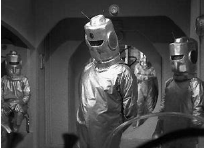 The Gammans have oddly-colored faces but that’s all we can see of them in their suits of armor, which are like the Tin Man meets the Cybermen. The conversation among these aliens as they orbit our planet is the usual grim but hilariously contradictory alien gibberish in kaijus about how Earth stands no chance, or maybe we do, and their monster Wangmagwi will eat everyone on Earth and THEN the space fleet will move in. Or he’ll attack in unison with the fleet. Hey, just keep it cazh, dude!
  ROAR (1981) – This was one of the first bad/ weird movies I planned to review when I started writing Balladeer’s Blog back in 2010, but like
  Yes, untrained. The original movie advertisements for Roar boasted that “No animals were harmed in the making of this film. 70 cast and crew members were.” The end result is not something any human or animal should have been put at risk over, believe me.
 First up, the general story: A naturalist lives in Africa in a large, sprawling home with dozens of lions, tigers, leopards, panthers, jaguars, etc. His marriage is in trouble (of course) and he’s in danger of losing his grant money.
  Balladeer’s Blog takes a look at my top horror movies of the past fifty years. It is NOT a list of my all-time favorite horror films, just the ones that fall within the round number of fifty years.
