
 JUNGLE JIM (1948) – Decades before Raiders of the Lost Ark, “Jungle Jim” Bradley, mercenary jungle guide and adventurer, was fighting Nazis, Communist Spies and other menaces while finding lost cities & ancient artifacts, all while romancing lovely ladies. Throw in the occasional dinosaur, giant spider or huge, man-eating eel and enjoy!
A modern Jungle Jim franchise could combine the best elements of Indiana Jones, Crocodile Dundee and Allan Quatermain. The Rock is too old now, but years ago his love of filming in jungles would have made him ideal for the role.
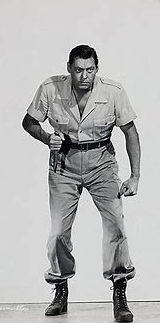 Jungle Jim, a former comic strip character, was featured in a 1937 serial, a series of movies in the 1940s and 1950s, plus a television series in that latter decade. Former Tarzan Johnny Weissmuller played Jungle Jim in everything but the 1937 serial.
At any rate, 1948’s Jungle Jim was Weissmuller’s first appearance as the character. Fifteen more movies and 26 television episodes would follow in all their fun, outdated, absurd and So Bad They’re Good glory.
THE STORY: Continue reading
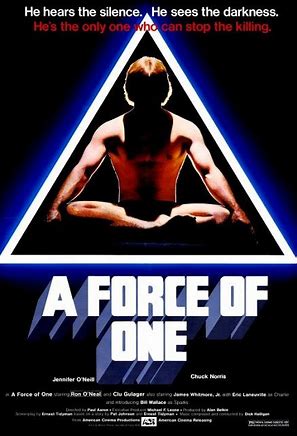 A FORCE OF ONE (1979) – Fresh off the success of Good Guys Wear Black, Chuck Norris starred in this action film directed by Paul Aaron in only his second directing effort. The prolific Ernest Tidyman wrote the screenplay.
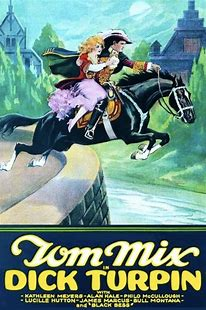 DICK TURPIN (1925) – Western star Tom Mix took a break from his Wild West movies by starring in this highly romanticized film about the real-life English thief and highway robber Dick Turpin. John G. Blystone directed the movie for Fox Film Corporation. Tom swapped his six-guns and rifles for a sword and pistols in this flick.
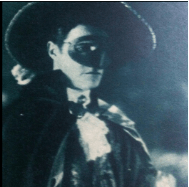 The main villain of the film is Lord Churlton (Philo McCullough), who not only resents having been robbed by Turpin, but abuses his power and influence by menacingly trying to force Lady Alice Brookfield (Kathleen Myers) to marry him.
 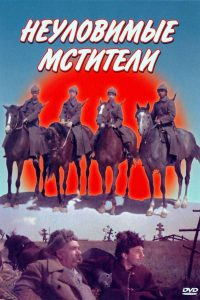 THE ELUSIVE AVENGERS (1967) – This movie is often classified as part of the subgenre called “Easterns/ Osterns” – counterparts of Westerns. As an example of global cinema, The Elusive Avengers is worth a watch maybe once in a lifetime, but the cringe factor is heavy as it romanticizes four young guerilla fighters during the Russian Civil War.
 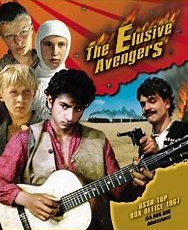 Judged purely on its production values and competent direction, The Elusive Avengers fascinates as much as it repels. In a world where a piece of garbage like deranged war criminal Vlad Putin runs Russia it can make a film like this a challenge to sit through without the real world intruding on one’s thoughts, but again, for anyone interested in world cinema history the movie is a revelation.
  For several years now I’ve meant to make a blog post recommending the YT Channel of Decker Shado, the often-hilarious figure who calls himself “The internet personality with the best hair.” He focuses mostly on genre films – new and old – and offers a lot of fresh insights on anything from schlock to blockbusters.
  January 8th is the combined marking of Elvis Presley’s birthday and the Battle of New Orleans, in which General Andrew Jackson and French Pirate Jean Lafitte defeated the British in the final battle of the War of 1812.
 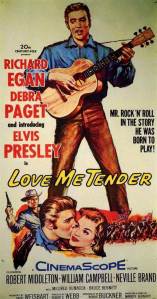 LOVE ME TENDER (1956) – Elvis was the latest reason that the saga of the Reno Gang/ Reno Brothers got distorted on the big screen. The need to turn the Reno story into a vehicle for Elvis Presley made this attempt the most unintentionally funny of them all.
  PRIMER (2004) – HAPPY NEW YEAR! Yes, I’m just childish enough to pat myself on the back for that play on words in the title of this blog post. With that out of the way I know I’m late to the game when it comes to Primer but my own skepticism about it made me keep it on the back burner in terms of priority movies to watch.
  Shane Carruth stars as Aaron and David Sullivan portrays Abe. The pair are engineers who – on the side – run a tech business out of Aaron’s garage. As a side effect of a project they are working on the two discover a means of time travel.
 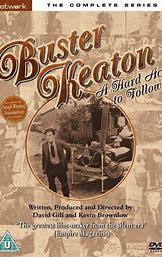 Reactions to Balladeer’s Blog’s reviews of silent movies have been positive enough that I’d like to offer a quick take on a few multi-part documentary series on the subject. Both were from British Film Historian Kevin Brownlow, who did a better job of depicting the Age of Silent Movies than any Americans ever did.
 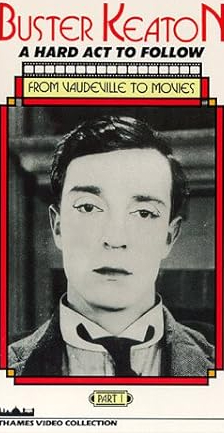 PART ONE – From Vaudeville to Movies: Brownlow and his colleagues scoured the best available footage remaining from Buster Keaton’s silent comedies. (For newbies to silent film history I’ll mention that countless movies from that period are lost forever due to decomposition prior to efforts to preserve them.)
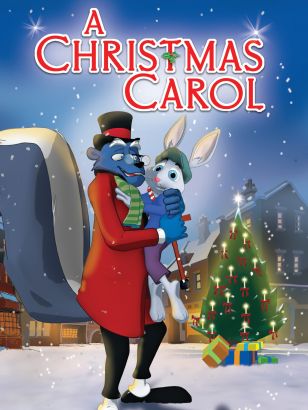 A CHRISTMAS CAROL (2006) – This computer-animation version of the Dickens classic was produced by BKN and distributed by Genius Entertainment, Kidtoon Films and Image Entertainment. Ric Machin directed. The 48 minute film had a brief theatrical run in November of 2006 before being released on home video.
