
Previously Balladeer’s Blog looked at variations of the Samson saga, including Islamic versions and other non-Biblical accounts. This time around I’ll examine silent movies about the long-haired strongman.
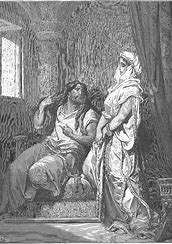 SAMSON AND DELILAH (1902) – This 6-minute short was directed by Ferdinand Zecca, Walter Pathe’s right-hand man. This film has survived and is an interesting historical piece. It’s the earliest surviving silent movie about Samson, the iconic Zecca’s first Samson film, plus Samson and Delilah is one of the silent era shorts that were tinted by hand – frame by frame.
Unfortunately, the production also suffers some of the worst shortcomings from that time period when silent flicks were still groping their way forward. We get painted backdrops, an unmoving camera, very limited credits, hilariously cheap props and insane levels of overacting.
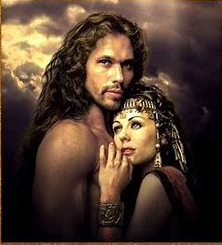 This 1902 effort opens with Samson’s “labor” of tearing off the gate of Gaza, then just dumping it rather than carrying it away. We get other standard bits from the tale of this Biblical Judge including, of course, the seductive Philistine woman Delilah learning that the secret of Samson’s strength lies in his uncut hair.
She cuts his hair to rob him of his strength, then turns him over for captivity and enslavement turning a corn mill. Zecca skips having Samson blinded in this version, and in lieu of the traditional taunting by his captors in the temple of Dagon, our hero is titillated by dancing girls just out of reach.
With his strength returning, Samson tears down the structure, crushing himself and the dancing girls. His spirit is then escorted up to Heaven by angels. Zecca would revisit this subject matter in 1908. Continue reading
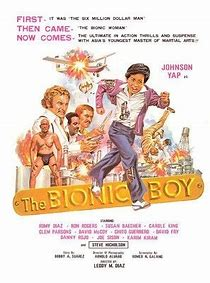 THE BIONIC BOY (1977) – This joint production of the Philippines and Hong Kong starred child martial arts champion Johnson Yap from Singapore. It was also released under alternate titles like Superboy, Trionic Warrior and others.
 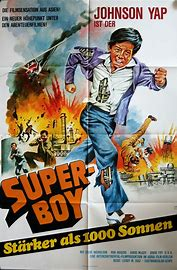 Sonny wins the Jackpot on the game show because he’s as intelligent as he is skilled at martial arts. When Not Liberace brings on Sonny’s parents, some gangsters watching the show see that his father is really a former Interpol agent who brought down several of their colleagues and has been living in a Witness Protection Program ever since. (Pretty stupid to let your face get televised to millions then.)
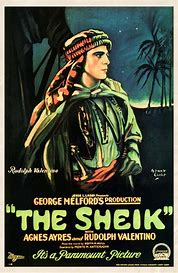 THE SHEIK (1921) – Edith Maude Hull’s 1919 novel came to the big screen to cement Rudolph Valentino’s rising star. He shone as Sheik Ahmed Ben Hassan with Agnes Ayers as Lady Diane Mayo.
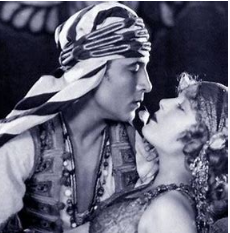 A lot of Gothic Romance Novel antics follow in this film that has not aged well. Valentino’s wide eyes and flaring nostrils were masterfully parodied by Peter Sellers in a comedy bit decades later.
 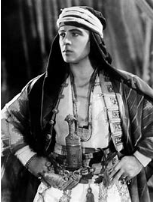 As their battle of wills goes on, Diane is seized by caravan robbers and taken to their leader’s lair. Sheik Ahmed leads his men to the rescue, and, with Stockholm Syndrome well and truly in charge, Lady Diane “realizes” how much she has fallen in love with her abductor.
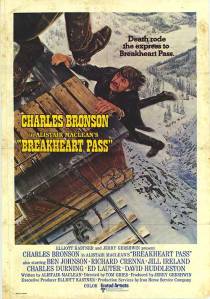 BREAKHEART PASS (1975) – (Frontierado is coming up August 2nd and, as always, it’s about the myth of the Old West, not the grinding reality.) Alistair MacLean may be more closely associated with espionage and crime thrillers like When Eight Bells Toll, The Eagle Has Landed and Puppet on a Chain but his lone Western, Breakheart Pass, is a very solid story which transfers MacLean’s usual themes to the American West.
 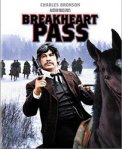 Some critics bash this above-average film because they apparently thought Alistair MacLean’s name on the script meant it would be an over-the-top Western Spy actioner along the lines of Robert Conrad’s old Wild Wild West television series crossed with Where Eagles Dare. Instead, Breakheart Pass comes closer to grittiness than slickness and is all the more enjoyable for that.
  THE FRONTIERADO HOLIDAY IS COMING UP ON FRIDAY, AUGUST 2nd!
 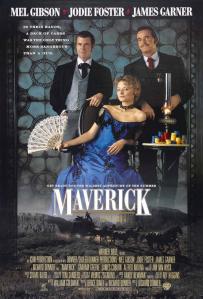 MAVERICK (1994) – Richard Donner directed and Mel Gibson starred in this excellent tribute to the 1950s and 1980s Maverick television series. The original series starred James Garner as slick-talking gambler/ gunslinger Bret Maverick AND, in old-age makeup, as “Pappy” Beauregard Maverick, the gambler and con-man patriarch of that family of rogues. (No relation to the real-life Maverick family of Texas, for whom “maverick” cattle were named.)
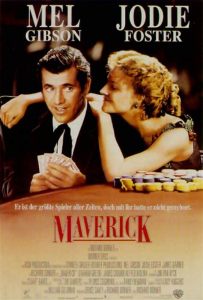 Mel Gibson portrays Bret Maverick since by 1994 James Garner was too old for the role. Jodie Foster co-stars as rival gambler Annabelle Bransford and the iconic James Garner provides memorable support as a lawman.
  RIN TIN TIN (1918-1932) – Here at Balladeer’s Blog, I’m even fonder of dogs than I am of silent movies, so this post will combine the two topics. Sadly, most silent films have become so little remembered that few people even realize that there actually WAS a real Rin Tin Tin, adopted by American soldiers during World War One.
 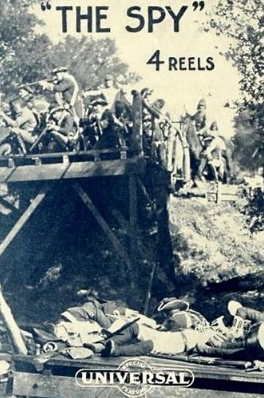 THE SPY (1914) – This four-reel movie was based on the 1821 novel of the same name by THE James Fenimore Cooper. The story is set largely at a home in Scarsdale, New York as American Rebel families share feuds, intrigues and romances with British Loyalists.
 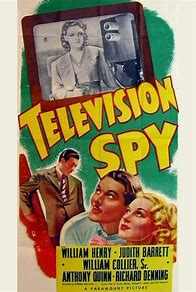 TELEVISION SPY (1939) – I’ve been reminiscing recently, what with Balladeer’s Blog’s 14th Anniversary just having passed a few days ago. I was reflecting on my long-ago review of the hilariously bad 1935 movie Murder by Television, which starred Bela Lugosi in a dual role.
 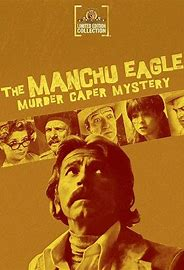 THE MANCHU EAGLE MURDER CAPER MYSTERY (1973, 1975) – This film was made in 1973 but not released until 1975. Where to begin with this bizarre detective “comedy” that starred Gabriel Dell long after his days with the Dead-End Kids/ Bowery Boys/ Little Tough Guys. For starters, fans of that series of films that ran from the 1930s onward will enjoy the fact that Dell gets to share a few scenes with his fellow veteran of those movies – Huntz Hall.
 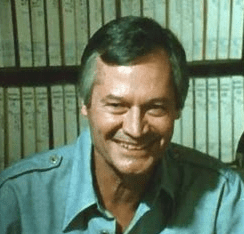 ROGER CORMAN (April 5th, 1926 – May 9th, 2024) – Many words have already been said about the passing of this film industry legend and I’m sure many, many more are yet to be said. From the 1950s to the current year – and with projects still in production – Roger William Corman was a Hollywood fixture.
  Roger was never known as someone who lacked talent, he was just in it for the money most of the time, and therefore kept his budgets tight and his schedules tighter. From 50s monster movies to Raging Youth films to whatever horror trends were ascendant to big-screen soap operas that could be more explicit with their content, Roger Corman was there, raking in bucks and working with future giants of the industry.
