
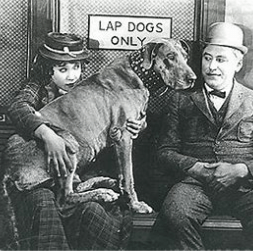
 Balladeer’s Blog takes another look at the films of a silent movie star. This time I’m reviewing some of the films featuring trained animal star Teddy the Great Dane aka Teddy the Dog aka Keystone Teddy. From 1915 to 1924 Teddy starred or otherwise appeared in silent shorts as well as feature-length movies.
Rin Tin Tin would have been the obvious canine star to start with, but I prefer going with the lesser-known topics first. FOR MY RIN TIN TIN BLOG POST CLICK HERE.
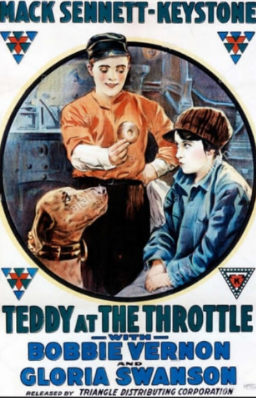 TEDDY AT THE THROTTLE (1917) – This Mack Sennett short at Keystone Studios was one of two films in which Teddy actually got his name in the title. In this light-hearted affair the Great Dane plays the pet of THE Gloria Swanson.
Obviously, any silent movie with Gloria in it packs an extra cultural punch due to her much later role as washed-up silent film star Norma Desmond in Sunset Boulevard. This comedy short has even more of a distinction – Swanson and co-star Wallace Beery were going through a bitter divorce during the filming.
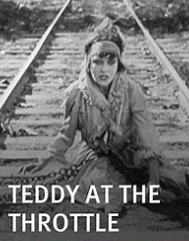 Beery’s villain character is embezzling money from the romantic leads Gloria Swanson and Bobby Vernon. Teddy, the REAL star, is cute and lively, plus he bravely saves Gloria’s life in the end when Beery ties her to railroad tracks after his villainy is exposed.
Supposedly, after Swanson became a big star she HATED being asked about playing second fiddle to a dog in a series of shorts.
Continue reading
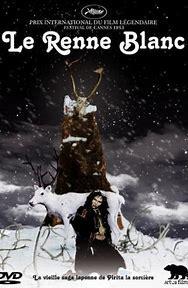 THE WHITE REINDEER (1952) – As Halloween Season nears its end, Balladeer’s Blog takes a look at a fascinating and haunting Finnish horror film. First off, let me assure readers that The White Reindeer is, indeed, a serious movie despite the way that some glib descriptions of it make it sound like just another campy black & white monster movie from long ago.
 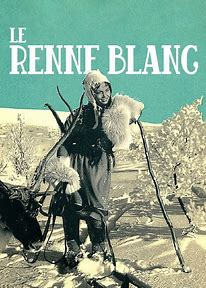 Blomberg’s best move was just accepting the fact that he didn’t have a big enough budget for convincing special effects so he relies on stylish editing, shadows and every camera trick in the book for the transformation scenes.
 Halloween Month rolls along here at Balladeer’s Blog with a look at two notoriously bad horror movies which use Andy Warhol’s name despite him not really having anything to do with them and credit Antonio Margheriti as the director even though Paul Morrissey wrote and directed them.
 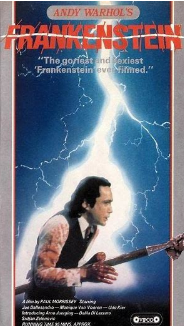 ANDY WARHOL’S FRANKENSTEIN (1973) – Also known as Flesh for Frankenstein, this 3-D monstrosity and its sister film, Andy Warhol’s Dracula (aka Blood for Dracula) used to be among the most well-known “So Bad They’re Good” movies. Oddly, they fell pretty much off the radar long ago, but get rediscovered every so often and enjoy a brief surge in notoriety from successive generations of horror fans.
 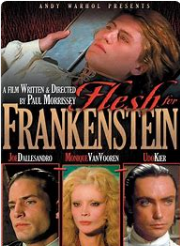 These two movies are also like 1970s time capsules, too. Recently relaxed standards for what could be shown on the big screen yielded a LOT of cheap films that were clearly made just to see how much gory violence and kinky titillation the creative teams could get away with.
 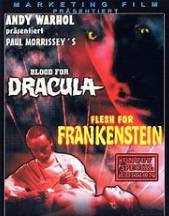 Andy Warhol’s Frankenstein and Andy Warhol’s Dracula deserve my usual warnings to horror fans who really hate extreme violence and bizarre sex. Don’t go below the “Continue reading” line or you’ll probably regret it. These films are mild compared to
 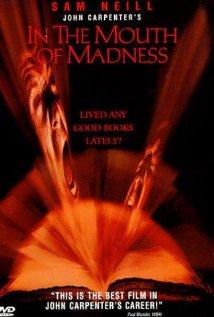 IN THE MOUTH OF MADNESS (1994) – Directed by John Carpenter and written by Michael De Luca, this movie was an unabashed valentine to H.P. Lovecraft, Stephen King’s imitations of Lovecraft, and The King in Yellow by Robert W Chambers. The King in Yellow, of course, is the 1895 book
 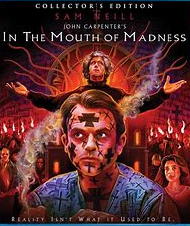 Soon, Trent is visited in his padded cell, where he has used a black crayon to cover his body and the padded walls with crucifixes for protection. His visitor is Dr Wrenn, played by David Warner, the panicked, crucifix-surrounded man from The Omen, now talking to the panicked, crucifix-surrounded Sam Neill in this film. (I admit that’s a sly touch in keeping with the style of the movie. It even has echoes of the victim in the 1970s film Equinox fixating on his protective crucifix.)
 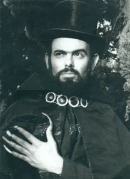 As Halloween Month continues, Balladeer’s Blog presents another seasonal post. Over the years I’ve reviewed plenty of the horror films made by Brazil’s King of Horror since the 1960s – Coffin Joe (Ze do Caixao) aka Jose “Mojica” Marins. I’ve even reviewed
 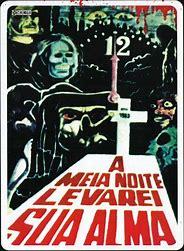 AT MIDNIGHT I’LL TAKE YOUR SOUL (1963)
 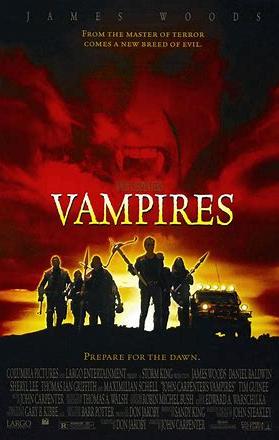 JOHN CARPENTER’S VAMPIRES (1998) – Halloween Month rolls along with this look at John Carpenter directing James Woods as Vatican-sanctioned vampire hunter Jack Crow. As always, James Woods is like a force of nature. When he’s on the screen he virtually blows away most of the people with whom he shares that screen.
 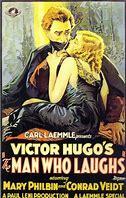 THE MAN WHO LAUGHS (1928) – I have no idea why Conrad Veidt doesn’t get the silent horror film love that Lon Chaney and Paul Wegener receive. In this final silent horror movie for Veidt, he shines once again in another landmark film. This one is based on the neglected Victor Hugo story about a figure who, like Hugo’s Quasimodo, has a monstrous disfigurement that causes him to be shunned and feared.
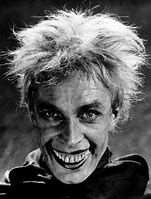 Dea falls in love with Gwynplaine’s poetic nature in fact, but when the grotesque smiler is discovered to be of noble descent the pair are separated by villainous figures involved in aristocratic court intrigues. Olga Baclanova co-starred as Duchess Josiana, the lead heavy in this forgotten Gothic horror classic.
  Halloween Month continues here at Balladeer’s Blog with this look at three notorious – but not necessarily all that good – horror films from iconic Italian director Lucio Fulci.
  THE BEYOND (1981) – A woman inherits The Seven Doors Hotel, a run-down inn outside New Orleans in the Louisiana countryside. It was once the site of an infamous murder in the 1920s and supernatural activities break out as our heroine Liza Merrill (Katherine MacColl) tries to refurbish the place.
 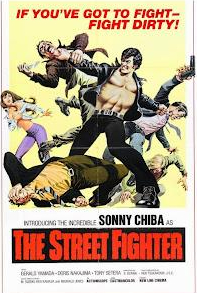 THE STREET FIGHTER (1974) – Long before the Street Fighter video games there was this ultra-violent cult film from Japan starring the one and only Shinichi “Sonny” Chiba. Long before
 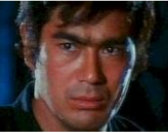 The iconic Chinese superstar Bruce Lee had passed away by this point, and Japan’s Sonny Chiba was hailed as Lee’s true successor in martial arts cinema, albeit with karate, judo and other skills that differed from Lee’s. There is a degree of truth to such claims, but Sonny was a much darker, grittier figure even if he DOES make the same kind of noises that Bruce made.
 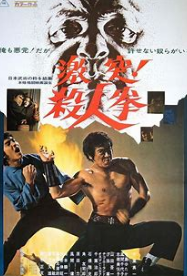 A lifetime of fighting in the streets of Japan has molded Terry into a legendarily hardened and ruthless man who is now a high-priced mercenary badass for hire. He’s not quite a “hero” since this film doesn’t have any, he’s just the main character like Michael Corleone in the Godfather movies.
  NUMBER THIRTEEN (1922) – This film marked the first time that Hitchcock worked as a director on a movie, but was the thirteenth film project he had worked on in some capacity, hence the title. The production went unfinished from lack of funds and the original title may have been Mrs. Peabody but even that is uncertain.
 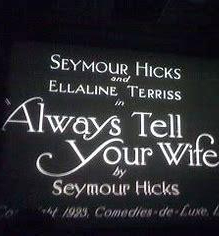 ALWAYS TELL YOUR WIFE (1923) – Hitchcock started out as a co-director of this 20-minute comedy short but had to step into the top spot when the original director quit over creative differences with the studio. Though Alfred’s previous directing effort had gone unfinished, this comedy short was completed but he was not credited since he had not directed the entire film.
  THE PLEASURE GARDEN (1925) – The third time was almost the charm as this 75-minute movie was not only completed, but Hitchcock was credited as the director!
  Balladeer's Blog